fufufafa
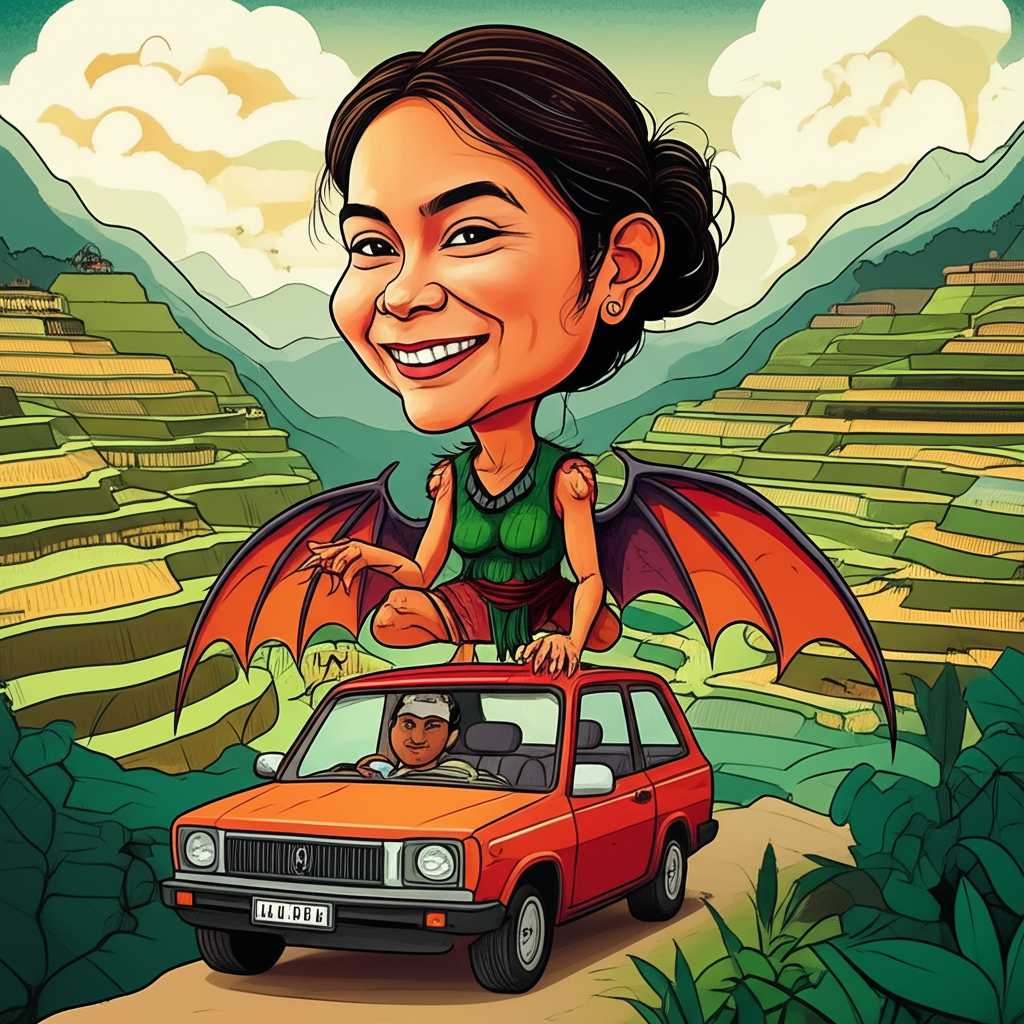
The rugged, mist-shrouded mountains of the Cordilleras in the Philippines conceal not only breathtaking landscapes but also a treasury of ancient wisdom and vibrant folklore. Among the many tales passed down through generations, one particular myth stands out for its imaginative explanation of a monumental human achievement: the Ifugao Rice Terraces. This narrative, centered around the colossal sea serpent Bakunawa and the radiant Moon, offers a glimpse into the cosmic understanding of the ancient Ifugao people, explaining how their iconic "stairways to the sky" came to be. It is a traditional story, a product of an age long past, woven from the threads of observation, wonder, and the human desire to comprehend the world around them.
Origins in a Mountainous World
To truly appreciate the myth of Bakunawa and the Moon, one must first step back into the cultural era and environment from which it emerged. The ancient Ifugao people inhabited a challenging landscape of steep mountain slopes and deep valleys. Their survival depended on their intimate knowledge of nature, the cycles of the seasons, and their profound connection to the land. Agriculture, particularly the cultivation of rice, was not merely a means of sustenance but the very bedrock of their society, intricately linked to their spiritual beliefs and social structures.
In this pre-scientific age, the world was perceived through a lens of animism and reverence for the natural forces. The sun, moon, stars, mountains, rivers, and even the smallest creatures were imbued with spirits and personalities. Cosmic events like eclipses were not mere astronomical phenomena but powerful omens, often attributed to the actions of colossal beings. The celestial bodies, especially the Moon, were vital guides for planting, harvesting, and understanding the passage of time, their presence or absence directly impacting the rhythms of life in their high-altitude settlements. It was within this worldview, where the mundane intertwined with the mythical, that stories like Bakunawa and the Moon took root, serving to explain the inexplicable and provide meaning to their arduous existence.
The Cosmic Adversaries: Bakunawa and Bulan
At the heart of this tale are two formidable entities: Bakunawa, the ravenous sea serpent, and Bulan, the luminous Moon.
Bakunawa, a name echoing through various Philippine mythologies, is often depicted as a colossal dragon or serpent, a creature of immense power and insatiable hunger. While its primary domain is typically the deep oceans, in the context of this Ifugao narrative, its cosmic appetite transcends the boundaries of land and sea. Bakunawa embodies the forces of chaos, destruction, and the terrifying unpredictability of nature. Its symbolic attributes include not only its immense size and power but also its primal drive to consume, representing the ever-present threat of darkness, famine, and the disruption of the natural order. It is a formidable antagonist, a force that demands respect and apprehension.
Bulan, or the Moon, on the other hand, is the embodiment of serene beauty, light, and life-giving influence. In many ancient cultures, including the Ifugao, the Moon was often revered as a benevolent deity or a vital celestial body that governed the tides, influenced fertility, and provided gentle illumination in the absence of the Sun. Bulan represents order, rhythm, guidance, and the cyclical nature of existence. Its radiant glow was a comfort, a source of inspiration, and a silent promise of continuation, vital for the survival and flourishing of early human societies. The conflict between these two beings is therefore not just a physical struggle but a cosmic clash between chaos and order, darkness and light, destruction and creation.
The Celestial Struggle and the Birth of the Terraces
In the epoch of primordial times, when the mountains of Ifugao were still raw and untamed, and the early people struggled to coax sustenance from their steep slopes, the world was bathed in the benevolent glow of Bulan, the Moon. Bulan, a celestial maiden of unparalleled radiance, moved gracefully across the night sky, her light nurturing the burgeoning life below and guiding the early Ifugao in their nascent attempts at cultivation. Her presence ensured the gentle flow of waters and the fertility of the land, though the mountainous terrain made farming a daunting task.
But from the abyssal depths, a monstrous hunger stirred. Bakunawa, the colossal serpent of the cosmos, grew envious of Bulan’s splendor and yearned to devour her light. Its scales shimmered with the darkness of the void, and its eyes burned with an insatiable desire. One fateful night, as Bulan hung heavy and full in the sky, Bakunawa rose from its unseen lair, its massive form eclipsing the stars. With a terrifying roar that echoed through the valleys, it lunged, attempting to swallow the luminous orb whole.
Panic gripped the world. Darkness descended, cold and absolute, threatening to extinguish all life. The early Ifugao people, terrified, cried out to the heavens, their pleas reaching the great creator deities, particularly Wigan, the god of the sky and sustenance, who watched over humanity. They understood that if Bulan were consumed, not only would light vanish, but the very rhythm of life, the flow of water, and the fertility of the soil would cease.
Witnessing the cosmic desecration and the terror of humanity, Wigan knew he had to intervene, not merely to repel Bakunawa, but to secure the future of his people. As Bakunawa wrestled with Bulan, trying to pull her into its gaping maw, Bulan fought back with all her divine might, her light flaring in defiance. It was in this moment of intense celestial struggle, guided by the wisdom of Wigan, that the mountains themselves began to respond.
As Bulan exerted her power to escape Bakunawa’s grasp, her divine essence, amplified by Wigan’s will, solidified onto the rugged mountain slopes. Each desperate movement, each radiant burst of light, etched itself onto the earth, carving out immense, flat steps. The very tears Bulan shed in her struggle, pure and life-giving, became the irrigation channels, guiding the mountain springs down these newly formed terraces. The force of Bakunawa’s thrashing tail, trying to anchor itself, inadvertently helped to shape the massive, sturdy walls that would hold the soil in place.
Eventually, Bakunawa, unable to fully consume the struggling Bulan and deterred by the intervention of the deities, was forced to retreat, leaving behind a world forever changed. The darkness receded, and Bulan, though scarred, shone once more. But now, beneath her gaze, the mountains were no longer steep and unyielding. They were adorned with magnificent, moon-born steps – the first rice terraces. These terraces, carved from the very struggle of the cosmos, allowed the Ifugao people to tame the mountain, to cultivate rice, and to thrive, forever linking their survival to the enduring light of Bulan and the memory of the great celestial battle.
Symbolism and Enduring Meaning
The myth of Bakunawa and the Moon is rich with symbolism, offering profound insights into the worldview of the ancient Ifugao. Bakunawa, the ravenous serpent, represents the raw, untamed forces of nature – the hunger, the chaos, and the potential for destruction that constantly threatened human existence. It embodies the fear of eclipses, darkness, and famine, reminding people of the precarious balance of life. Bulan, the Moon, conversely, symbolizes light, order, fertility, and the life-sustaining rhythms of the cosmos. It represents hope, guidance, and the divine benevolence that allows life to flourish.
The terraces themselves, born from this celestial struggle, are the ultimate symbol of human ingenuity, resilience, and harmony with nature, aided by divine intervention. They represent the ability to adapt, to transform a challenging environment into a source of sustenance, and to create order from chaos. The story teaches that even in the face of overwhelming forces, a combination of divine will, celestial struggle, and human effort can lead to magnificent creation. It underscores the vital importance of the Moon for agriculture and the deep connection between the Ifugao people and their sacred land.
Modern Interpretations and Cultural Legacy
In contemporary times, the myth of Bakunawa and the Moon, like countless other indigenous narratives, has transcended its original explanatory function to become a cherished cultural artifact. While not taken literally, it is interpreted today as a testament to the rich imagination and deep philosophical insights of the Ifugao ancestors. This story, and others like it, finds new life in various forms: as subjects in cultural studies, inspiration for modern literature, and even as elements in popular culture, such as character designs in video games or animated series that draw from Philippine folklore.
Academics study these myths to understand ancient belief systems, social structures, and environmental adaptations. For the Ifugao people, retelling these stories reinforces their cultural identity and connection to their heritage. It serves as a reminder of their ancestors’ profound respect for nature and their innovative spirit in building the very terraces that are now a UNESCO World Heritage site, admired globally for their engineering marvel and aesthetic beauty.
Conclusion: A Tapestry of Imagination
The tale of Bakunawa and the Moon, and its connection to the origins of the Ifugao Terraces, is a powerful example of how ancient cultures sought to explain the grandeur of their world and the wonders they created. It is a testament to the human imagination, a narrative spun from observation, fear, and reverence for the cosmos. As a cultural story, it stands as a monument to the Ifugao people’s ingenuity and their deep spiritual ties to their land, not as a literal account of creation.
As Muslims, we recognize that the true Creator and Sustainer of the heavens and the earth, and all that is between them, is Allah (SWT). It is His infinite power and wisdom that brought forth the universe and all its intricate wonders, including the majestic mountains and the life-giving moon. We hold firm to the belief in the One God, the sole Source of all creation. However, this does not diminish the value of understanding and appreciating the diverse cultural heritage of humanity. Such myths, like the one of Bakunawa and the Moon, offer invaluable insights into the human spirit’s timeless quest for meaning, its capacity for wonder, and its enduring tradition of storytelling, enriching our collective understanding of the vast tapestry of human experience and imagination.