fufufafa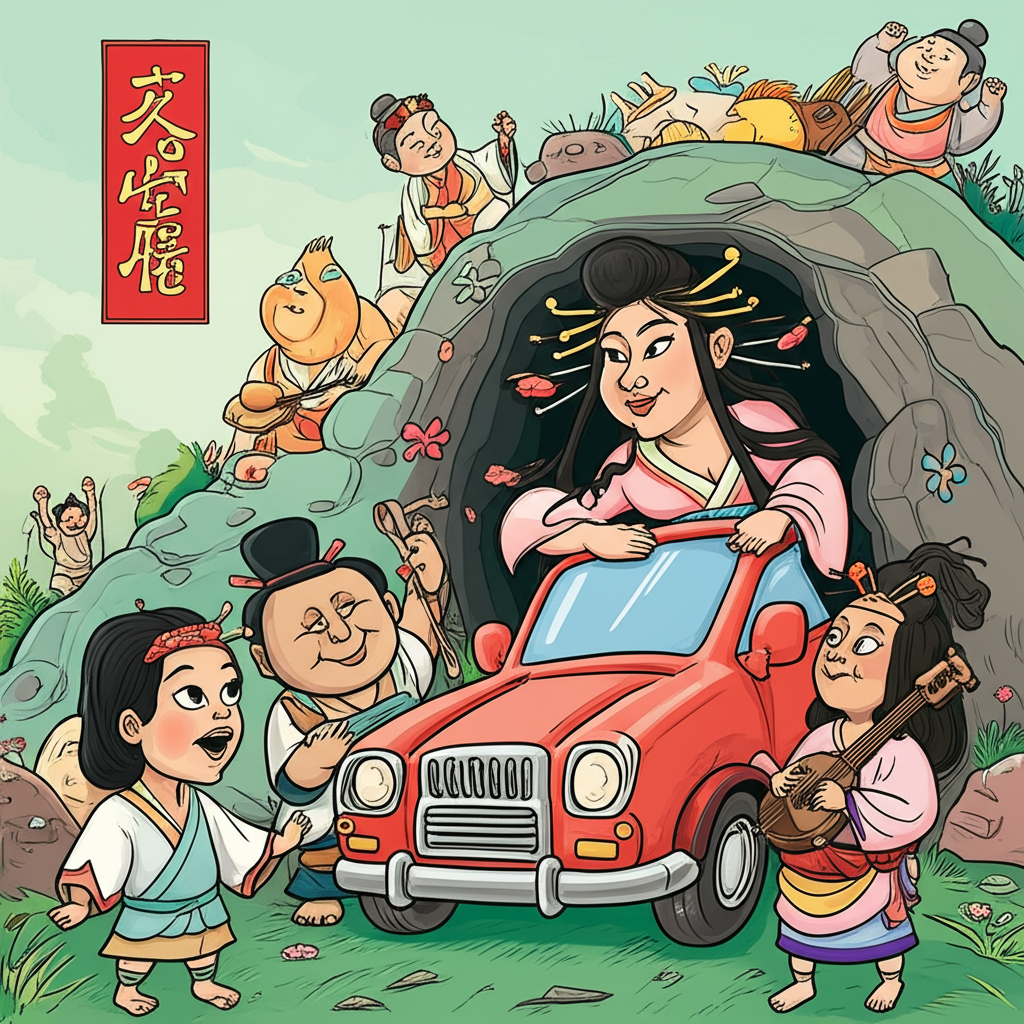
Amaterasu’s Cave: The Songs that Called Back the Sun
In the vast tapestry of world mythology, few stories capture the profound human relationship with nature as vividly as those from ancient Japan. Long before recorded history was meticulously kept, the people of the Japanese archipelago told tales to explain the world around them—the changing of the seasons, the fury of a storm, and the life-giving warmth of the sun. Among the most significant of these is the legend of Amaterasu Omikami and her retreat into the Heavenly Rock Cave. This is not a chronicle of historical events but a foundational cultural narrative, a song from the mythological realm of Takama-ga-hara, the High Plain of Heaven, that sought to make sense of darkness and celebrate the inevitable return of light.
Origins and Cultural Background
This story finds its roots in Shinto, the indigenous spiritual tradition of Japan. Its earliest written forms appear in the 8th-century texts, the Kojiki ("Record of Ancient Matters") and the Nihon Shoki ("Chronicles of Japan"). These texts were compiled during a time when Japan was consolidating its imperial identity, and they served to weave together a national origin story from a diverse collection of oral traditions.
The society that shared these tales was deeply agrarian and animistic. The world was not an inanimate collection of resources but a vibrant, living entity filled with countless kami—spirits or deities that inhabited everything from mountains and rivers to trees and wind. In this worldview, natural phenomena were the direct actions of these kami. A bountiful harvest was a blessing, a typhoon was a sign of anger, and the sun was the most vital force of all. The story of Amaterasu’s withdrawal was therefore more than just a fable; it was a powerful explanation for the terrifying possibility of a world without sunlight, whether through a solar eclipse or the bleakness of a harsh winter.
The Figures of the High Plain
At the heart of this narrative are several key figures, each representing fundamental forces of nature and society. They are not beings to be worshipped but symbolic personifications of the world as the ancient Japanese people understood it.
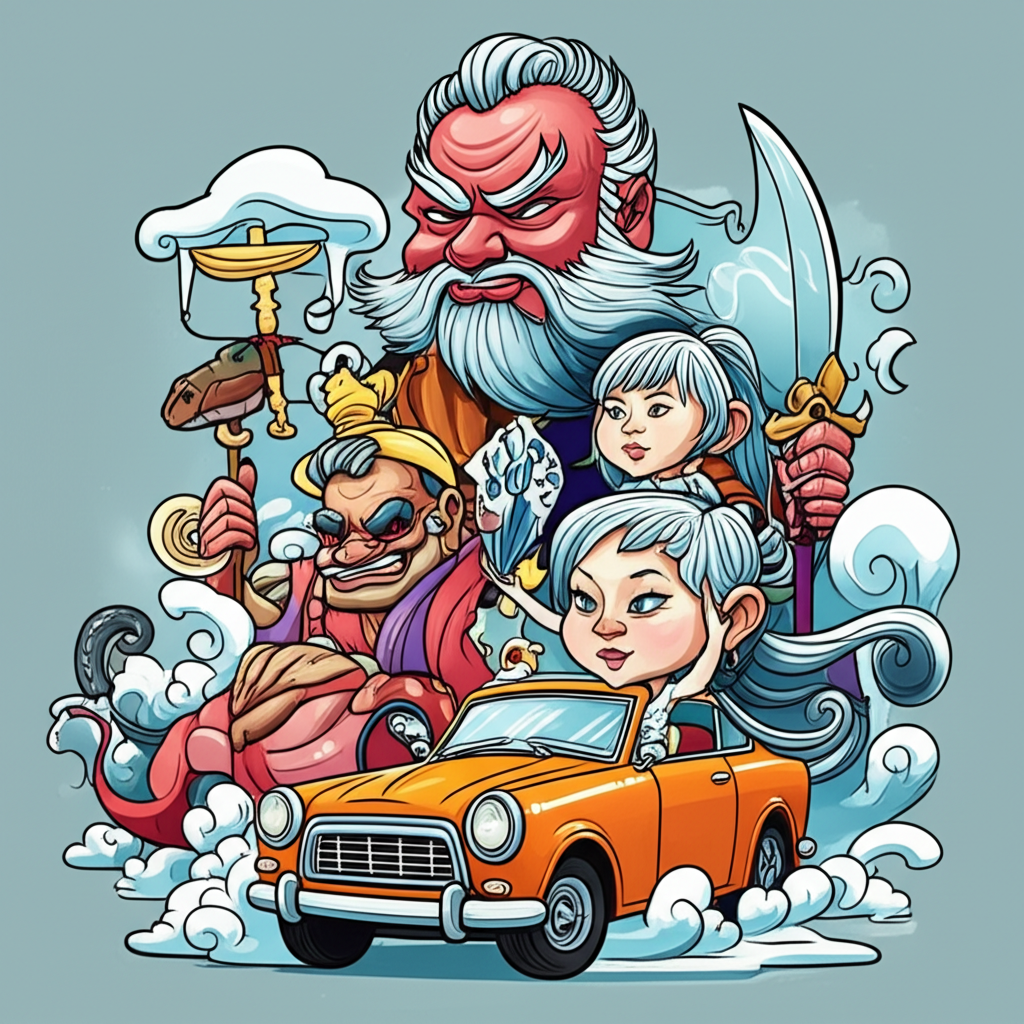
- Amaterasu Omikami: The central figure of the story, her name translates to "the great august kami who shines from heaven." She is the symbolic representation of the sun, order, purity, and life itself. In the myths, she is often depicted weaving sacred garments in her hall, an act that symbolizes the creation of cosmic order and civilization.
- Susanoo-no-Mikoto: Amaterasu’s younger brother, Susanoo is a complex and volatile figure. He represents the untamed, chaotic forces of nature—the violent storm, the raging sea, and the unpredictable aspects of the world. His actions, while destructive, are not purely evil; they are the raw, untempered energy that must be balanced for the world to function.
- Ame-no-Uzume-no-Mikoto: Often called the kami of dawn, mirth, and revelry. She embodies the power of joy, laughter, and community. Her role in the story highlights the ancient belief that celebration and artistic expression possess the power to overcome despair and darkness.
The Narrative: A World Plunged into Darkness
The story begins in Takama-ga-hara, the celestial home of the kami. Susanoo, having been banished by his father for his relentless rampages, decided to bid farewell to his sister, Amaterasu. His arrival was not peaceful. With a thunderous roar, he shook the mountains and rivers, his presence a premonition of the chaos to come.
Though initially wary, Amaterasu was convinced of his sincerity after a ritual contest. However, Susanoo’s wild nature could not be contained. In a fit of jealous rage against his sister’s orderly domain, he committed a series of terrible transgressions. He destroyed the neat divisions of her sacred rice paddies, filled in irrigation ditches, and defiled her palace.
Amaterasu, patient and forgiving, initially excused his behavior as drunken recklessness. But Susanoo’s final act was unforgivable. As Amaterasu and her attendants were weaving in their sacred hall, he tore a hole in the roof and hurled the flayed carcass of a heavenly horse into the room. In the ensuing panic and horror, one of Amaterasu’s beloved attendants was accidentally killed by a weaving shuttle.
Overcome with grief, shame, and fear at her brother’s monstrous behavior, the sun personified could bear it no longer. She fled and sealed herself inside the Heavenly Rock Cave, the Ame-no-Iwato. Immediately, a profound darkness fell upon both the heavens and the earth. The world grew cold. Crops withered, evil spirits emerged from the shadows, and the joyous sounds of life were replaced by a cacophony of wails and laments. The order Amaterasu had so carefully woven was unraveling into chaos.
Desperate, the eight million kami of the celestial plain gathered by the tranquil river of heaven to devise a plan. It was Omoikane, the kami of wisdom and ingenuity, who conceived of a solution. It would not be a plan of force, but one of artifice, curiosity, and celebration.
Following Omoikane’s instructions, the kami set the stage. They gathered the long-crowing roosters whose calls were thought to herald the dawn. They forged a magnificent bronze mirror, the Yata no Kagami, and crafted a string of comma-shaped jewels, the Yasakani no Magatama. These were hung from the branches of a sacred sakaki tree placed before the cave entrance.
With everything prepared, the performance began. Ame-no-Uzume stepped forward, overturned a wooden tub, and began to dance upon it. Her feet stomped out a rhythm that echoed through the silent darkness. Her dance was wild, comical, and unrestrained. She disrobed, her movements so full of joyous abandon that the assembled kami erupted into a thunderous, earth-shaking laughter.
Inside the cave, Amaterasu heard the commotion. Puzzled, she slid the great stone door open just a crack. "I have hidden myself away, and the world is plunged in darkness," she called out. "Why is Ame-no-Uzume dancing, and why do all the kami laugh?"
Ame-no-Uzume replied with a clever ruse: "We rejoice because there is a kami more illustrious and beautiful than you!"
Intrigued, Amaterasu peered out further. At that moment, another kami held up the magnificent mirror. Seeing her own brilliant reflection for the first time, she was captivated. As she stepped forward, drawn by her own light, the mighty kami Ame-no-Tajikarao, who had been hiding beside the entrance, grabbed her hand and pulled her out of the cave. Instantly, another kami stretched a sacred rope of rice straw, a shimenawa, across the entrance to prevent her from ever retreating again.
Light, warmth, and order flooded back into the universe. The world was saved not by a great battle, but by wisdom, community, and the irresistible power of laughter.
Symbolism and Meaning
For the ancient people who told this story, it was rich with meaning. On the most direct level, it served as a mythological explanation for a solar eclipse—a terrifying event where the sun inexplicably vanishes, only to be "lured back out." It also reflects the cycle of the seasons, with Amaterasu’s retreat symbolizing the death and darkness of winter, and her return representing the life-affirming rebirth of spring.
The story also carries deep social symbolism. It underscores the idea that harmony is essential for survival. The combined efforts of all the kami—the wisdom of Omoikane, the craft of the metalsmiths, the strength of Tajikarao, and the artistry of Uzume—were needed to restore balance. It suggests that even in the darkest of times, community, ingenuity, and joy are the keys to bringing back the light.
Modern Perspective
Today, the tale of Amaterasu’s cave remains one of the most important and influential stories in Japanese culture. It is not viewed as literal history but as a foundational myth that informs national identity and artistic expression.
The three sacred items used to lure her from the cave—the mirror, the jewel, and the sword Kusanagi-no-Tsurugi (which Susanoo later discovers in a separate myth)—became the three Imperial Regalia of Japan, symbols of the emperor’s legitimacy.
In modern pop culture, the story is a recurring wellspring of inspiration. Amaterasu appears as the protagonist in the acclaimed video game Ōkami, where she takes the form of a white wolf tasked with restoring beauty to a cursed land. The myth’s characters and themes are frequently referenced in countless anime, manga, and films, demonstrating its enduring power to capture the imagination. Academically, the story is studied for its insights into ancient agricultural society, its portrayal of gender dynamics among the kami, and its role in the political narrative of early Japan.
Conclusion
The story of Amaterasu’s retreat into the Heavenly Rock Cave is a timeless piece of cultural heritage. It is a product of human imagination, a narrative crafted by an ancient people to understand the fundamental forces that governed their lives. It is a tale that reminds us that darkness is temporary and that light can be coaxed back into the world through collective effort and celebration.
As we reflect on such powerful cultural narratives, it is important to remember their context. As Muslims, we recognize that only Allah is the true Creator and Sustainer of the universe, the sole source of all light and life. The myths and legends of ancient cultures are not statements of theological truth, but they are a fascinating window into the human past. They reveal a universal, shared desire to find meaning in the cosmos, to explain the unknown, and to tell stories that bind communities together, celebrating the enduring hope that even after the longest night, the dawn will always return.