fufufafa
The tapestry of human culture is woven with threads of myth and legend, stories passed down through generations, offering glimpses into the minds and beliefs of our ancestors. Among these ancient narratives, from the rich and diverse folklore of India, emerges the tale of the Rakshasa and the enigmatic River of Souls. These are not accounts of historical events or divine pronouncements, but rather imaginative creations of ancient peoples, attempts to understand the mysteries of life, death, and the forces they perceived to be at play in the world.
Whispers from a Bygone Era: Origins and Cultural Context
The stories of Rakshasas and the cosmic rivers are deeply rooted in the ancient Indian subcontinent, a land where civilization has flourished for millennia. This mythology blossomed during periods where the understanding of the natural world was often intertwined with the spiritual. Societies were largely agrarian, deeply connected to the cycles of nature – the rising and setting sun, the ebb and flow of rivers, the passage of seasons, and the inevitability of death. In such a context, the world was often viewed as a dynamic interplay of benevolent and malevolent forces, where the unseen realms held as much sway as the tangible.
Life was often precarious, subject to the whims of nature and the uncertainties of existence. Death was a profound mystery, a transition that inspired both fear and contemplation. It was within this environment of deep reverence for the natural world and a profound engagement with the existential questions of life and death that these elaborate mythological narratives took shape. They served as a framework for understanding the cosmos, the human condition, and the forces that governed both.
The Rakshasa: A Shadow of the Unseen
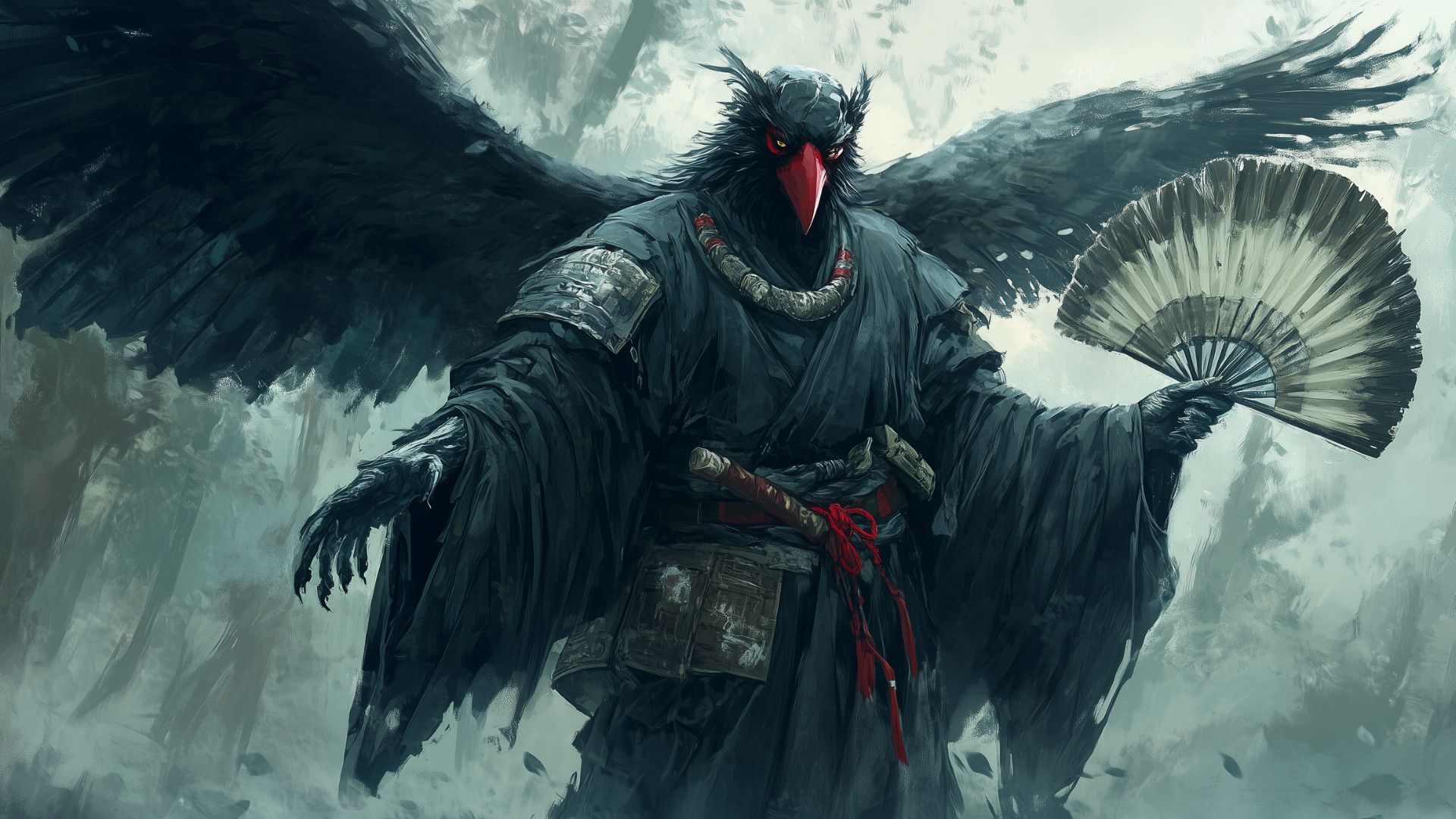
The Rakshasa, a prominent figure in Hindu mythology, is not a singular entity but rather a class of beings often depicted as powerful, malevolent, and sometimes shape-shifting creatures. They are typically portrayed as having formidable physical strength, sharp fangs, and a fearsome appearance, often with dark skin and wild hair. Symbolically, the Rakshasa represents primal forces, untamed energies, and the darker aspects of existence. They embody chaos, greed, lust, and destruction, acting as antagonists in many narratives, testing the resolve and virtue of heroes and gods alike. They are the embodiment of the primal fears that lurked in the shadows of the ancient world – the fear of the unknown, of destruction, and of the disruption of cosmic order. Their presence often signifies a challenge to righteousness and the established order, a force that must be confronted and overcome.
The River of Souls: A Journey Beyond Life
The River of Souls, while not a singular, universally defined entity across all Indian mythologies, often appears in narratives as a liminal space, a conduit between the realm of the living and the afterlife. It can be envisioned as a vast, flowing entity, carrying the spirits of the departed on their final journey. Sometimes depicted as the River Vaitarani, it is a formidable obstacle, fraught with peril and guarded by fearsome beings, including Rakshasas. This river symbolizes the transition, the purification, and the judgment that the soul undergoes after death. It represents the irreversible flow of time and the inevitable passage from one state of being to another. The journey across it is often depicted as arduous, requiring merit earned in life or the intervention of divine grace.
The Narrative of the Rakshasa and the River of Souls
Imagine, if you will, a time long past, when the veil between the mortal world and the unseen realms was thin. The air hummed with ancient energies, and the whispers of the departed echoed in the rustling leaves. In this world, the River of Souls flowed, a dark, swirling current that carried the essence of all who had lived and died. Its waters were not merely water, but a liquid tapestry of memories, emotions, and the lingering echoes of life.
On the banks of this formidable river, where the mist hung heavy and the air was thick with the scent of decay and forgotten dreams, lurked the Rakshasa. This particular Rakshasa was a being of immense power, his form shifting like shadows in the twilight. His eyes, like twin embers, burned with an insatiable hunger, not for flesh, but for the very essence of the souls that dared to cross his domain. He was a guardian of sorts, but a cruel and selfish one, demanding a toll from every spirit that sought passage.
The souls, weakened and disoriented by their transition, would arrive at the river’s edge, their forms ethereal and trembling. They carried with them the weight of their earthly lives – the joys, the sorrows, the regrets, and the triumphs. But here, at the threshold of the afterlife, their earthly possessions and earthly identities held no meaning. What mattered was the purity of their intent, the merit they had accumulated, or the strength of their spirit.
The Rakshasa would rise from the murky depths, his roar a chilling symphony of despair. He would demand a sacrifice, a fragment of their most cherished memory, a sliver of their deepest love, or a shard of their most profound regret. For those who resisted, or who had little to offer, the Rakshasa would drag them into the churning waters, their cries lost in the relentless flow of the River of Souls.
There were tales, however, of brave souls, those who had lived lives of extraordinary virtue and compassion. They would approach the river not with fear, but with a quiet resolve. They would offer the Rakshasa a memory of selfless kindness, a testament to their unwavering love for humanity, or a profound understanding of the ephemeral nature of life. Sometimes, these offerings were so pure, so potent, that they would momentarily blind the Rakshasa, or even appease his insatiable hunger. In such instances, the river would carry them swiftly and safely across.
The Rakshasa, in his primal existence, was a constant reminder of the challenges that lay beyond the mortal coil. He represented the trials that tested the soul’s readiness for the next stage, the forces that sought to ensnare the unwary and the impure. The River of Souls, in its ceaseless flow, was the ultimate equalizer, carrying all beings towards an unknown destiny, where their actions in life would ultimately determine their fate.
Symbolism and Meaning: Mirrors to the Human Condition
To the ancient peoples who shared these stories, the Rakshasa and the River of Souls were not mere fantasies. They were potent symbols that reflected their understanding of the world and their place within it. The Rakshasa, with his predatory nature, could represent the destructive forces of nature – the famines, the plagues, the unpredictable violence – that threatened their existence. He also embodied the internal struggles of humanity: greed, anger, and the temptations that pulled individuals away from righteous paths. He was a personification of the obstacles one might face on the spiritual journey, the internal and external challenges that required courage and integrity to overcome.
The River of Souls, on the other hand, was a powerful metaphor for the process of death and the afterlife. It symbolized the transition, the shedding of the earthly form, and the journey towards a final reckoning or a new existence. The arduous passage across the river could represent the moral and spiritual purification required to attain a favorable afterlife, highlighting the importance of living a virtuous life. It spoke to the universal human experience of facing the unknown after death, a mystery that these stories attempted to illuminate.
Echoes in the Modern World: Literature, Games, and Cultural Studies
The enduring power of these ancient myths is evident in their continued presence in contemporary culture. The Rakshasa, in its various forms, continues to captivate imaginations in literature, film, and video games, often reimagined as formidable villains or complex anti-heroes. These modern interpretations explore themes of good versus evil, the nature of power, and the allure of the dark.
The concept of a River of Souls or a liminal crossing into the afterlife is a recurring motif in fantasy literature and mythology, resonating with the universal human fascination with what lies beyond death. Cultural studies scholars and mythologists continue to analyze these narratives, seeking to understand the underlying human psychologies, societal structures, and philosophical inquiries that gave rise to them. These stories provide invaluable insights into the cultural heritage and worldview of ancient India.
A Legacy of Stories: Reflection and Understanding
The tale of the Rakshasa and the River of Souls is a testament to the rich imaginative power of ancient peoples. It is a cultural narrative, a story told to explain the inexplicable, to entertain, and to impart moral lessons. As Muslims, we recognize that only Allah (God) is the true Creator and Sustainer of all existence, the ultimate power and authority over the seen and unseen realms. These ancient stories, while fascinating and culturally significant, are products of human imagination and do not hold divine truth.
However, by studying these myths, we gain a deeper appreciation for the diversity of human thought and the enduring tradition of storytelling. They allow us to connect with our shared human heritage, to understand the universal questions that have occupied minds across centuries, and to marvel at the creative ways in which ancient cultures sought to make sense of their world. The echoes of the Rakshasa and the River of Souls serve as a reminder of the enduring power of myth to shape our understanding, even as we hold firm to our core beliefs.