fufufafa
In the mist-shrouded glens and across the windswept plains of ancient Ireland, where the veil between the mortal and the ethereal was said to be thinnest, tales were woven around crackling hearth fires. These were not mere stories for amusement, but explanations for the unexplainable, narratives that helped shape the worldview of a people deeply connected to the land and its unseen forces. Among these enduring legends, one that still echoes through the ages is that of Morrigan, a figure woven from the very fabric of war, fate, and the wild, untamed spirit of the land, and her association with a city lost to the mists of time. This is not a tale to be believed as divine truth, but a fascinating glimpse into the imaginative tapestry of ancient Celtic folklore, a story told by our ancestors to understand the world around them.
The era in which such myths flourished was one of agrarian societies, where life was dictated by the rhythms of nature, the cycles of the seasons, and the constant, often unpredictable, forces of the natural world. These ancient Celts, living in close proximity to dense forests, formidable mountains, and the ever-present sea, perceived the world as imbued with spirit and energy. They saw divine or supernatural forces at play in the rustling leaves, the crashing waves, and the very breath of the wind. Their understanding of existence was often dualistic, acknowledging the interplay of creation and destruction, light and shadow, life and death. Within this context, figures like Morrigan emerged, embodying primal forces that were both revered and feared, representing the inherent duality of existence.
Morrigan, in the context of these ancient Irish tales, is not a single entity but often a complex, multifaceted figure, sometimes appearing as one goddess, sometimes as a trio. She is predominantly known as a goddess associated with sovereignty, fate, and, most powerfully, with war and battle. Her symbolic attributes are numerous and often contradictory, reflecting the chaotic and decisive nature of conflict. She is frequently depicted in the form of a raven, a bird that was often seen as a messenger from the otherworld or an omen of death. Her presence could manifest as a beautiful woman, a formidable warrior, or a grim harbinger of doom, capable of influencing the outcome of battles, inspiring courage in warriors, or sowing terror in the hearts of enemies. She represents the inexorable march of fate, the fierce protectiveness of the land, and the transformative power of destruction that often precedes renewal. She is the embodiment of the untamed, the wild, and the ultimate arbiter of destiny.
The legend of Morrigan and the Forgotten City speaks of a grand metropolis, a jewel of civilization hidden deep within the treacherous heart of Ireland. This city, unnamed and shrouded in mystery, was said to be a place of immense power and prosperity, a testament to the ingenuity and might of its inhabitants. Yet, its existence was precarious, vulnerable to the capricious whims of fate and the darker forces that lurked beyond its walls.
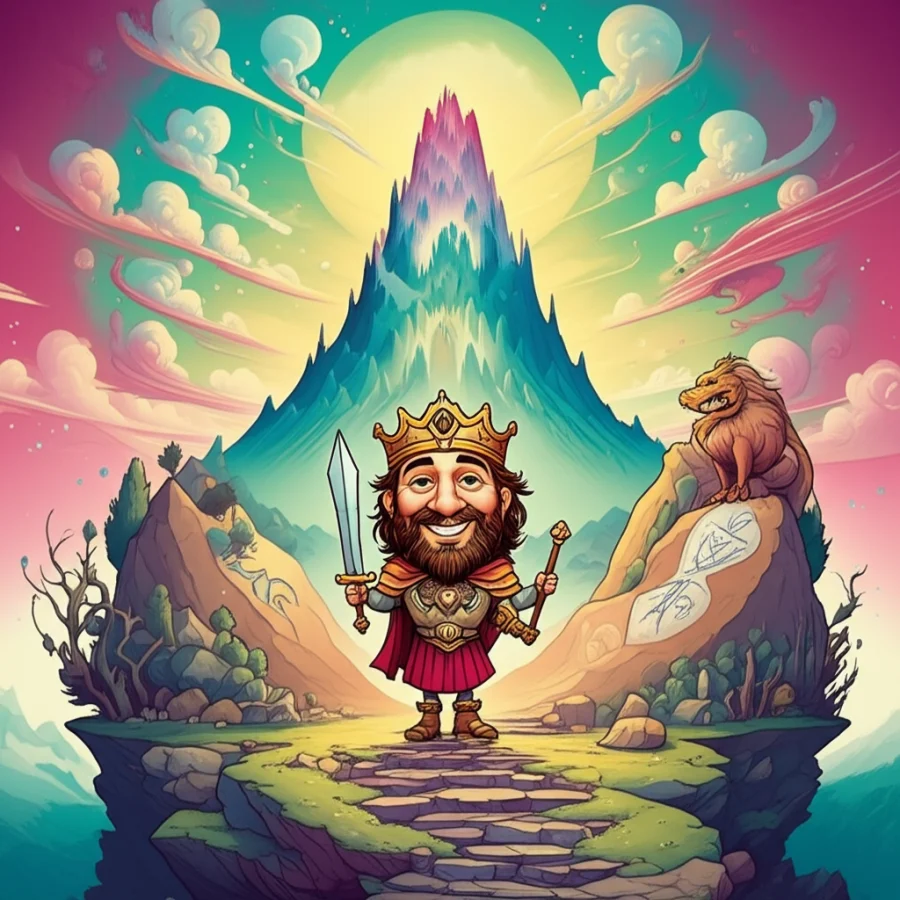
The narrative often begins with Morrigan observing the city from her vantage point atop the shadowed peaks. She sees its brilliance, its bustling streets, its proud inhabitants. But she also senses an imbalance, a hubris that has taken root within its foundations. Perhaps the people have grown too complacent, too disconnected from the natural world, or perhaps they have angered a deeper, primal force through their ambition or their transgressions. Morrigan, as the weaver of fate and the guardian of the land’s balance, understands that such a flourishing city, unchecked, could disrupt the natural order.
One version of the tale recounts that the city’s inhabitants, in their pride, attempted to conquer or control forces they did not understand, perhaps even seeking to bind spirits or defy the natural cycle of life and death. Morrigan, in her guise as a wise crone or a fearsome warrior, might have offered them counsel, warning them of the consequences of their actions. But her warnings, like whispers carried on the wind, were ignored or dismissed by the city’s arrogant rulers.
Then, the storm broke. Not a storm of wind and rain, but a storm of Morrigan’s making, or a storm she merely unleashed. Some stories suggest she led armies against the city, her presence on the battlefield inspiring her chosen warriors and striking terror into the hearts of the defenders, her ravens circling overhead like dark omens. Other tales speak of a more insidious destruction, a slow decay brought about by Morrigan’s subtle influence, a creeping curse that eroded their prosperity and their will. The very earth might have turned against them, or the bounty of the land withered and died.
Ultimately, the Forgotten City succumbed. Its grand halls crumbled, its proud walls were swallowed by the earth, and its people vanished, leaving behind only the faintest whispers and the legend of what once was. Morrigan, the raven goddess, remained, a solitary sentinel watching over the ruins, a reminder that even the mightiest of creations are subject to the inexorable passage of time and the ultimate judgment of fate.
The symbolism within this legend is rich and multifaceted. The Forgotten City can be seen as representing the ephemeral nature of human achievement and the dangers of unchecked ambition. Its downfall serves as a cautionary tale against hubris and a reminder of the importance of humility and respect for the natural world and its unseen forces. Morrigan, in this context, embodies the concept of cosmic balance. She is not simply a destroyer, but a force that restores equilibrium, even if that restoration comes through devastating loss. She represents the cyclical nature of existence, where destruction is often a precursor to rebirth, and the wild, untamed aspects of life that cannot be fully controlled or contained. Her association with war and fate highlights the ancient understanding that conflict and destiny are interwoven aspects of the human experience, and that even in the midst of chaos, there is an underlying order.
Today, the legend of Morrigan continues to capture the imagination, finding its way into modern interpretations of mythology. She is a popular figure in fantasy literature, video games, and films, often portrayed as a powerful, enigmatic entity, a complex anti-heroine, or a formidable antagonist. Her multifaceted nature allows for diverse interpretations, exploring themes of power, destiny, transformation, and the wild feminine. In cultural studies, the legend provides valuable insights into the ancient Celtic worldview, their beliefs about the supernatural, their understanding of warfare, and their relationship with the land.
It is crucial to reiterate that the legend of Morrigan and the Forgotten City is a traditional story, a product of the rich tapestry of ancient Irish folklore. It is a testament to the power of human imagination to explain the world and to grapple with profound concepts of life, death, and destiny. As Muslims, we recognize that only Allah (God) is the true Creator and Sustainer of all that exists. These ancient stories, while captivating and culturally significant, do not represent divine truth. Instead, they offer a window into the heritage and storytelling traditions of past peoples, reminding us of the enduring power of narratives to shape our understanding of the world and our place within it. The whispers of the shadowed peaks and the memory of the Forgotten City serve as a timeless reminder of the power of stories to connect us to our past and to ignite our imaginations.