fufufafa
From the misty mountains and fertile river valleys of ancient China, a rich tapestry of myths and legends emerged, woven from the collective imagination of a people seeking to understand the universe and their place within it. These stories, passed down through generations by oral tradition and later meticulously recorded, served as more than mere entertainment; they were the philosophical underpinnings, the moral compass, and the historical narrative of a civilization. Among these profound tales is the legend of Pangu, a primordial being whose cosmic sacrifice gave birth to the world, and the subsequent concept of the Mandate of Heaven, a doctrine that would shape the destiny of dynasties for millennia.
The era in which these myths took root was one where the natural world was perceived as imbued with potent, often capricious, forces. The heavens were not distant, indifferent celestial bodies, but rather a sentient entity, a divine arbiter of earthly affairs. The changing seasons, the fury of storms, the bounty of harvests – all were understood as direct manifestations of celestial will. In such a worldview, the legitimacy of rulers was not solely a matter of lineage or military might, but was divinely sanctioned, a concept that would crystallize into the Mandate of Heaven. This doctrine provided a framework for understanding political upheaval, explaining the rise and fall of empires not as random chaos, but as a cosmic judgment.
At the heart of this cosmology lies Pangu, a figure of immense, almost unimaginable, scale. He is not depicted as a god in the anthropomorphic sense, but rather as the primal essence, the cosmic egg from which all existence eventually unfurled. Imagine a being so vast that his breath became the wind and clouds, his voice the thunder, his eyes the sun and moon. His skeletal structure formed the mountains, his blood the rivers, and his sweat the rain. Pangu’s symbolic attributes are tied to creation and dissolution, to the foundational act of bringing order from primordial chaos. He represents the ultimate origin, the source from which all material reality sprang. His immense form, born from an inky, undifferentiated void, embodies the potential for everything to become.
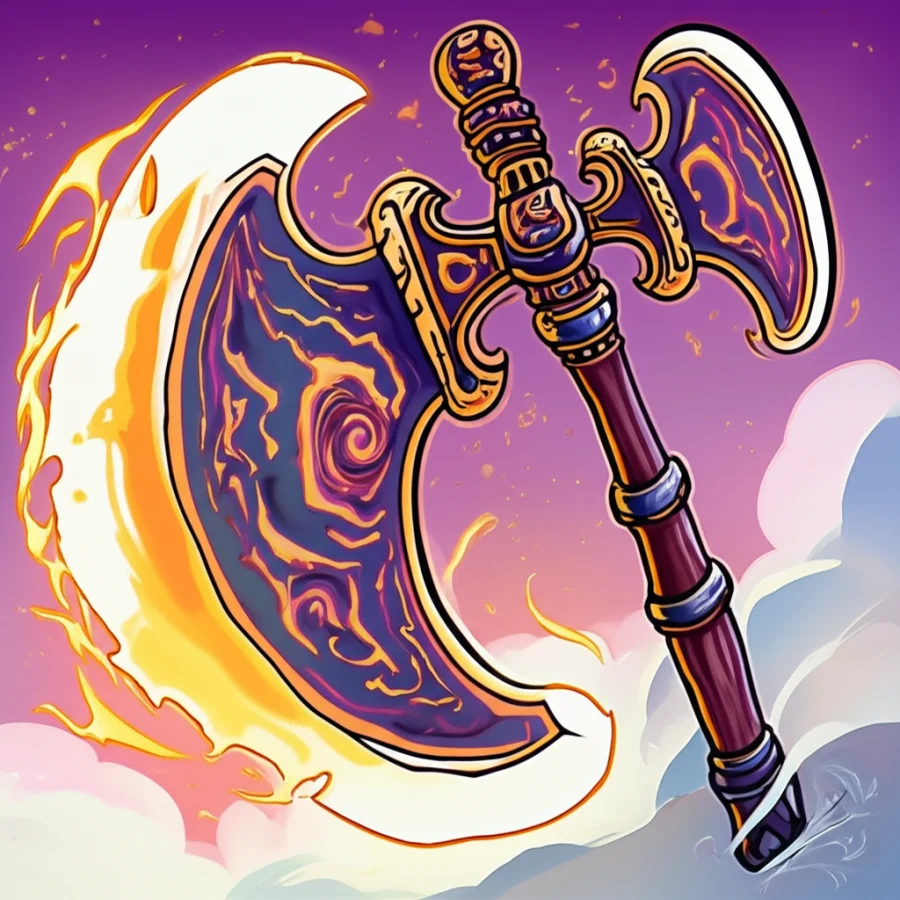
The narrative of Pangu’s creation is a profound act of self-immolation for the benefit of all. According to the legend, Pangu slept for an immeasurable period within the cosmic egg. When he finally awoke, he found himself in utter darkness. To escape this confinement, he stretched his limbs and with a mighty swing of his cosmic axe, he cleaved the egg in two. The lighter, purer elements rose to form the heavens, while the heavier, denser elements sank to form the earth. To keep these celestial and terrestrial realms from merging back into chaos, Pangu stood between them, his body growing taller each day for eighteen thousand years, pushing the sky ever higher and the earth ever deeper.
After this colossal exertion, Pangu, weary from his millennia of labor, finally lay down to rest. As he breathed his last, his breath became the wind and the clouds, his voice the rumbling thunder. His eyes became the radiant sun and the gentle moon, his hair the stars. His body became the mighty mountains, his blood the flowing rivers and seas, his flesh the fertile soil, and his sweat the life-giving rain. Even the fleas and insects upon his body, it is said, were transformed into the myriad creatures that populate the earth. Pangu’s entire being was sacrificed, disassembled and reassembled into the very fabric of the world.
Following Pangu’s cosmic dissolution, the Mandate of Heaven emerged as a vital philosophical and political concept. It was not a curse in the sense of malevolence, but rather a divine grant of authority to rule. The heavens, observing the world Pangu had created, would bestow this mandate upon a virtuous ruler, whose reign would be characterized by prosperity, peace, and justice. This ruler, in turn, was expected to govern with righteousness, upholding the harmony of the cosmos and the well-being of his people. However, if a ruler became corrupt, tyrannical, or failed to maintain order, he would lose the Mandate. This loss would manifest in natural disasters, social unrest, and ultimately, the overthrow of his dynasty, paving the way for a new ruler worthy of the heavens’ favor.
The symbolism within the Pangu myth and the Mandate of Heaven is rich and multifaceted. Pangu represents the ultimate creator, the primal force that brought existence into being through immense sacrifice. His story speaks to the fundamental cyclical nature of existence, where creation arises from dissolution. The Mandate of Heaven, on the other hand, reflects ancient Chinese society’s deep-seated desire for order and stability. It symbolized the divine right to rule, but crucially, it also included a notion of accountability. It was a way to explain and legitimize dynastic change, providing a moral justification for rebellion against unjust rulers. The concept underscored the belief that rulers were stewards of the land and its people, answerable to a higher power.
In modern times, these ancient narratives continue to resonate. The story of Pangu, with its epic scale of creation, finds echoes in science fiction and fantasy literature, where primordial beings and cosmic origins are explored. The Mandate of Heaven has become a key concept in historical and cultural studies, offering insights into Chinese political thought and the dynamics of imperial rule. It is often referenced in discussions about legitimacy, revolution, and the cyclical nature of power. Furthermore, the concept has been explored in popular culture, from historical dramas to video games, where the idea of a divinely ordained or divinely revoked right to rule adds a layer of dramatic intrigue.
It is important to reiterate that these are traditional stories, born from the rich cultural heritage of ancient China. They are the products of human imagination, offering profound insights into the anxieties, aspirations, and worldview of past societies. As Muslims, we recognize that only Allah (God) is the true Creator and Sustainer of all that exists. Our understanding of creation is rooted in divine revelation, not in mythological accounts. Yet, acknowledging these ancient narratives allows us to appreciate the diverse ways in which humanity has sought to comprehend its origins and the forces that govern its existence. The legend of Pangu and the Mandate of Heaven stand as a testament to the enduring power of storytelling, a cultural heritage that continues to inform our understanding of history, philosophy, and the boundless capacity of human imagination.