fufufafa
In the vast, shimmering expanse of the Pacific Ocean, where turquoise waters meet endless skies, lie islands steeped in a rich tapestry of oral traditions and ancient lore. From these sun-drenched shores, and from the deep currents that cradle them, emerges a fascinating narrative woven from the threads of nature, reverence, and the enduring human quest to understand the world. This is the story of the shark gods, echoes of Rongo, and the mythical homeland of Hawaiki – a testament to the imaginative spirit of the ancient peoples who navigated these waters and sought meaning in the powerful forces around them.
This narrative does not represent a factual account or a call to belief. Instead, it offers a window into the worldview of ancient Polynesian cultures, a time when the natural world was perceived as alive with spirit and interconnectedness. The stories passed down through generations, often recited around crackling fires under star-strewn skies, were vital tools for understanding their environment, their place within it, and the intricate relationships that governed their lives.
The cultural era in which these myths flourished was one of profound connection to the sea. For Polynesian peoples, the ocean was not merely a source of sustenance; it was a highway, a provider, and a powerful, untamed entity. Their societies were structured around a deep respect for the forces of nature, often personified in deities and ancestral spirits. The world was seen as a dynamic place, where the tangible and the spiritual intertwined, and where understanding the behaviour of the sea, its creatures, and its moods was paramount for survival and prosperity. Their cosmology was often cyclical, with creation, destruction, and rebirth playing significant roles, reflecting the rhythms of the tides and the seasons.
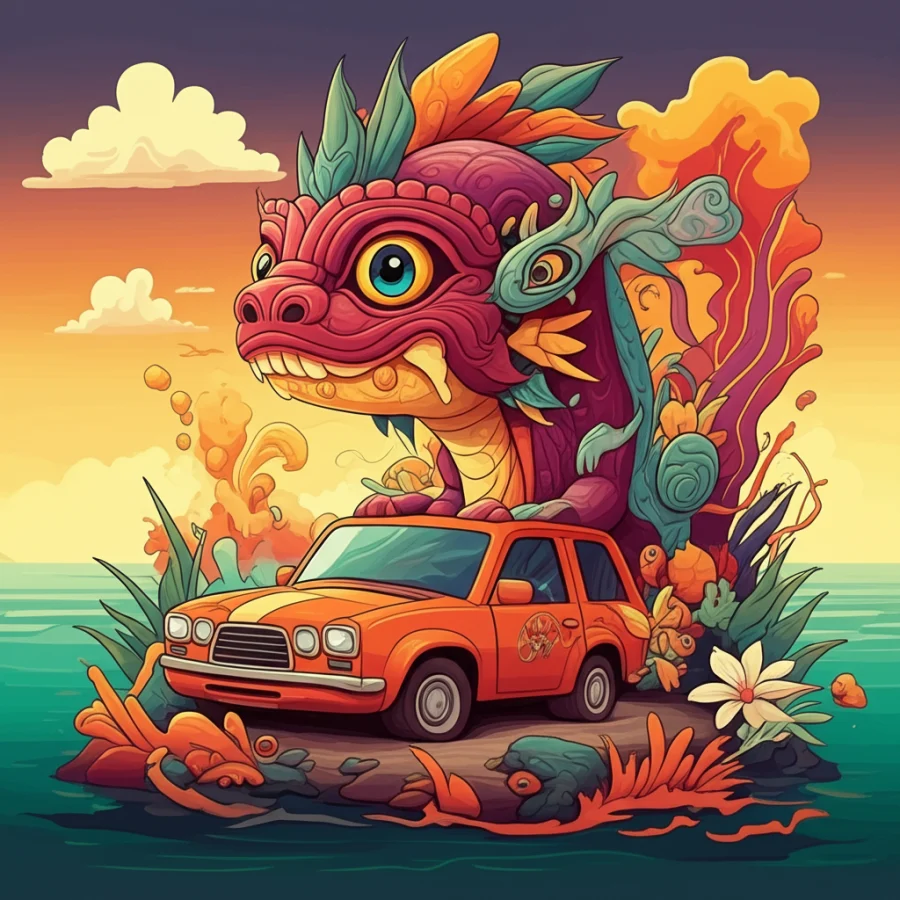
Among the most formidable inhabitants of this oceanic realm were the sharks. These sleek, powerful predators, moving with effortless grace through the water, inspired a complex mixture of awe and trepidation. In the eyes of the ancient peoples, certain sharks, particularly the larger species, were not simply animals but embodiments of immense power, ancestral beings, or even divine entities. These were the “shark gods,” figures that occupied a significant space in their mythology.
These shark deities were often depicted as possessing immense strength, primal ferocity, and an ancient wisdom. They were not necessarily portrayed as benevolent figures in the modern sense, but rather as forces of nature that commanded respect and adherence to certain protocols. Their symbolic attributes were tied to the very essence of the ocean: its depths, its currents, its ability to both give and take life. They represented the raw, untamed power of the sea, a power that could be both destructive and life-sustaining. Their presence was a constant reminder of the delicate balance of existence and the need for humans to act with humility and understanding in the face of such might.
The concept of Hawaiki, a legendary ancestral homeland, is a recurring theme in Polynesian mythology, though its precise location and nature vary across different island groups. It is often described as a place of origin, a spiritual realm from which their ancestors and deities first emerged. In some traditions, Hawaiki is a physical land, a paradise lost, while in others, it is a spiritual dimension, a realm of the ancestors and gods. It is from this primordial source that many of the great voyages of discovery are said to have begun, carrying with them the seeds of culture, knowledge, and the sacred stories of their lineage.
The narrative of the shark gods often intertwines with the journey from Hawaiki. Imagine, if you will, a time long ago, when the first canoes, expertly crafted and guided by seasoned navigators, set sail from the shores of Hawaiki. The ocean was their canvas, and the stars their compass. As they ventured into the vast unknown, they carried with them the stories of their gods, including the powerful shark deities.
These shark gods were not distant observers but active participants in the lives of the voyagers. In some tales, they were revered as guardians of the sea routes, guiding the canoes through treacherous waters or protecting them from storms. A swift, powerful shark swimming alongside a canoe might be interpreted as a sign of favour or a blessing. Conversely, an aggressive encounter with a shark could signify displeasure or a warning.
The ancient peoples understood that the ocean’s bounty was a gift, and that this gift was managed by powerful beings. The shark gods were seen as keepers of this order. They ensured that the fish populations remained healthy, that the currents flowed as they should, and that the balance of the marine ecosystem was maintained. Offerings and rituals were sometimes performed to appease these deities, seeking their favour for successful fishing expeditions or safe passage.
One might envision a scene where a chief, seeking wisdom or guidance, performs a ritual on the shore. He might chant ancient incantations, his voice carrying on the sea breeze, acknowledging the power of the shark gods and their connection to the ancestral waters. The rhythmic lapping of the waves would be the soundtrack to his plea, and perhaps, in the distance, a dark fin would break the surface, a silent, symbolic response. These stories were not merely tales; they were a framework for understanding the complex and often unpredictable relationship between humanity and the natural world.
The symbolism inherent in these myths is profound. The shark gods, with their primal strength and mastery of the ocean depths, represented the awe-inspiring power of nature itself. They embodied the untamed and the mysterious, forces that could not be controlled but must be understood and respected. Their association with Hawaiki, the ancestral homeland, also linked them to lineage, origin, and the continuity of life. They were a reminder that their existence was tied to a larger, ancient order, a legacy passed down through generations.
Furthermore, these stories likely served as a moral compass. The actions of the shark gods, whether perceived as benevolent or cautionary, provided lessons in behaviour. Respect for the ocean and its inhabitants, humility in the face of power, and the importance of maintaining balance were all likely embedded within these narratives. They taught the people to be mindful of their impact on the environment and to live in harmony with the natural world.
In the modern era, these ancient tales continue to resonate, albeit in different forms. The mythologies of Polynesia, including the stories of shark gods and Hawaiki, are explored in literature, academic studies, and cultural preservation efforts. They inspire artists, writers, and filmmakers, finding new life in contemporary interpretations. In the realm of video games, for instance, elements of Polynesian mythology, including powerful sea creatures and ancestral spirits, are often incorporated into fantastical worlds. Cultural studies delve into the anthropological significance of these narratives, offering insights into the beliefs, social structures, and worldview of these ancient societies.
In conclusion, the tales of the shark gods and the mythical land of Hawaiki are rich cultural narratives, born from the imagination and profound connection to the natural world of ancient Polynesian peoples. They are stories that speak of awe, respect, and the deep mysteries of the ocean. As Muslims, we understand that all creation originates from the singular, supreme Creator, Allah, who is the true Sustainer of the heavens and the earth. These ancient stories, however, offer us a valuable glimpse into the cultural heritage of humanity, highlighting the enduring power of storytelling, the human capacity for imagination, and the universal quest to find meaning in the world around us. They are echoes from the past, reminding us of the diverse ways in which people have sought to understand their place in the grand cosmic narrative.