fufufafa
The mists of time, much like the legendary fogs woven by its central figure, often obscure the precise origins of ancient myths. Yet, from the verdant lands and storm-lashed coasts of Ireland, the Isle of Man, and parts of Scotland, emerges a tapestry of tales featuring Manannán mac Lir, the Son of the Sea. This is a traditional story, a legend woven by ancient Celtic peoples, passed down through generations not as a historical account but as a vibrant narrative reflecting their understanding of the world, the sea, and the unseen forces they perceived to govern their lives. It is a cultural artifact, a testament to human imagination and the enduring power of storytelling, and it is presented here solely for cultural, historical, and educational understanding, recognizing it as a work of folklore and not a factual or divine account.
Origins and Cultural Background: Echoes from an Ancient World
To truly appreciate the legend of Manannán mac Lir, one must first step back into the cultural era and environment from which it sprang. This myth flourished among the pre-Christian Celtic societies, particularly in Iron Age and early medieval Ireland. These were communities deeply intertwined with their natural surroundings. The sea, in particular, was not merely a geographical feature but a living, breathing entity—a source of sustenance, a highway for trade, a formidable barrier, and a gateway to unknown realms.
The people of that time viewed the world through a lens vastly different from our own. Their cosmology was often animistic and polytheistic, where every tree, river, mountain, and especially the vast ocean, harbored spirits or deities. The boundary between the mundane and the magical was permeable, and the natural world was alive with powerful, often capricious, forces. For coastal dwellers, the sea dictated their fortunes, offering both immense bounty and terrifying destruction. It was in this context of profound respect, awe, and perhaps fear for the ocean’s immense power that figures like Manannán mac Lir took shape in their collective imagination. The myths provided explanations for the inexplicable, guidance for navigating life’s challenges, and a rich narrative framework for their oral traditions.
Manannán mac Lir: Master of the Otherworld and the Waves
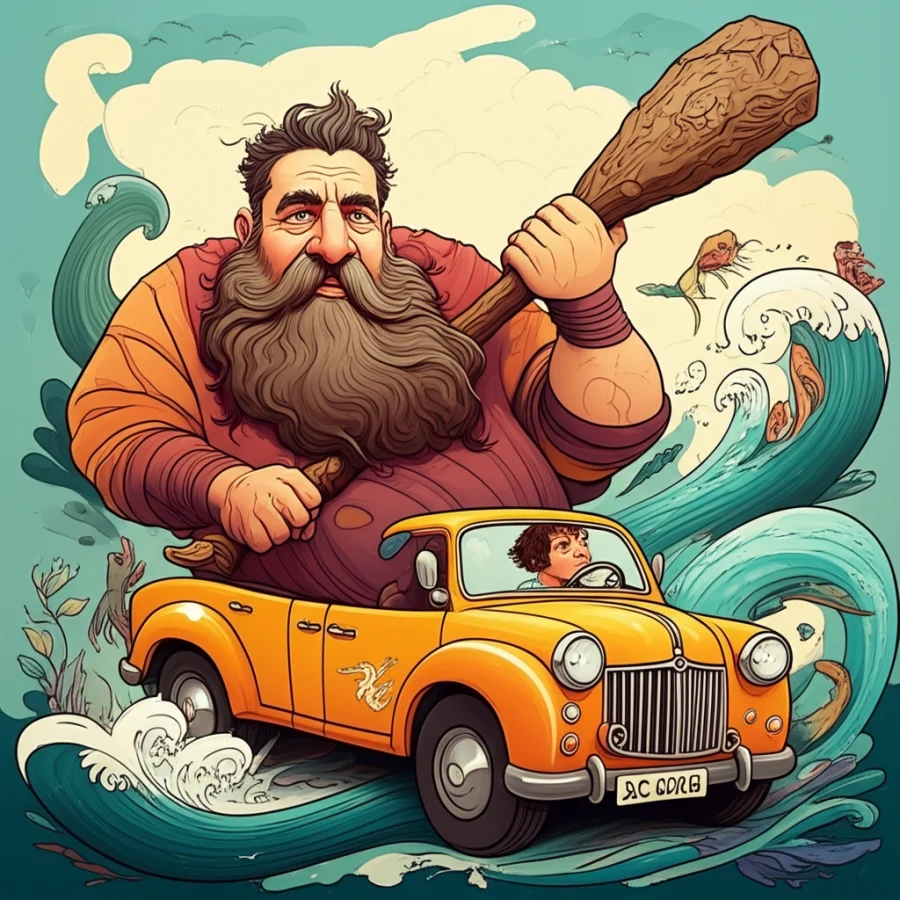
At the heart of these maritime narratives stands Manannán mac Lir, a revered and formidable figure. Described as the son of the sea-god Lir, Manannán himself embodies the very essence of the ocean. He is often depicted as a majestic, wise, and sometimes trickster-like deity, a master of illusions and shape-shifting. His appearance could range from a handsome young warrior to a wizened elder, or even a beast of the sea, depending on his whim and the needs of the narrative.
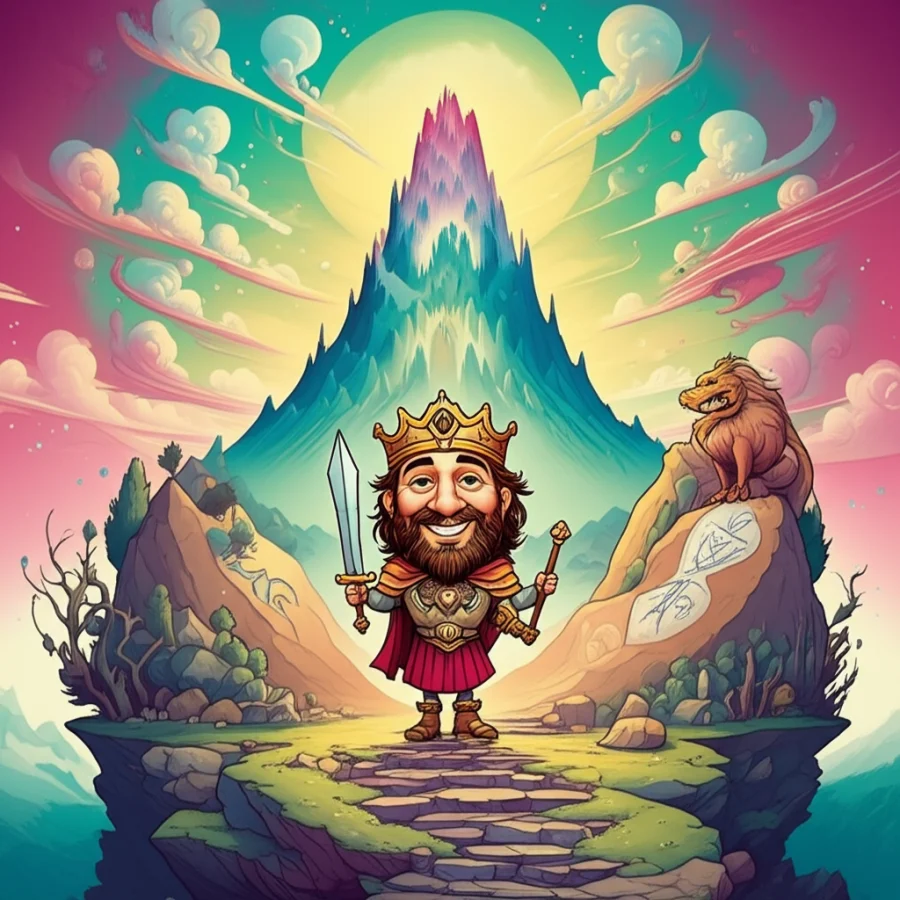
Symbolically, Manannán is the embodiment of the sea’s multifaceted nature: its boundless generosity, its terrifying storms, its deceptive calm, and its profound mysteries. He is credited with owning a magical boat, Scuabtuinne ("Wave-Sweeper"), which required no sails or oars, moving wherever its master willed. He possessed a cloak of invisibility that could envelop entire islands in mist, and a fearsome sword, Fragarach ("The Answerer"), capable of cutting through any armor. More profoundly, Manannán was also seen as the guardian and ferryman to Tír na nÓg, the Land of Youth, a fabled Otherworld where time stood still and joy reigned eternal. These symbolic attributes were not meant to promote belief in a literal being, but rather to represent the vast, unpredictable power of the ocean and the human yearning for immortality and escape from worldly woes, as understood by the ancient Celts.
The Sacred Sea: A Journey into Manannán’s Realm
The ancient narratives recount many tales of Manannán, each painting a picture of his immense power and wisdom. It is said that Manannán held sway over the waters surrounding Ireland, his domain stretching from the visible shores to the deepest, unseen abysses. His home was often described as Emhain Ablach, a mystical island realm brimming with apple trees and eternal youth, or sometimes simply the Isle of Man, which bears his name to this day.
One recurring theme in the lore is Manannán’s role as a benevolent yet demanding host and protector. The tales speak of heroes and mortals who, by chance or design, stumbled upon his magical realm. Sometimes, they were brought by the sheer force of the waves, finding themselves on a shimmering shore where the air was sweet and time had no meaning. Others sought him out, desiring his wisdom, his healing powers, or passage to the Otherworld.
Manannán, ever the master of illusion, would test those who sought him. He might appear as a humble fisherman, offering cryptic advice, or as a fearsome warrior, challenging their courage. His magical mists, which could descend without warning, were not merely a natural phenomenon but an extension of his will, used to conceal his island, to confuse intruders, or to guide lost souls to safety. It is recounted that he once used his magic to provide the Tuatha Dé Danann, the divine race of ancient Ireland, with feasts that never diminished and kept them hidden from their enemies. He was also a renowned healer, capable of mending the most grievous wounds with his mystical knowledge of herbs and the sea’s restorative powers.
His interactions with mortals often involved gifts—a magical horse that could traverse land and sea, a cup that revealed truth, or simply a boon of wisdom. Yet, these gifts often came with responsibilities or subtle lessons about the ephemeral nature of life and the enduring power of the sea. For the ancient Celts, Manannán represented the profound respect due to the ocean—a force that could nurture life with its bounty of fish and seaweed, or claim it without mercy in a sudden storm. His narratives provided a framework for understanding the capricious nature of the waves, the mysteries of distant horizons, and the profound connection between the land and the sea that shaped their very existence.
Symbolism and Meaning: Ancient Wisdom in Myth
To the ancient people who shared these stories, Manannán mac Lir and the sacred sea represented a complex web of meanings. He was, first and foremost, the personification of the sea itself – its immense power, its unpredictability, its life-giving and life-taking aspects. His control over mists symbolized the mysterious, the hidden, and the liminal spaces between worlds, mirroring the fog that often blankets coastal regions, blurring the line between land and sea.
Manannán also embodied profound wisdom, a deep understanding of the cosmos, and the secrets of magic and healing. His role as guardian of the Otherworld reflected the ancient Celtic belief in an afterlife or a parallel dimension—a place of eternal youth and happiness, yet one accessible only through trials or divine intervention. He represented the journey beyond the known, the passage from mortality to immortality. Moreover, his sometimes trickster nature, his ability to deceive with illusions, may have served as a cautionary tale about appearances and the deceptive nature of the world, or even the sea itself. In essence, Manannán was a multifaceted symbol of humanity’s relationship with the natural world, the unknown, and the yearning for wisdom and eternity.
Modern Perspective: Echoes in Contemporary Culture
While the ancient beliefs that gave rise to Manannán mac Lir have long since faded, his legend continues to resonate in the modern world. Today, he is no longer revered as a deity but celebrated as a compelling figure of cultural heritage. His tales are studied in academic circles, forming a vital part of Celtic studies, folklore, and mythological research, offering insights into the worldview of ancient peoples.
Manannán mac Lir also makes frequent appearances in contemporary popular culture. He inspires characters in fantasy literature, where authors draw upon his magical attributes and connection to the Otherworld to craft new narratives. He can be found in video games, often as a powerful mystical entity or a source of quests, and his name and imagery occasionally surface in film and television productions seeking to evoke the rich tapestry of Celtic mythology. In these contexts, Manannán serves not as an object of faith, but as a source of imaginative inspiration, a testament to the enduring power of ancient stories to captivate and entertain across millennia.
Conclusion: A Legacy of Imagination
The legend of Manannán mac Lir and the Sacred Sea stands as a magnificent example of a cultural story, a product of human imagination born from a deep connection to the natural world. It is a testament to the storytelling tradition of the ancient Celts, offering a window into their perceptions, fears, and hopes. As Muslims, we recognize that only Allah is the true Creator and Sustainer of all existence, and it is to Him alone that all worship and belief are due. These ancient narratives, therefore, are understood as cultural artifacts, rich in symbolism and historical significance, rather than sources of truth or divine power. They remind us of the universal human impulse to explain the world, to grapple with the unknown, and to preserve cultural heritage through the timeless art of storytelling.