fufufafa
In the tapestry of ancient Celtic lore, woven from the mists of Ireland and the windswept shores of Scotland, whispers of the sea god Manannán mac Lir have echoed through centuries. This is not a tale of historical fact, but a traditional story, a legacy passed down from the ancient peoples who gazed upon the vast, untamed ocean and sought to understand its mysteries through the power of myth. These narratives, rich with imagination and allegory, offer a fascinating glimpse into the worldview of those who lived in closer communion with the natural world.
The era in which these stories took root was one where the lines between the earthly and the ethereal were often blurred. For the early Celtic peoples, the world was a vibrant, living entity, imbued with spirits and forces that governed the rhythms of life and death. The sea, in particular, was a profound and awe-inspiring presence. It was a source of sustenance and a conduit for trade, but also a realm of unpredictable fury, capable of swallowing ships and claiming lives without warning. It was a frontier, both physical and spiritual, a place of wonder and trepidation. In such a world, it was natural for the human mind to personify these powerful forces, to create deities and beings who embodied the ocean’s might, its beauty, and its terrifying depths.
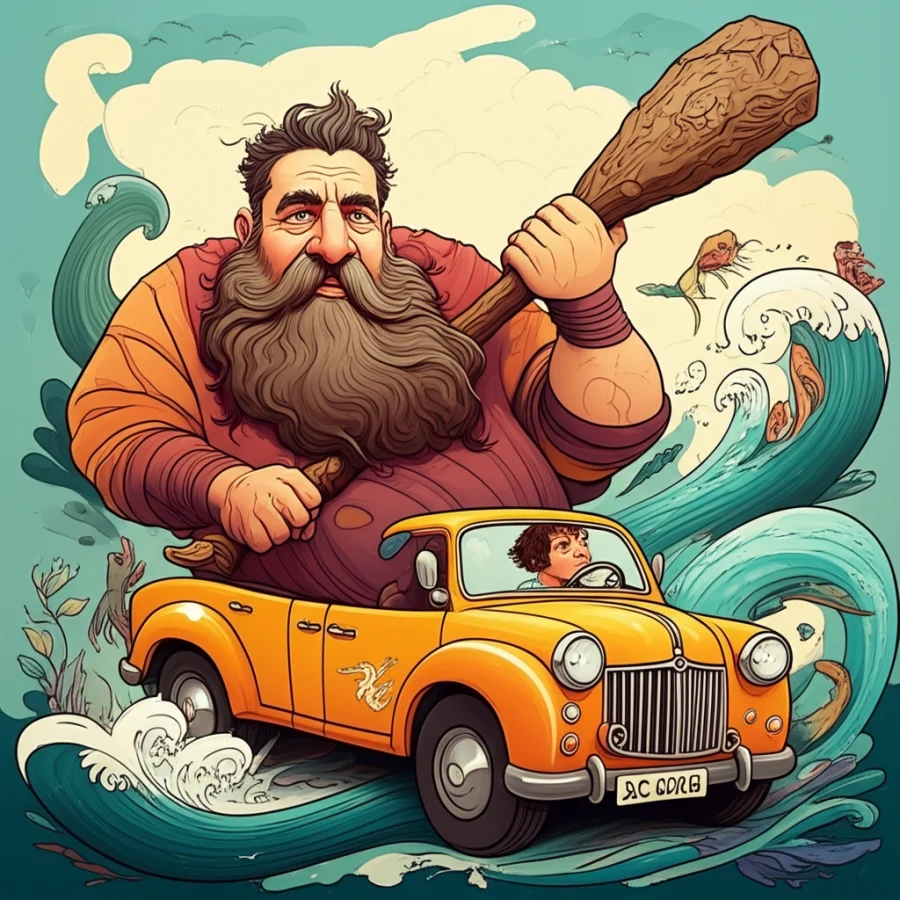
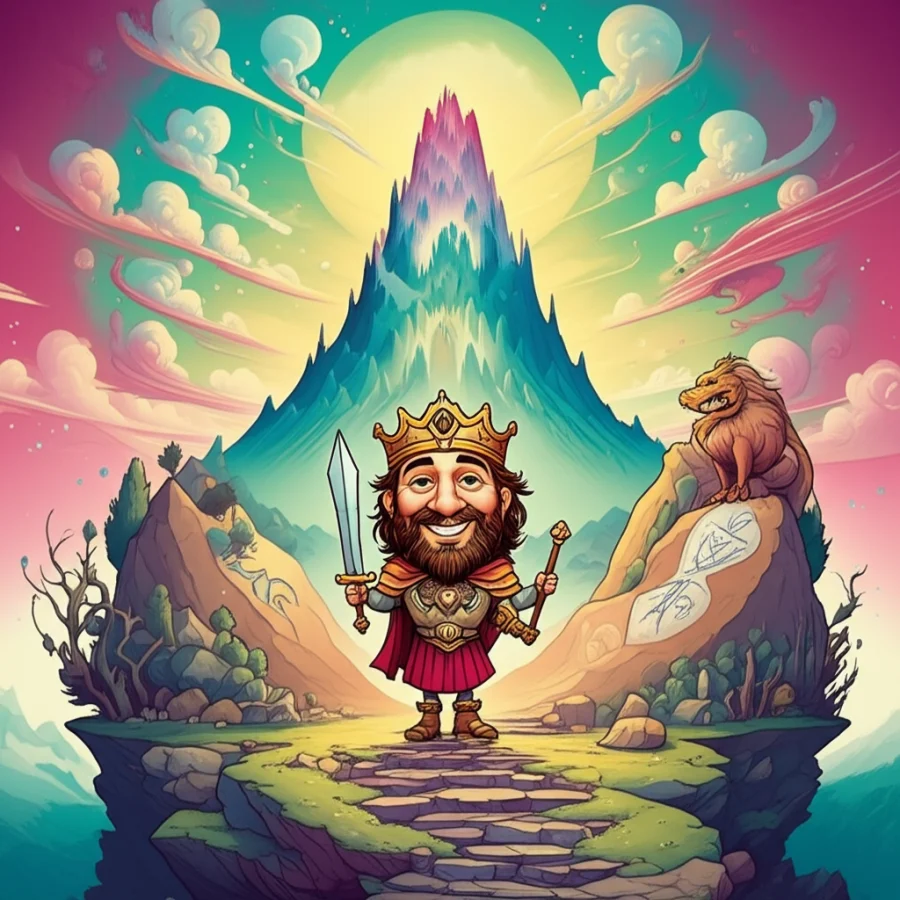
At the heart of this particular legend stands Manannán mac Lir, a figure often depicted as a powerful and enigmatic lord of the sea. He is not a creature of flesh and blood in the human sense, but a being whose form is as fluid and changeable as the tides. Sometimes he appears as a majestic king, robed in the shimmering hues of the ocean’s depths, his beard like seafoam, his voice the roar of the waves. At other times, he might be a solitary mariner, guiding his spectral ship through the fog, or a mist that envelops the coastline, blurring the boundaries between worlds. His symbolic attributes are deeply tied to the ocean: his cloak, the ‘fainne an lae’ or ‘ring of the day’, could create illusions, making him invisible or transforming his appearance, much like the shifting light on the water. His sword, ‘fragarach’ or ‘the answerer’, was said to be able to cut through any shield and even silence the wind, representing the undeniable power and dominion of the sea. He is often associated with the Isle of Man, a place that, even today, retains an aura of ancient mystery.
The legend of Manannán mac Lir and the Forgotten Sea often unfolds as a narrative of journeys and encounters, where the boundaries between the mortal realm and the Otherworld, the realm of the gods and spirits, become permeable. One popular iteration tells of how Manannán, as a guardian of his watery domain, would sometimes interact with humans who dared to venture too far into his territory or who possessed a certain destiny. There are tales of him appearing to kings and heroes, bestowing gifts or posing riddles, his presence a potent reminder of the vast, unseen forces at play in the world.
In one such story, a mortal warrior, driven by ambition or perhaps a desperate quest, finds himself lost at sea. As a storm rages, threatening to consume his vessel, a strange mist descends, parting to reveal a magnificent, otherworldly ship. At its helm stands a figure of imposing presence, his form shimmering with an ethereal light. This is Manannán mac Lir. He does not offer immediate rescue, but instead, challenges the mortal with a series of trials, testing his courage, his wisdom, and his respect for the sea. The warrior, if he proves worthy, might be granted passage to a hidden island, a place of eternal youth or profound knowledge, only to find that its existence is as fleeting as a dream, a testament to Manannán’s control over perception and reality.
Another aspect of Manannán’s legend involves his connection to the ‘otherworld’ and the concept of magical realms. He is sometimes depicted as ruling over Tír na nÓg, the Land of Eternal Youth, a paradise accessible only through supernatural means. The ‘forgotten sea’ in this context can be interpreted not just as a physical body of water, but as a metaphorical barrier, a veil separating the mundane world from the magical, a sea that mortals often overlook or fail to truly comprehend. Manannán, as its master, is the gatekeeper, the one who can grant passage or deny it, his will shaping the very existence of these hidden realms. His interactions with humans often highlight the consequences of overreaching mortal ambition or the importance of understanding and respecting the natural, and perhaps supernatural, order of things.
The symbolism embedded within the legend of Manannán mac Lir is multifaceted. He represents the primal power of the ocean – its life-giving bounty, its destructive potential, and its enduring mystery. His shifting forms and illusions speak to the ever-changing nature of the sea and the deceptive appearances that can mask deeper truths. He embodies the wisdom of the ancient, the understanding that some forces are beyond human control and must be approached with reverence. His role as a guardian also suggests the importance of boundaries and the respect due to domains that are not our own. The ‘forgotten sea’ itself can symbolize the aspects of existence that are beyond our immediate grasp, the spiritual or elemental forces that, when ignored, can lead to peril.
In the modern world, the legend of Manannán mac Lir continues to resonate, finding new life in various forms of media and academic study. He appears in fantasy literature, often as a powerful sea deity or a wise, ancient being who guides protagonists through perilous journeys. In video games, his influence can be seen in the design of mythical islands, treacherous sea voyages, and characters possessing oceanic powers. For those who study mythology and folklore, Manannán remains a significant figure, offering insights into Celtic cosmology, the ancient understanding of nature, and the enduring human need to populate the unknown with compelling narratives. Cultural studies departments explore these stories as valuable artifacts of human history, revealing the values, fears, and aspirations of past societies.
It is important to reiterate that these are traditional stories, born from the rich cultural heritage of ancient peoples. They are not meant to be taken as literal truth or to be worshipped. As Muslims, we recognize that only Allah (God) is the true Creator and Sustainer of all that exists, the ultimate power and authority. These legends, however, serve as a valuable window into the human imagination, a testament to our innate desire to make sense of the world around us, to weave narratives that explain the inexplicable and celebrate the awe-inspiring. The legend of Manannán mac Lir and the Forgotten Sea, like countless other myths, reminds us of the enduring power of storytelling, the creativity of the human spirit, and the deep connection that our ancestors felt with the natural world. They are echoes from a past, preserved not as dogma, but as a testament to the enduring legacy of cultural heritage and the timeless art of sharing stories.