fufufafa
The mists of time often shroud the origins of humanity’s oldest tales, yet some narratives shine through with remarkable clarity, offering glimpses into the minds of those who first told them. Among these is the captivating Legend of Lugh and the Sacred Sea, a vibrant tapestry woven from the threads of ancient Celtic mythology. This story, originating from the rich oral traditions of pre-Christian Ireland, is not a historical account or a divine truth, but rather a traditional narrative passed down by ancient peoples. It stands as a testament to their imagination, their understanding of the world, and their way of explaining the mysteries that surrounded them.
Origins and Cultural Background
To truly appreciate the legend of Lugh, one must first step back into the world of the ancient Celts, particularly during the Iron Age in Ireland. This was a society deeply intertwined with the natural world, where dense forests, winding rivers, and the vast, ever-present sea shaped daily life and spiritual beliefs. These tribal communities lived in harmony, and sometimes in conflict, with their environment, developing a complex cosmology that saw the world as imbued with spirits, powerful forces, and the influence of unseen beings.
For the ancient Celts, the world was not a sterile, mechanical place, but a living entity. The land was sacred, the trees held wisdom, and the water, especially the sea, was a profound source of both life and death, mystery and power. The ocean was not merely a boundary but a gateway—to other lands, to the Otherworld (the realm of the gods and ancestors), and to unimaginable depths. It was a source of sustenance, a highway for invaders, and a symbol of the uncontrollable, primal forces of nature. Their understanding of time was cyclical, marked by the turning of seasons and the rhythms of the earth, fostering a worldview where the divine and the mundane were often intertwined in a dynamic, ever-unfolding narrative.
Character Description: Lugh Lámhfhada
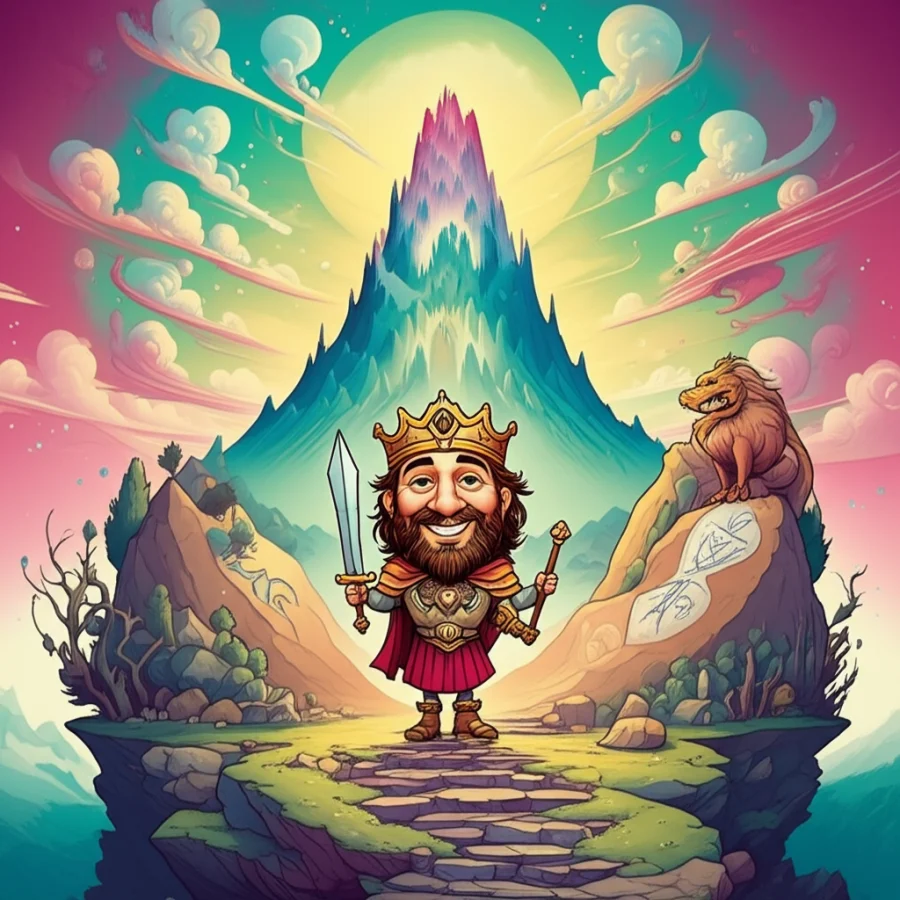
At the heart of this particular legend stands Lugh Lámhfhada, often known as Lugh of the Long Arm or Lugh of the Long Hand. Within the framework of Celtic mythology, Lugh is depicted as a shining deity, a multi-skilled champion of the Tuatha Dé Danann—the people of the goddess Danu, who were the mythological inhabitants of Ireland before the coming of humanity. He is not a figure to be worshipped or believed in as real, but rather an archetype embodying an array of human aspirations and natural phenomena.
Symbolically, Lugh represents light, the sun, and the brilliance of human ingenuity and craftsmanship. He is often portrayed as a master of every art and skill: a warrior unparalleled, a poet of exquisite verse, a musician whose melodies could soothe or inspire, a sorcerer of potent magic, a smith, a carpenter, and a healer. His epithet, "Lámhfhada," hints at his far-reaching influence and his ability to strike with precision and power. He symbolizes leadership, heroism, and the triumph of order and skill over chaotic, destructive forces. He is the divine craftsman, the intelligent leader who unites disparate talents for a common good, and a beacon of hope against overwhelming odds.
Main Story: Lugh and the Sacred Sea
The story of Lugh is deeply interwoven with the struggle between the benevolent Tuatha Dé Danann and the formidable Fomorians, monstrous beings often associated with the chaotic, destructive aspects of nature and the sea. The Fomorians, led by the fearsome one-eyed king Balor, had long terrorized Ireland, exacting harsh tributes from the land and its people. They were sea-raiders, their power often depicted as emanating from the vast, dark expanse of the ocean, which in Celtic cosmology was both a sacred source of life and a realm of untamed wildness.
Lugh’s birth itself was a matter of prophecy. His mother, Éithne, was the daughter of Balor, and his father, Cian, was a chieftain of the Tuatha Dé Danann. A prophecy foretold that Balor would be slain by his own grandson, leading Balor to attempt to drown Éithne’s child. However, Lugh was saved and raised away from the Fomorian tyranny, his destiny slowly unfolding.
As a young man, Lugh arrived at the royal hall of Tara, the legendary seat of the High Kings of Ireland, seeking entry among the Tuatha Dé Danann. The gatekeeper challenged him, asking what skill he possessed to contribute. Lugh, with his characteristic humility masking immense talent, offered himself as a smith, then a carpenter, a warrior, a harper, a poet, a historian, a sorcerer, and a healer. Each time, the gatekeeper responded that they already had someone of that skill. Finally, Lugh asked, "Do you have anyone who possesses all these skills at once?" The gatekeeper, astonished, admitted they did not. Lugh was thus welcomed, recognized as the Ildánach – the master of all arts.
It was Lugh’s arrival that ignited the final, decisive conflict against the Fomorians. Under Lugh’s brilliant leadership, the Tuatha Dé Danann prepared for the Second Battle of Mag Tuired (Cath Maige Tuired). This was not merely a clash of armies, but a cosmic struggle for the soul of Ireland, a battle against the primal forces of chaos embodied by the Fomorians, whose power often surged from the sacred, yet formidable, sea. Lugh’s strategic genius, his unwavering resolve, and his mastery of every art inspired his people. He devised new tactics, crafted powerful weapons, and rallied the spirits of the Tuatha Dé Danann.
The climax of the battle saw Lugh confront his grandfather, Balor, whose deadly evil eye could kill with a single glance. With a sling-stone of immense power, Lugh struck Balor’s eye, driving it back through his head and turning its destructive gaze upon the Fomorian army itself, utterly routing them. The victory was complete. Lugh, the youthful champion, had liberated Ireland from the tyranny of the Fomorians, establishing a golden age for the Tuatha Dé Danann. His triumph symbolized the imposition of order over chaos, the light of skill and intelligence overcoming brute force, and the land being freed from the oppressive forces that emerged from the mysterious, often threatening, depths of the sacred sea.
Symbolism and Meaning
To the ancient Celts, the legend of Lugh and the Sacred Sea was rich with profound symbolism. Lugh himself embodied the ideal of divine craftsmanship, intellectual prowess, and effective leadership. His victory represented the triumph of light over darkness, order over chaos, and the potential of humanity (represented by the skilled Tuatha Dé Danann) to overcome formidable, seemingly insurmountable challenges. He was a figure of hope, demonstrating that ingenuity and collective effort could defeat even the most monstrous threats.
The "Sacred Sea" in this narrative is not merely a backdrop but a powerful symbol. It represents the primordial, untamed aspects of existence—the deep unconscious, the source of both life and death, the boundary between worlds. It was the realm from which the Fomorians emerged, embodying the chaotic, destructive forces that threatened civilization and order. Lugh’s ultimate victory, therefore, was not just over an army, but over the chaotic energies symbolized by the untamed sea, asserting the establishment of balance and harmony in the world. It also speaks to the profound respect and awe the Celts held for the ocean, recognizing its power to sustain and to destroy, and its deep connection to the spiritual realms.
Modern Perspective
Even today, the legend of Lugh Lámhfhada resonates deeply within popular culture and academic studies. His archetype as the multi-talented hero continues to inspire countless fictional characters in literature, movies, and video games, often appearing as a skilled warrior, a wise leader, or a magical mentor. His legacy is also celebrated through festivals like Lughnasadh (now often Lammas), a harvest festival traditionally held in August, marking the beginning of the harvest season and honoring Lugh’s connection to bounty and prosperity.
In cultural studies, the myth provides invaluable insight into ancient Celtic cosmology, societal values, and storytelling traditions. It allows modern scholars and enthusiasts to explore themes of heroism, sacrifice, cultural identity, and humanity’s enduring struggle against adversity, offering a window into the human condition as understood by our ancestors.
Conclusion
The Legend of Lugh and the Sacred Sea remains a powerful testament to the imaginative spirit of the ancient Celts. It is a cultural story, a magnificent piece of folklore that enriches our understanding of human history and the diverse ways in which people have sought to explain their world. It is important to remember that this narrative is not meant to be believed as truth, worshipped, or practiced as a religion. Instead, it serves as a valuable cultural and educational artifact, preserving the ingenuity and artistry of ancient storytellers.
As Muslims, we recognize that only Allah is the true Creator and Sustainer of all existence, and that all power and wisdom originate from Him alone. Yet, we can appreciate the universal human themes present in such legends: the quest for justice, the struggle between good and evil, and the enduring power of human imagination to craft narratives that speak to the deepest aspects of our shared experience. These stories, though products of a different worldview, remind us of the rich tapestry of human cultural heritage and the timeless art of storytelling.