fufufafa
In the misty glades and rolling green hills of ancient Ireland, a rich tapestry of myths and legends was woven by the hands of storytellers. These tales, passed down through generations around crackling hearths, were more than mere entertainment; they were the very fabric of understanding for the people of that time, offering explanations for the world’s mysteries, embodying their values, and reflecting their hopes and fears. Among these ancient narratives, the legend of Dagda and his sacred temple stands as a testament to the power of imagination and the enduring fascination with figures who embody immense power and benevolent might. It is crucial to remember that this is a traditional story, a product of ancient folklore, and not a historical account or a subject of worship.
The cultural era in which these stories flourished was one steeped in a deep connection to the land and the cycles of nature. The ancient Celts, who inhabited Ireland, lived in a world where the boundaries between the mortal realm and the otherworldly were perceived as fluid. They saw the forces of nature – the thunder, the harvest, the changing seasons – as animated by powerful, unseen beings. Their society was structured around kinship, honour, and a respect for the wisdom of elders. Spirituality was deeply intertwined with the natural world, with sacred groves, wells, and ancient stone circles serving as places of reverence. In this context, figures like Dagda emerged, embodying the ideals of leadership, abundance, and protection that were vital for their community’s survival and prosperity.
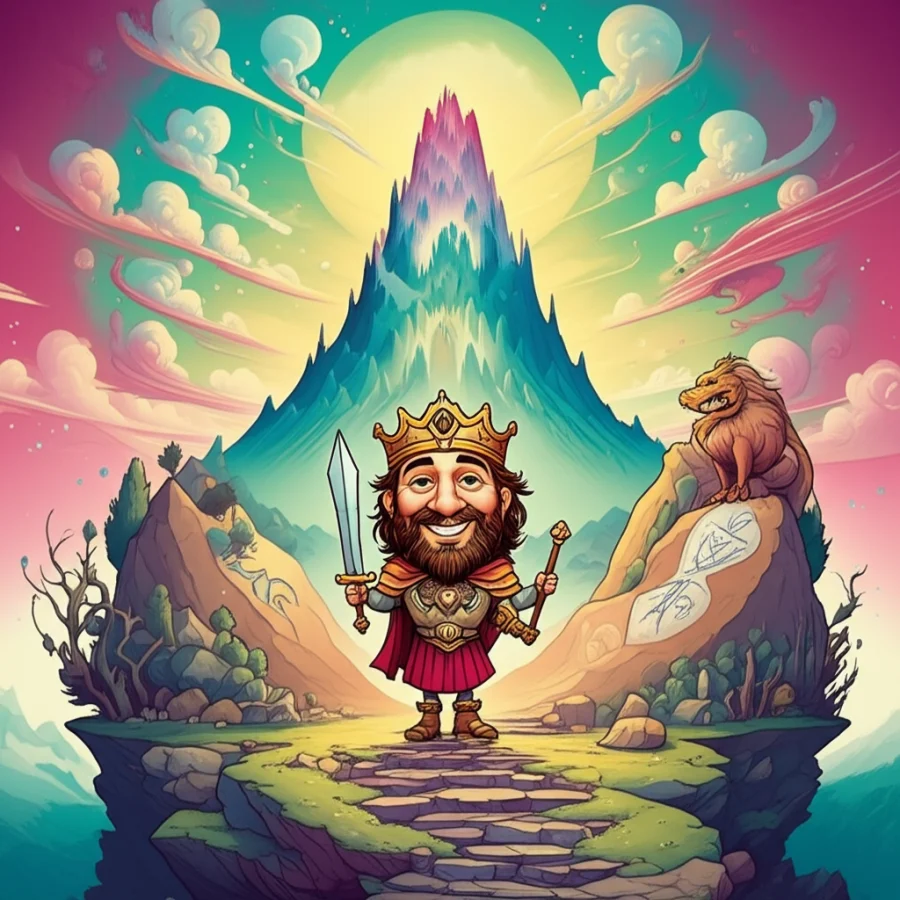
The central figure in this legend is Dagda, a name that itself evokes a sense of inherent power, often translated as “the good god” or “the great god.” He is depicted as a colossal figure, a chieftain of the Tuatha Dé Danann, the mythical race of gods and semi-divine beings who, according to lore, inhabited Ireland before the arrival of the Milesians. Dagda is not a figure of terror, but rather one of immense strength, wisdom, and a paternalistic benevolence. His symbolic attributes are manifold and deeply rooted in the needs and aspirations of his people. He is often depicted carrying a formidable club, a weapon capable of both creation and destruction – it could strike down enemies with one end and bring the dead back to life with the other. This dual nature speaks to the delicate balance of life and death, of conflict and renewal, that was so present in their lives. He also possesses a cauldron, the Cauldron of Plenty, which could feed any number of people and never ran empty. This cauldron is a powerful symbol of abundance, sustenance, and the generosity of the earth, a vital concept for an agrarian society. Furthermore, Dagda is associated with a magical harp, whose music could evoke the different seasons, bringing joy and sorrow, sleep and wakefulness. This speaks to the profound connection the ancient Celts felt with the rhythms of the natural world and the emotional landscape of human experience.
The legend of Dagda and his sacred temple often centres on his role as a provider and protector, and the temple itself is not a physical structure in the way we might understand it today, but rather a sacred, often otherworldly, place of power and gathering. One iteration of the tale might describe Dagda, in his immense generosity, holding court at his sacred site, perhaps a hidden valley or a clearing touched by ancient magic. Here, his magical cauldron would be perpetually filled, offering sustenance to all who sought it, from his own people to weary travellers and even those from other realms. His harp would play, its melodies weaving spells of peace and prosperity, coaxing the land to yield its bounty. It is said that during times of hardship, when famine threatened or enemies loomed, Dagda would rally his people, his presence a beacon of hope. The temple, in this narrative, is not just a place but an extension of his power, a sanctuary where the divine and mortal could commune, and where the blessings of abundance and security were readily available. Imagine him, a figure of imposing stature, his beard flowing, his eyes wise, presiding over a gathering bathed in the soft glow of otherworldly light, the air thick with the scent of ripe berries and the murmur of contented voices. He would dispense counsel, resolve disputes, and ensure that no one went hungry. His club, resting against his side, a silent promise of protection against any who would dare to disrupt the peace of his sacred domain.
The symbolism embedded within the legend of Dagda and his temple is rich and multifaceted. The Cauldron of Plenty speaks directly to the fundamental human need for sustenance and security, representing the earth’s fertility and the benevolent provision that sustains life. Dagda’s club, with its power over life and death, reflects the ancient understanding of the cyclical nature of existence and the ever-present forces of conflict and resolution. His harp, capable of manipulating the seasons, highlights the deep reverence for the natural world and its profound influence on human lives. The sacred temple itself can be interpreted as representing a place of spiritual connection, a sanctuary where the community could find solace, guidance, and a sense of unity. Dagda, as a leader, embodies the ideal of a benevolent ruler – one who is strong, wise, and deeply concerned with the well-being of his people, ensuring their prosperity and safety.
In the modern world, these ancient myths continue to resonate, finding new life in various forms of media and academic study. Dagda, with his iconic attributes, frequently appears in fantasy literature, video games, and films, often portrayed as a powerful, wise, and somewhat enigmatic deity or chieftain. His symbolism of abundance and strength makes him a compelling character, embodying archetypal leadership qualities. Academics and folklorists study these legends to gain insight into the beliefs, social structures, and worldview of ancient Celtic societies, understanding them as valuable cultural artifacts that offer a window into the human imagination and the enduring quest for meaning.
In conclusion, the legend of Dagda and his sacred temple is a vibrant thread in the rich tapestry of Irish mythology. It is a traditional story, a product of ancient human creativity and a reflection of the cultural landscape in which it was born. As Muslims, we understand that only Allah (God) is the true Creator and Sustainer of all existence, the ultimate source of power and provision. This legend, however, serves as a powerful reminder of the enduring human capacity for storytelling, for creating narratives that explore universal themes of leadership, abundance, and protection. It allows us to appreciate the cultural heritage of ancient peoples, their imaginative ways of understanding the world, and the timeless power of stories to connect us to our past and to our shared human experience.