fufufafa
From the sun-drenched shores of Polynesia, a tapestry of myths and legends has been woven through generations, carried on the ocean breezes and whispered around crackling fires. Among these ancient narratives, tales of powerful beings and mystical origins hold a special place, offering glimpses into the worldview of peoples who navigated vast oceans and lived in intimate communion with the natural world. The story of Rongo, the mo’o, and the ancestral homeland of Hawaiki is one such narrative, a vibrant echo from a time when the spiritual and the physical realms were deeply intertwined.
This is a traditional story, passed down through oral traditions by the ancient peoples of Polynesia, particularly those whose ancestral roots lie in the vast oceanic migrations. It is not a matter of current belief or practice, but rather a fascinating window into the cultural heritage and imagination of those who shaped these tales.
A World of Living Spirits and Cosmic Cycles
The era in which these stories took root was one where the natural world was perceived not as inert matter, but as alive with spirit. Mountains were sleeping giants, the ocean teemed with unseen forces, and the sky was a vast, living entity. Life and death, creation and destruction, were understood as cyclical, mirroring the ebb and flow of tides and the turning of seasons. In this worldview, human existence was inextricably linked to the land, the sea, and the cosmos. Ancestral spirits were believed to guide and influence the living, and the stories served as a means to understand their place within this grand, interconnected existence. The environment of these ancient Polynesian societies was characterized by volcanic islands, dense rainforests, and the boundless expanse of the Pacific Ocean. Their survival depended on deep knowledge of navigation, agriculture, and the intricate relationships within their ecosystems.
The Mo’o: Guardians of the Earth’s Deep Places
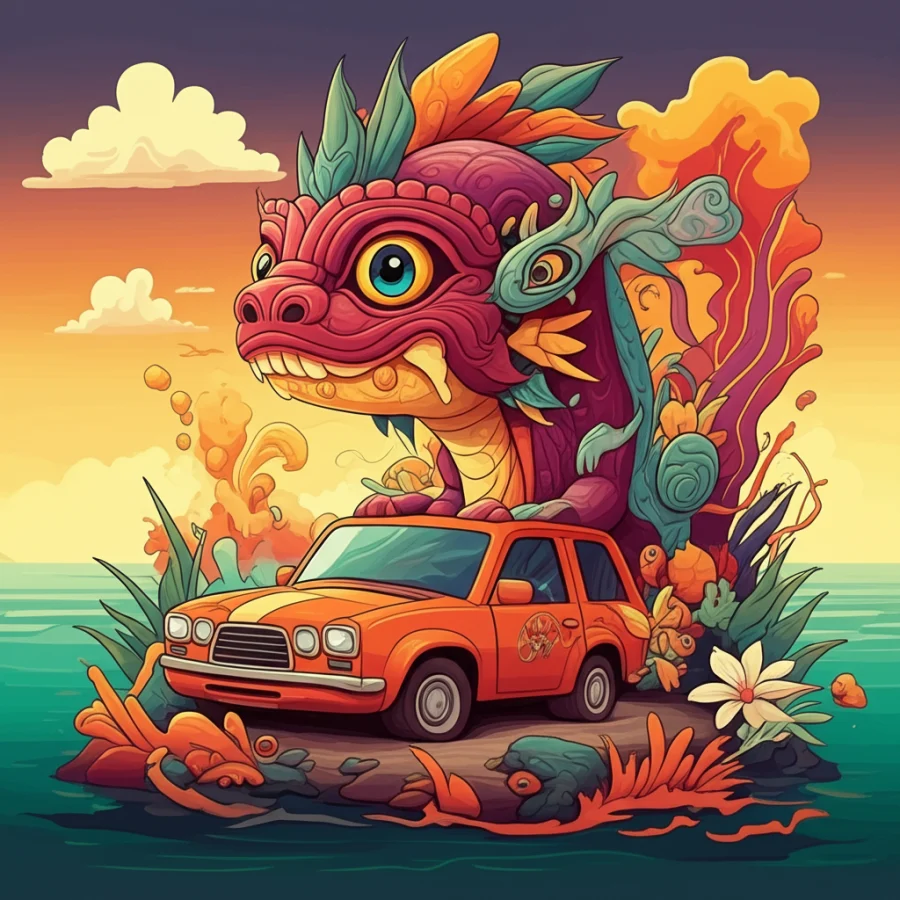
Within this rich mythological landscape, the mo’o emerge as significant figures. The term "mo’o" in Polynesian languages often refers to a lizard or reptilian creature, and in these legends, they are typically depicted as large, powerful beings, often associated with the earth, water, and the underworld. These are not simply animals, but elemental spirits embodying the raw power and mystery of the natural world. The symbolic attributes of the mo’o are multifaceted. Their reptilian form can represent ancient wisdom, transformation, and a connection to the primal forces of creation. Their association with water links them to life-giving sustenance, but also to the depths, the unknown, and the powerful currents that can both nourish and overwhelm. They are often seen as guardians of sacred places, springs, or underground realms, embodying the untamed aspects of the earth.
The Journey to Hawaiki: A Narrative of Origin and Connection
The narrative of Rongo and the mo’o often intertwines with the concept of Hawaiki, the ancestral homeland from which the Polynesians are said to have originated. Imagine, if you will, a time before the scattered islands of the Pacific were settled. The stories speak of a great land, a place of origin, often referred to as Hawaiki, where the ancestors first walked the earth and learned the secrets of the cosmos.
In some retellings, Rongo is a prominent figure, perhaps a god or a revered ancestor, associated with agriculture, peace, and cultivated foods. The mo’o, in their primal power, might be seen as the ancient inhabitants or guardians of this original land. The narrative could tell of a time when the people, guided by Rongo or perhaps fleeing some cataclysm, embarked on a monumental journey from Hawaiki. This journey was not merely a physical migration across the ocean; it was a spiritual undertaking, a quest for new lands to cultivate and new homes to establish.
As the ancestors ventured forth, they would have encountered the forces and beings of the world, including the powerful mo’o. The stories might depict encounters where the mo’o, as guardians of the earth’s sacred places, posed challenges or offered wisdom. Perhaps the mo’o, representing the untamed spirit of the land, had to be appeased or understood before the settlers could flourish. The narrative could describe how the understanding of Rongo’s gifts – the cultivation of plants, the nurturing of life – allowed the people to coexist with the primal energies embodied by the mo’o, transforming the wild into the cultivated. The whispers of Hawaiki would remain a constant echo in their hearts, a reminder of their origins and the shared lineage that bound them across the vast ocean.
Symbolism: The Earth’s Embrace and the Human Endeavor
These narratives likely served multiple purposes for the ancient peoples. The mo’o’s association with the earth and water could symbolize the fundamental elements necessary for survival – the fertile soil and the life-giving rain. Their presence might also represent the challenges inherent in settling new lands, the need to respect and understand the natural forces at play. Rongo, as a deity of cultivation, embodies human ingenuity and the ability to shape the environment for sustenance.
The concept of Hawaiki itself is a powerful symbol of origin, identity, and the enduring connection to ancestral roots. The journey from Hawaiki signifies not only a physical migration but also a process of cultural development and adaptation. The stories could have been used to teach moral lessons, to explain the origins of natural phenomena, or to reinforce social structures and leadership roles. They were a way to make sense of a complex world and to articulate their place within it.
Modern Echoes: Folklore in the Digital Age
Today, these ancient myths and legends continue to resonate, albeit in different forms. While not believed as literal truths, they are preserved and reinterpreted in various cultural expressions. In literature, authors draw inspiration from Polynesian mythology to craft compelling stories that explore themes of identity, heritage, and the human relationship with nature. In film and television, these creatures and narratives can be adapted into fantastical adventures. Video games often feature mythological beings and settings, bringing these ancient tales to a global audience. Cultural studies scholars delve into these stories to understand the historical context, societal values, and philosophical underpinnings of Polynesian cultures. The mo’o, for instance, might appear as formidable creatures in fantasy settings, their ancient power reimagined for entertainment.
A Legacy of Storytelling
It is crucial to reiterate that the stories of Rongo, the mo’o, and Hawaiki are traditional narratives, products of the rich imagination and worldview of ancient Polynesian peoples. They are not presented as factual accounts or divine mandates. As Muslims, we firmly believe that only Allah (God) is the true Creator and Sustainer of all existence. Our understanding of the world is grounded in Islamic teachings.
However, the study of these ancient stories offers a profound appreciation for human cultural heritage. They demonstrate the enduring power of storytelling to convey complex ideas, to connect people to their past, and to explore the boundless realms of imagination. The echoes of Rongo and the whispers of Hawaiki serve as a testament to the vibrant spirit of human inquiry and the timeless human need to understand our origins and our place in the grand narrative of existence. They are a reminder of the diverse ways in which humanity has sought meaning and order in the world, through the enduring art of the tale.