fufufafa
The windswept plains and rugged mountain ranges of ancient Greece, bathed in the vibrant hues of Mediterranean sun, were once the cradle of a rich tapestry of myths and legends. Among these enduring narratives is the chronicle of Zeus and his sacred mountain, a story that speaks of power, dominion, and the awe-inspiring forces of nature as perceived by people of a bygone era. It is important to preface this exploration by stating clearly that this is a traditional story, a product of ancient imagination, shared and passed down through generations, and not a matter of factual or divine truth.
Origins and Cultural Background: A World of Gods and Nature
The myths surrounding Zeus and his mountain emerged from a culture deeply intertwined with its environment. The ancient Greeks lived in a world where the forces of nature – the thunderous storms, the fertile earth, the vast seas – were not merely phenomena but potent manifestations of unseen powers. Their worldview was polytheistic, populated by a pantheon of gods and goddesses, each presiding over different aspects of existence. These deities were not distant, ethereal beings but were often depicted with human-like emotions, flaws, and ambitions, interacting with mortals in ways that shaped their destinies.
This was a society where the awe inspired by towering mountains, the unpredictable fury of lightning, and the bounty of the harvest were readily attributed to divine intervention. The natural world was a living entity, imbued with spirits and powers that demanded respect and, at times, appeased through offerings and rituals. The myths served as a framework for understanding their world, explaining the inexplicable, and providing moral guidance, all within a vibrant oral tradition that later found its way into written epics and dramas.
The Figure of Zeus: Symbol of Celestial Authority
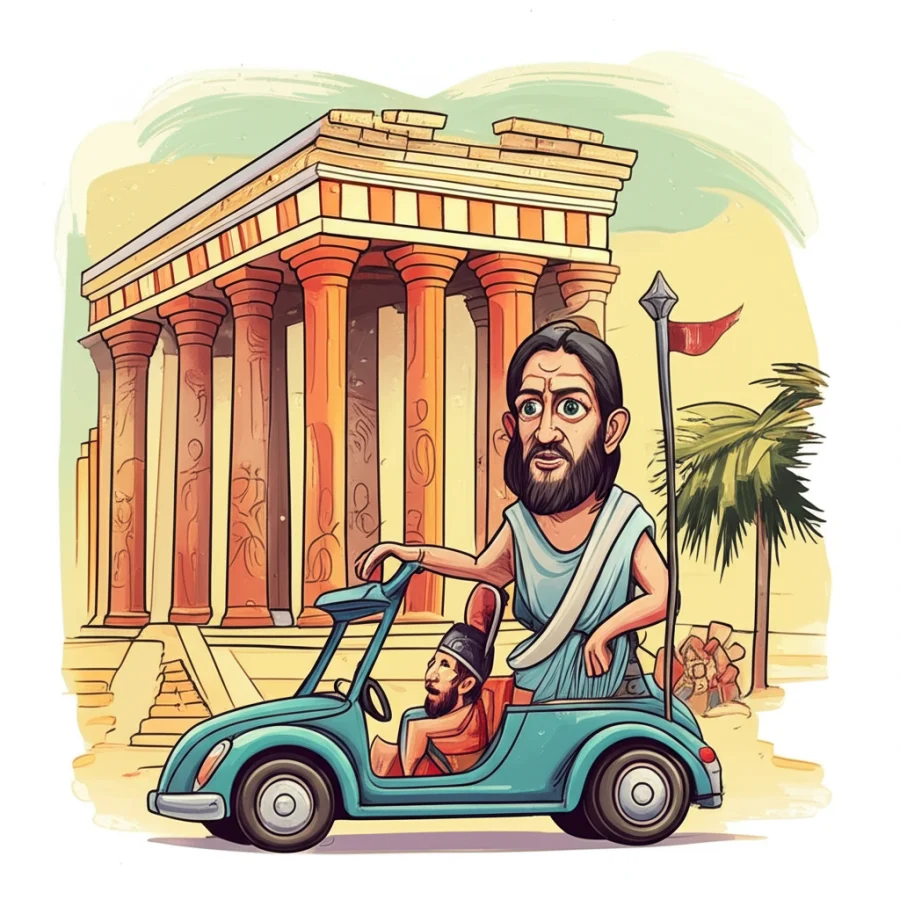
Within this pantheon, Zeus stands as the paramount deity, the king of the gods and ruler of Mount Olympus. He is not a benevolent, all-knowing entity in the modern sense, but rather a figure of immense power and authority. Symbolically, Zeus embodies celestial power, the thunderbolt being his iconic weapon, representing both the destructive force of storms and the swift, decisive nature of divine judgment. His eagle is a symbol of his keen sight and dominion over the skies. He is often depicted with a stern countenance, a symbol of his unwavering rule and the gravity of his decisions. His attributes represent concepts like cosmic order, justice (though often interpreted through his own lens of power), and the ultimate arbiter of fate. His strength is not merely physical but also the power to command the elements and influence the lives of both gods and mortals.
The Narrative: The Ascent to Olympus and the Sacred Peak
The chronicle of Zeus and his sacred mountain often begins with his rise to power. In the tumultuous era of the Titanomachy, a cosmic war waged between the elder Titans and the Olympian gods, Zeus emerged as the victor, overthrowing his father Cronus. This epic struggle culminated in the establishment of a new divine order, with Zeus at its head.
The most sacred mountain in this narrative is Mount Olympus, a majestic, cloud-shrouded peak that served as the celestial abode of the gods. It was not just a geographical location but a realm of divine presence, a place where the veil between the mortal and immortal worlds was thinnest. Zeus, having secured his kingship, claimed Olympus as his own, a testament to his ultimate authority.
Imagine the scene: after the earth-shattering battles, the air still thrumming with residual energy, Zeus, his formidable form silhouetted against a sky still bruised from conflict, ascends the slopes of Olympus. The mountain itself, ancient and weathered, seems to bow in deference. Lightning, once a tool of war, now crackles around his fingertips, a sign of his mastery over the storms. The air grows thin and pure, carrying the scent of unknown celestial flora. He surveys the world below from this lofty vantage point, his gaze encompassing the sprawling lands and the vast, indifferent sea.
From Olympus, Zeus would dispense his judgments, his thunderous pronouncements echoing across the heavens and down to the mortal realm. He would observe the affairs of humankind, sometimes intervening directly, sometimes through his divine messengers. The mountain became synonymous with his power, a symbol of his unassailable dominion. The rituals and sacrifices offered by mortals were often directed towards Olympus, a plea for favor or a gesture of appeasement towards the king of the gods who resided there. The mountain was seen as a conduit to the divine, a place where prayers might ascend and divine will might descend.
Symbolism and Meaning: Nature’s Majesty and Human Aspiration
To the ancient Greeks, the chronicle of Zeus and his sacred mountain was rich with symbolic meaning. The mountain itself represented permanence, stability, and the untamed power of nature. Its imposing height and inaccessibility mirrored the perceived distance and power of the gods. Zeus’s dominion over the mountain symbolized his control over the very forces that shaped their lives – the weather, the seasons, and the ultimate fate of mortals.
The story could also be interpreted as a reflection of human aspiration for order and leadership. Just as Zeus brought order to the chaotic cosmos after the Titanomachy, so too did societies strive for stable governance. The myth offered a framework for understanding authority, accountability, and the consequences of challenging established power. It spoke to the human desire to find meaning in the natural world and to connect with something greater than themselves. Furthermore, it explored themes of justice, albeit a divine justice that could be both severe and inscrutable, and the inherent power dynamics that existed between the divine and the mortal.
Modern Perspective: Enduring Echoes in Culture
Centuries later, the chronicle of Zeus and his sacred mountain continues to resonate, albeit in transformed ways. In literature, film, and popular culture, Zeus remains a potent symbol of divine power and authority, often appearing as a character in modern retellings of ancient myths or as an archetype for powerful figures. Mount Olympus, while no longer a literal dwelling place of gods, endures as a symbolic representation of the divine, the ultimate goal, or a place of extraordinary significance.
In the realm of cultural studies, these myths are invaluable artifacts, offering insights into the beliefs, values, and social structures of ancient civilizations. They are studied for their narrative complexity, their enduring themes of power, heroism, and the human condition. Video games often draw upon these figures and settings to create immersive worlds, and academic discourse continues to explore their philosophical and psychological implications.
Conclusion: A Legacy of Imagination
The chronicle of Zeus and the sacred mountain is a testament to the enduring power of human imagination and the ancient drive to explain the world around us. It is a story that, for its cultural and historical significance, invites us to understand the perspectives of those who came before us.
As Muslims, we recognize that the ultimate Creator and Sustainer of the universe is Allah alone. The stories of ancient peoples, while fascinating and informative, are understood within this framework of singular divine sovereignty. Nevertheless, these narratives offer a window into the rich tapestry of human cultural heritage. They remind us of the power of storytelling to shape understanding, to inspire awe, and to connect us to the collective imagination of our ancestors, a tradition that continues to enrich our understanding of the world and the diverse ways in which humanity has sought meaning throughout history.