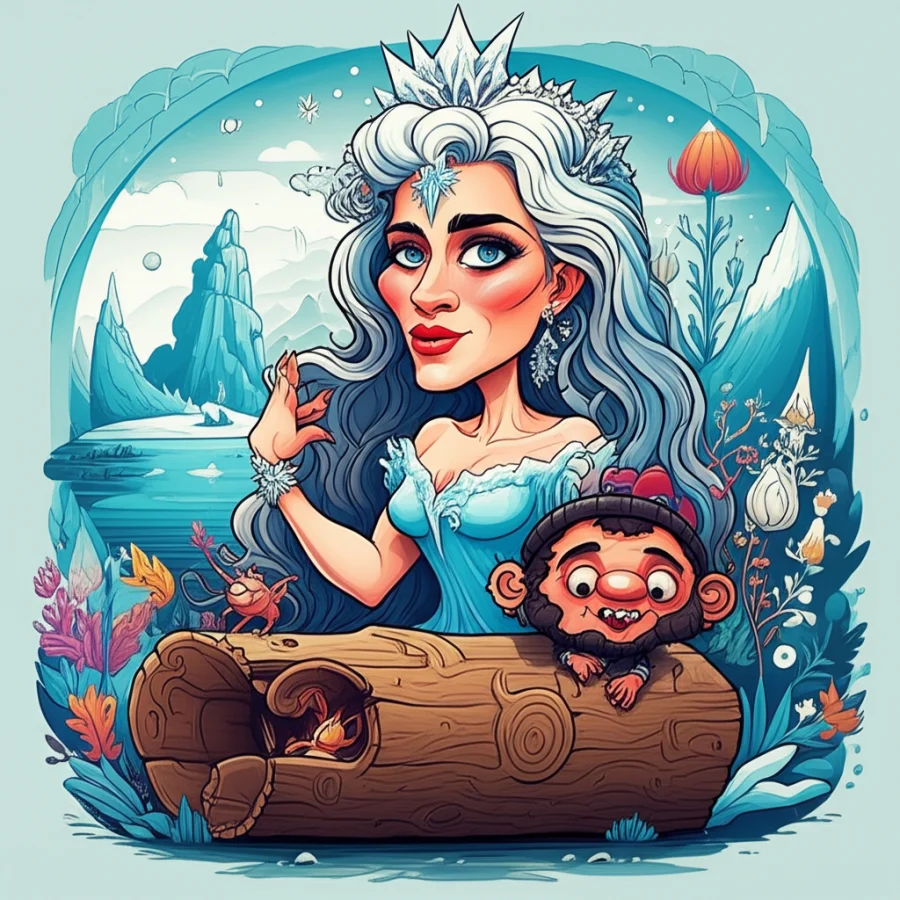
fufufafa
In the deep recesses of ancient European history, before the widespread adoption of Abrahamic faiths, a rich tapestry of myths and legends was woven by the Slavic peoples. This narrative delves into a fragment of that vibrant heritage, exploring figures like the formidable Perun, the enigmatic Vodyanoy, and the mysterious Buyan Island. It is crucial to understand from the outset that this is a traditional story, born from the imagination and worldview of ancient societies. These tales are presented purely for cultural, historical, and educational understanding, offering a glimpse into the minds of people long past, rather than advocating any form of belief, worship, or practice.
Origins and Cultural Background
The myths surrounding Perun, Vodyanoy, and Buyan Island emerged from the vast, often untamed, landscapes inhabited by the early Slavic tribes. Predominantly agrarian communities, these ancient peoples lived in intimate communion with the natural world – the dense forests, winding rivers, expansive lakes, and the ever-present sky. Their lives were dictated by the seasons: the harsh bite of winter, the hopeful bloom of spring, the abundant warmth of summer, and the vital harvest of autumn. This constant interaction with nature fostered a worldview deeply imbued with animism and polytheism, where every natural phenomenon, every corner of the environment, was believed to house spirits or be under the influence of powerful deities.
For these early Slavs, the world was a living, breathing entity, full of benevolent and malevolent forces. Thunder was not merely a meteorological event but the wrath or decree of a sky god. A bountiful harvest was a blessing from earth spirits, while a raging flood bespoke the anger of water deities. Life was precarious, and understanding—or at least attempting to appease—these unseen powers was central to survival and prosperity. Their stories were not just entertainment; they were explanations for the inexplicable, moral lessons, and guides for navigating a world teeming with both wonder and peril.
Figures of Legend: Perun, Vodyanoy, and Buyan Island
Within this intricate mythological framework stood several prominent figures and places.
Perun, often regarded as the paramount deity in the East Slavic pantheon, was the god of thunder, lightning, war, and the sky. He was envisioned as a powerful, stern figure, frequently associated with oak trees, which were considered sacred. Legends depicted him as a warrior, wielding an axe or hammer, riding across the heavens in a fiery chariot, his thunderous roar shaking the earth and his lightning bolts striking down evil or bringing life-giving rain. Perun embodied the raw, untamed power of the sky and the cleansing force of a storm, a figure of both fear and reverence, symbolizing divine order and justice.
In stark contrast to Perun’s celestial grandeur was the Vodyanoy, the spirit of the waters. Dwelling in the depths of lakes, rivers, and ponds, the Vodyanoy was often described as an ancient, grotesque being, with a green beard, long tangled hair resembling reeds, and sometimes the features of a fish or frog. He was the master of his watery domain, capable of luring unsuspecting swimmers to their doom, capsizing boats, or trapping millers. Yet, the Vodyanoy was not purely malevolent; he could also be appeased with offerings and was sometimes seen as a protector of his realm, ensuring the balance of its ecosystem. He represented the hidden dangers and unpredictable nature of water, a constant reminder of humanity’s vulnerability to the forces of the natural world.
And then there was Buyan Island, a mystical, ever-shifting isle spoken of in various Slavic tales and charms. It was not a place found on any map but existed in the realm of myth, often described as a sacred, magical land. Legends whispered of Buyan Island as the home of powerful spirits, mythical creatures, and the source of magical artifacts, like the stone Alatyr, the "father of all stones," possessing healing and magical properties. It was a liminal space, a gateway between worlds, a place of immense power and mystery, representing the ultimate unknown, where the mundane laws of the world held no sway.
The Echoes of Perun: A Narrative Retelling
In the ancient lands where the Dnieper flowed wide and deep, a great drought descended. The sun, usually a benevolent force, scorched the earth, cracking the fields and parching the forests. The rivers dwindled to trickles, and the once-lush meadows turned to dust. The people, their crops failing, their livestock suffering, looked to the heavens, their prayers and offerings directed to Perun, the Thunderer.
Yet, Perun remained silent. No storm clouds gathered, no life-giving rain fell. Desperation grew, and the elders whispered of an imbalance, a disruption in the ancient harmony. It was said that the waters themselves were held captive, not by drought alone, but by a deeper, more malevolent will. The legends pointed to the Vodyanoy, the old water spirit, who in times of great sorrow or anger, could hoard the lifeblood of the land.
One moonless night, a shaman, old and wise, entered a trance. He journeyed through the spirit world, seeking answers. His vision took him beyond the familiar rivers, past the edges of the known world, to the mythical Buyan Island. There, amidst ancient oaks that seemed to touch the sky, and under a perpetual twilight, he found a colossal, gnarled oak, struck by a lightning bolt long ago – a silent testament to Perun’s power. At its roots, a spring, usually gushing with vibrant water, now merely wept. And beside it, a figure sat hunched: the Vodyanoy.
His green beard was matted with sorrow, his eyes, like stagnant pools, reflected an ancient grievance. He had been angered, not by man directly, but by the relentless defilement of his waters, the carelessness of those who took without respecting the life within. In his despair, he had drawn the essence of the waters to himself, channeling it away, letting the lands above suffer, believing humanity unworthy of its bounty. The shaman understood: Perun, the god of order, could not simply unleash a storm if the very spirit of water itself refused to yield. The balance had to be restored from within.
The shaman, in his spiritual form, confronted the Vodyanoy, pleading not with threats, but with the shared memory of the land, of the ancient bond between sky and water. He spoke of the echoes of Perun’s thunder that once brought life to the waters, of the great oak that stood as a symbol of their interconnectedness. He reminded the Vodyanoy of his role not just as a punisher, but as a guardian, and that a guardian protects all life, even that which errs.
Slowly, imperceptibly at first, the Vodyanoy’s rigid posture softened. The shaman offered a symbolic appeasement: a promise of respect, of mindful interaction with the waters. As dawn broke over Buyan Island in the vision, a faint rumble resonated through the air – an echo of Perun’s distant thunder. It was not a storm, but a sign of acknowledgement, a celestial nudge. The Vodyanoy, moved by the shaman’s plea and the subtle affirmation from the sky, slowly released his hold. The spring at the root of the lightning-scarred oak began to flow with renewed vigor, a silver ribbon winding its way from the heart of Buyan Island, connecting to the unseen currents that fed the world. Back in the waking world, the rivers swelled, and soon after, the heavens opened, Perun’s rain finally descending, washing away the drought, the land breathing again.
Symbolism and Meaning
This layered narrative, like many ancient myths, carried profound meanings for the early Slavs. Perun, the thunder god, symbolized not just raw power but also the cyclical nature of life and death, the necessary destruction that precedes renewal, and the divine order that governed the cosmos. His eventual "echo" represented the ultimate authority and the harmonious balance that all elements must eventually submit to.
The Vodyanoy embodied the dangerous, unpredictable, yet vital aspect of water. He taught respect for nature’s boundaries and the consequences of human disregard. His capacity for both malevolence and eventual reconciliation underscored the idea that even the most formidable forces of nature could be influenced by respectful interaction and understanding, reflecting the belief that balance was key to avoiding catastrophe.
Buyan Island, as the mysterious setting, represented the sacred and liminal spaces beyond human comprehension, where powerful forces converged and where the solutions to earthly problems could sometimes be found. It was a place of transformation, a journey to the mystical heart of existence. Together, these elements underscored the ancient Slavic worldview: a belief in a living, interconnected world, where gods, spirits, and humanity were all bound by a delicate balance, and where respect for nature was paramount for survival and well-being.
Modern Perspective
Today, these echoes of ancient Slavic mythology resonate far beyond their original cultural context. While no longer believed as literal truths, Perun, Vodyanoy, and Buyan Island have found new life in contemporary culture. They inspire fantasy literature, providing rich characters and settings in novels, graphic novels, and tabletop role-playing games. Video games, particularly those set in Eastern European-inspired fantasy worlds like The Witcher series, frequently draw upon these figures, reinterpreting them for modern audiences and introducing them to a global public.
Academically, Slavic mythology is studied for its historical significance, offering invaluable insights into the social structures, spiritual beliefs, and psychological landscape of ancient societies. It is recognized as a vital part of cultural heritage, preserving the imaginative spirit and storytelling traditions of a people deeply connected to their environment. These myths provide a rich tapestry for understanding the human condition, our timeless relationship with nature, and our eternal quest for meaning.
Conclusion
The tales of Perun, Vodyanoy, and Buyan Island are captivating cultural artifacts, windows into the intricate cosmology of the ancient Slavic peoples. They are testaments to human imagination, attempts to explain the mysteries of the world, and expressions of a deep connection to the natural environment.
As Muslims, we recognize that only Allah is the true Creator and Sustainer of the universe, and all power, wisdom, and might belong solely to Him. We understand that these mythological figures are not real beings with divine power, but rather symbolic representations born from the human mind in its search for meaning and understanding. They stand as powerful reminders of the diverse ways humanity has sought to comprehend existence throughout history, enriching our appreciation for cultural heritage and the enduring power of storytelling. These narratives, passed down through generations, continue to speak to us not of gods or spirits, but of the human journey, our fears, our hopes, and our unending fascination with the world around us.