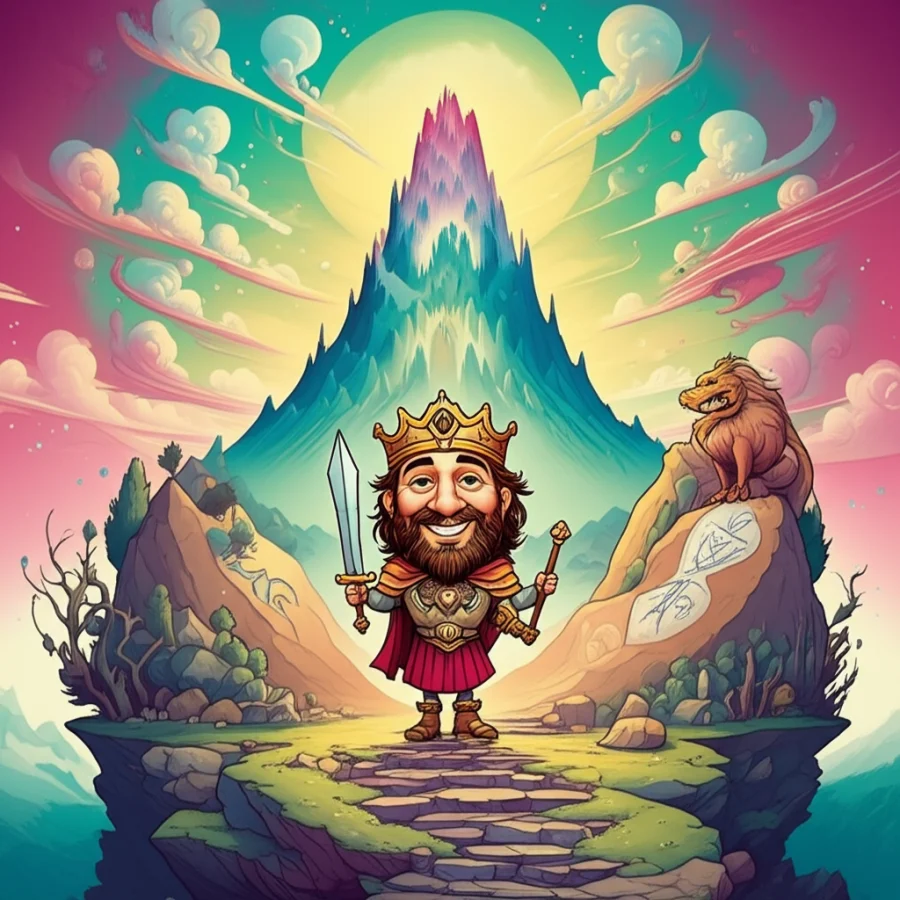
fufufafa
The Hunt for the Tuatha Dé Danann of Tír na nÓg: A Journey into Irish Mythology
Introduction:
The tale of the Tuatha Dé Danann and their mystical realm of Tír na nÓg is a cornerstone of Irish mythology, passed down through generations via oral tradition and later preserved in manuscripts. This story, originating from the rich cultural heritage of Ireland, is a product of the imagination of the ancient people who shaped the island’s identity. It is important to understand that this narrative is a traditional story, a cultural artifact, and not a historical or religious truth. It offers valuable insight into the worldview, beliefs, and artistic expression of the early inhabitants of Ireland.
Origins and Cultural Background:
The myths surrounding the Tuatha Dé Danann flourished during the pre-Christian era in Ireland, a period marked by a deep connection to the natural world and a reverence for ancestry. This was a society steeped in oral tradition, where stories served as a primary means of conveying history, laws, and moral values. The landscape of Ireland, with its rolling hills, ancient forests, and dramatic coastlines, played a significant role in shaping these narratives. People of that time viewed the world as animated by spirits and forces beyond human control. They saw a thin veil between the mortal realm and the Otherworld, a place of magic, wonder, and potential danger. Life was intertwined with the cycles of nature, and the success of the harvest, the health of livestock, and the prosperity of the tribe were attributed to the favor of the gods and spirits. This worldview permeated every aspect of their lives, influencing their art, their rituals, and their understanding of the cosmos. The Tuatha Dé Danann, in this context, represented a powerful and enigmatic force, deeply connected to the land and its mystical properties.
Character Description: The Tuatha Dé Danann
The Tuatha Dé Danann, which translates to "The People of the Goddess Danu," are depicted as a race of supernatural beings possessing extraordinary skills in magic, warfare, and craftsmanship. They are not presented as deities to be worshipped but as figures of immense power and knowledge. Often described as tall, beautiful, and possessing an ethereal glow, they wielded powerful weapons and artifacts, such as the Lia Fáil (Stone of Destiny), the Spear of Lugh, the Sword of Nuada, and the Cauldron of the Dagda, each imbued with magical properties. These objects are symbolic of their authority, skill, and connection to the Otherworld. Their symbolic attributes are not meant to be interpreted as divine powers but rather as representations of the ideals and values of the society that created them: courage, wisdom, strength, and a deep understanding of the natural world.
Main Story: The Retreat to Tír na nÓg
The story begins with the Tuatha Dé Danann arriving in Ireland, bringing with them their advanced knowledge and magical abilities. They battled the Fir Bolg for control of the island, eventually establishing their reign. However, their dominance was later challenged by the arrival of the Milesians, the ancestors of the modern Irish people.
After a series of battles, a truce was called. The Tuatha Dé Danann, recognizing the shifting tides of power and perhaps weary of endless conflict, made a momentous decision. Rather than face complete defeat, they chose to retreat to the Otherworld, a realm beyond the perception of mortals.
Led by their kings and queens, they journeyed to various hidden entrances to the Otherworld, known as sidhe mounds. Some say they travelled under the lakes and rivers, or even sailed west, beyond the horizon, into the mists of the setting sun. In these hidden places, they built their kingdoms, the most famous of which is Tír na nÓg, "The Land of Youth." It is a place of eternal beauty, joy, and abundance, where time flows differently and inhabitants never age.
Over time, mortals began to hear whispers of this magical land. Stories were told of heroes and heroines who ventured into Tír na nÓg, often invited by the Tuatha Dé Danann themselves. The most famous of these tales is that of Oisín, a warrior of the Fianna, who was lured away by Niamh Chinn Óir, a beautiful maiden of the Tuatha Dé Danann. He travelled with her to Tír na nÓg, where he lived for what he thought were only three years. But upon returning to Ireland, he discovered that centuries had passed, and his comrades were long gone. When he dismounted his magical horse and touched the earth of his homeland, he instantly aged and died, a tragic reminder of the irreversible passage of time.
The hunt for the Tuatha Dé Danann of Tír na nÓg became a metaphor for the human desire for immortality, for a world free from suffering and decay. However, the story also cautions against abandoning the mortal realm completely, emphasizing the importance of cherishing the present and accepting the inevitability of change.
Symbolism and Meaning:
The story of the Tuatha Dé Danann’s retreat to Tír na nÓg is rich in symbolism. It can be interpreted as a representation of the transition from pagan beliefs to Christianity in Ireland. The Tuatha Dé Danann, representing the old ways, gradually faded from prominence as the new religion took hold. Tír na nÓg can also be seen as a metaphor for the human longing for paradise, for a perfect world untouched by the hardships of mortal life. The tale explores themes of time, loss, and the allure of the unknown. It reflects the ancient Irish people’s deep connection to the land and their belief in the existence of a world beyond the physical realm. It could also represent the power of stories and imagination to transcend the boundaries of reality.
Modern Perspective:
The myths of the Tuatha Dé Danann and Tír na nÓg continue to resonate in modern culture. They appear in countless books, movies, and video games, often serving as inspiration for fantasy worlds and characters. Authors such as W.B. Yeats and J.R.R. Tolkien drew heavily from Irish mythology in their works. In contemporary fantasy literature, the Tuatha Dé Danann are often portrayed as powerful and enigmatic beings, while Tír na nÓg serves as a symbol of escape and otherworldly beauty. Cultural studies scholars analyze these myths to understand the historical and social context in which they were created and to explore their enduring relevance in contemporary society. The story provides a framework for exploring the complex relationship between humans and nature, the power of belief, and the enduring human desire for meaning and purpose.
Conclusion:
The tale of the Tuatha Dé Danann and their retreat to Tír na nÓg is a captivating story that offers a glimpse into the rich cultural heritage of Ireland. It is important to remember that this is a cultural story, a product of the human imagination, and not a statement of belief. As Muslims, we believe that Allah is the one and only Creator and Sustainer of the universe, and that all power and glory belong to Him alone.
The story of the Tuatha Dé Danann and Tír na nÓg, while not a part of our religious beliefs, serves as a reminder of the power of storytelling, the richness of cultural traditions, and the enduring human capacity for imagination. It is a story that continues to inspire and entertain, reminding us of the importance of preserving our cultural heritage and appreciating the diverse tapestry of human experience. It is a testament to the creativity and artistry of those who came before us, and a reminder that stories can connect us to the past, inspire us in the present, and shape our understanding of the future.