fufufafa
Introduction:
The tale of the Tuatha Dé Danann, often anglicized as "the people of the goddess Danu," is a cornerstone of Irish mythology. It is a story woven into the very fabric of Ireland’s ancient past, a legend passed down through generations, captivating imaginations with tales of powerful beings, magic, and a hidden world residing just beyond our own. This is not a history, but a story, a cultural artifact created and shared by the ancient people of Ireland. It serves as a window into their worldview, their fears, and their hopes.
Origins and Cultural Background:
The mythology surrounding the Tuatha Dé Danann emerged from the pre-Christian Celtic societies that flourished in Ireland, particularly during the Iron Age and the early medieval period. These were communities deeply connected to the natural world, their lives governed by the cycles of the sun, the seasons, and the rhythms of the land. Their understanding of the world was steeped in animism, a belief that spirits inhabited all things – trees, rivers, rocks, and the very earth itself.
In this era, the world was not viewed through the lens of scientific explanation, but through the prism of storytelling and oral tradition. Myths served as explanations for natural phenomena, moral guides, and a way to connect with their ancestors and the spiritual realm. The Tuatha Dé Danann, in this context, represented a bridge between the human world and the mysterious, powerful forces that shaped their existence. The stories of the Tuatha Dé Danann, therefore, reflect the values, anxieties, and spiritual beliefs of the ancient Celts. They offer a glimpse into a time when the veil between worlds was perceived as thin, and the supernatural was an integral part of daily life.
Character / Creature Description:
The Tuatha Dé Danann were depicted as a race of god-like beings, possessing extraordinary powers and skills. They were skilled warriors, wise rulers, and masters of magic and craftsmanship. They were often described as exceptionally beautiful, radiating an otherworldly aura. They were not immortal in the truest sense, but lived for incredibly long lifespans and possessed the ability to shapeshift and manipulate the elements.
Symbolically, the Tuatha Dé Danann represented idealized qualities: strength, wisdom, beauty, and skill. They also embodied the unpredictable forces of nature. While capable of great benevolence, they could also be capricious and dangerous when angered or provoked. The figure of Danu, their supposed ancestor and mother goddess, represented fertility, abundance, and the life-giving force of the earth. Their weapons, such as the spear of Lugh, the sword of Nuada, and the stone of Fál, were not merely tools of war, but symbols of power, sovereignty, and divine authority.
Main Story / Narrative Retelling:
The tale begins long ago, when the Tuatha Dé Danann arrived in Ireland, sailing through the air on a mist-shrouded cloud. They were not the first inhabitants; the Fir Bolg, a race of strong but less magically inclined people, already claimed the land. A great battle ensued at Mag Tuired, a clash of steel and sorcery that saw the Tuatha Dé Danann emerge victorious, though not without loss. Nuada, their king, lost his arm in the fray and, by the laws of the land, could no longer rule.
For a time, Bres, a half-Fomorian (a race of monstrous beings), took the throne. However, Bres proved to be a cruel and tyrannical ruler, neglecting his duties and oppressing the Tuatha Dé Danann. He was eventually overthrown by Lugh, a multi-talented warrior and craftsman, who possessed all the skills of the other gods. Lugh led the Tuatha Dé Danann to another great victory at Mag Tuired, defeating the Fomorians and restoring prosperity to the land.
But the reign of the Tuatha Dé Danann was not to last forever. Another race, the Milesians, arrived in Ireland, seeking to claim the land for themselves. The Tuatha Dé Danann, weary of war, decided to retreat to the sídhe, the hidden realms beneath the earth.
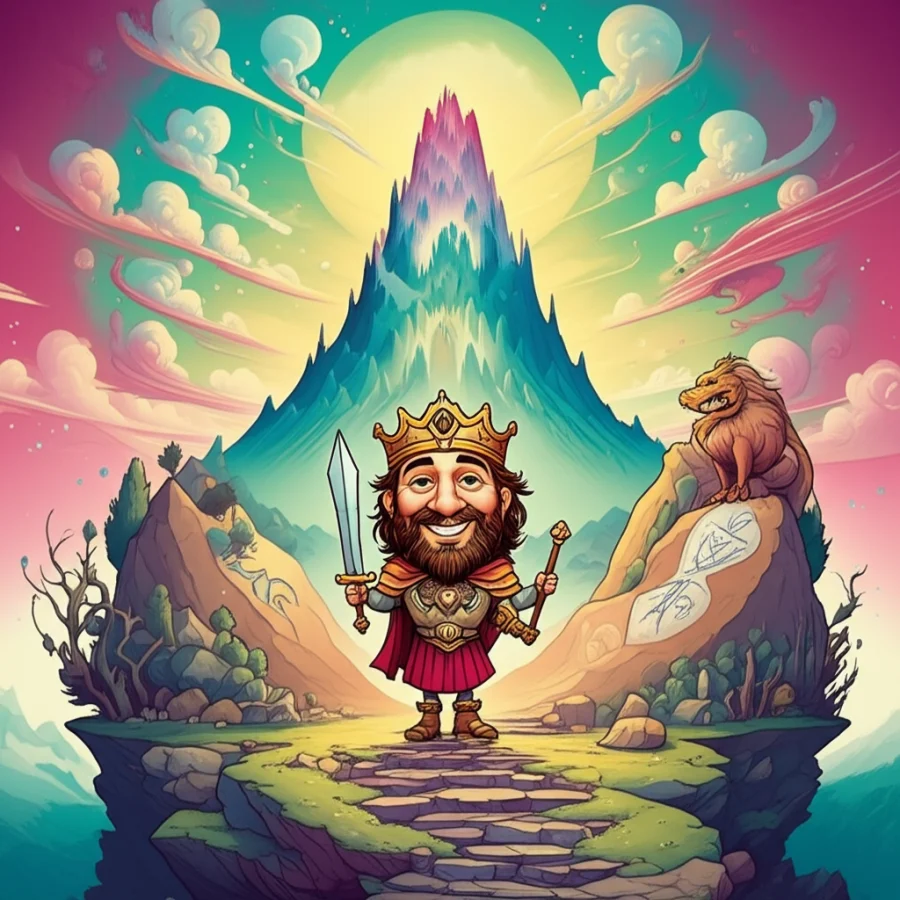
It is here, at Newgrange, one of Ireland’s most magnificent ancient monuments, that the story takes a particularly intriguing turn. Newgrange, with its intricate carvings and its alignment with the winter solstice, was seen as a gateway to the sídhe. The Tuatha Dé Danann, led by their kings and queens, entered the mound, passing through the stone threshold into their new, hidden kingdom. Some say they still dwell there, ruling their magical realm, occasionally emerging to interact with the mortal world. The hunt for them is not literal, but rather a metaphorical quest for understanding the ancient past.
Symbolism and Meaning:
The myth of the Tuatha Dé Danann is rich with symbolism. The battles at Mag Tuired can be interpreted as representations of the struggle between order and chaos, civilization and barbarism. The arrival of the Milesians and the subsequent retreat of the Tuatha Dé Danann into the sídhe may symbolize the transition from paganism to Christianity in Ireland, with the old gods fading into the background as a new faith took hold.
The sídhe itself represents the otherworld, a realm of magic, mystery, and the unknown. It is a place where the laws of nature are suspended and anything is possible. The tales of the Tuatha Dé Danann’s magic and power reflect the ancient Celts’ awe of nature, their respect for the spiritual realm, and their belief in the interconnectedness of all things.
Modern Perspective:
The myths of the Tuatha Dé Danann continue to inspire artists, writers, and filmmakers today. They appear in countless books, movies, and video games, often reimagined and reinterpreted for modern audiences. From fantasy novels to animated films, the Tuatha Dé Danann have become enduring figures in popular culture, representing themes of magic, heroism, and the power of the imagination. In cultural studies, the myth provides valuable insight into the beliefs and worldview of the people of ancient Ireland. It serves as a powerful reminder of the enduring power of storytelling and the human need to connect with the past.
Conclusion:
The tale of the Tuatha Dé Danann of Newgrange is a captivating story, a testament to the rich cultural heritage of Ireland. It is a story of gods and goddesses, battles and magic, and a hidden world that exists just beyond our own. However, it is important to remember that this is a story, a myth, and not a historical account or a matter of faith. As Muslims, we recognize that only Allah is the true Creator and Sustainer of the universe. This story is not about validating any supernatural claims, but rather about understanding and appreciating the cultural heritage of a particular group of people.
The enduring appeal of the Tuatha Dé Danann lies in their ability to spark our imaginations and transport us to a world of wonder and enchantment. They remind us of the power of storytelling and the importance of preserving our cultural heritage for future generations. The hunt for them is not about finding a hidden race of beings, but about discovering the richness and depth of human imagination.