fufufafa
From the mist-shrouded landscapes of ancient Ireland and the verdant, often rain-kissed shores of Britain, arises a tapestry of tales woven from the very fabric of myth and folklore. These are the stories of the Tuatha Dé Danann, the "People of the Goddess Danu," beings who, in the narratives of our ancestors, walked the earth and shaped its destiny before the arrival of later peoples. Among their most enigmatic abodes, whispered in hushed tones and painted with the hues of legend, is the mystical island of Avalon. This article delves into the folklore surrounding the hunt for these legendary beings and their fabled home, exploring its origins, the symbolism it held, and its enduring resonance in our modern world, all as a testament to the rich heritage of human storytelling.
Whispers from the Dawn of Time: Origins and Cultural Context
The tales of the Tuatha Dé Danann are deeply rooted in the pre-Christian Celtic world, a period stretching back over two millennia. The Celts were a collection of tribes and cultures spread across much of Europe, with their heartlands in Ireland, Britain, and parts of mainland Europe. Their worldview was intrinsically linked to the natural world. The forests were alive with unseen forces, the rivers flowed with ancient spirits, and the mountains held secrets guarded by beings of immense power. This was a world where the veil between the physical and the spiritual was thin, and where the divine was not confined to distant heavens but was an active participant in the earthly realm.
In this environment, where life and death were cyclical and the forces of nature held immense sway, stories served as vital tools. They explained the unexplainable, provided moral guidance, and offered comfort and meaning in a world often fraught with hardship and uncertainty. The Tuatha Dé Danann, in these ancient narratives, represented the primordial forces of creation, the custodians of magic, and the ancestors of humanity, their deeds shaping the very landscape and the destinies of the people who inhabited it.
The Shining Ones: Describing the Tuatha Dé Danann
The Tuatha Dé Danann are not described as mere mortals. They are depicted as beings of extraordinary beauty, possessing immense power, and living lives of great longevity, often bordering on immortality. Their attributes are not to be understood as literal descriptions but as symbolic representations of the qualities they embodied for the ancient storytellers.
They were associated with the mastery of the elements, able to command the weather, shape the land, and move through the world with effortless grace. Their magic was potent, capable of illusion, healing, and great feats of creation and destruction. They were also seen as embodying the ideals of kingship, wisdom, and artistry. Figures like Lugh, the master of all crafts, or the Morrigan, goddess of war and fate, represent the diverse aspects of leadership and the complex forces that governed life. Their otherworldly nature was often emphasized by their radiant appearance, their ability to appear and disappear at will, and their dwelling places in the hidden realms, like the Sidhe mounds or the enchanted island of Avalon.
The Quest for Avalon: A Narrative of Myth
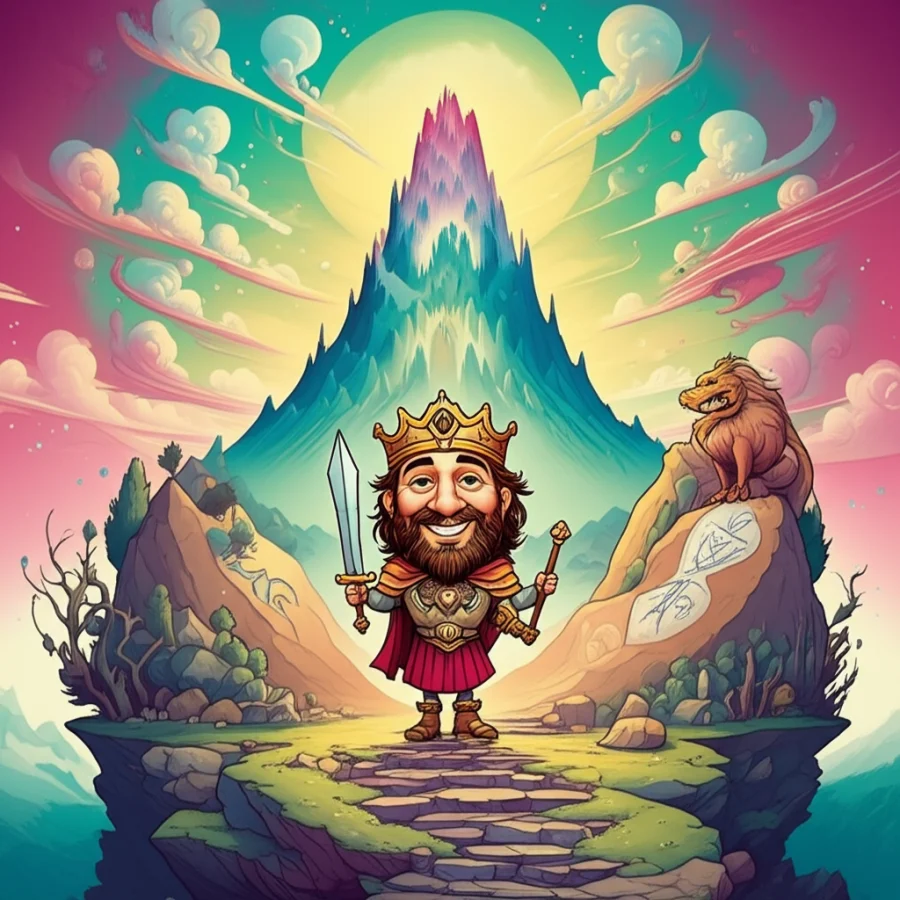
The legend of Avalon, often described as a mystical island shrouded in mist and perpetually autumnal, became the ultimate sanctuary for the Tuatha Dé Danann. It was a place of eternal spring, where apples, the fruit of immortality, grew in abundance, and where the finest of their kind sought refuge from the changing world. The "hunt" for the Tuatha Dé Danann of Avalon, therefore, is not a literal pursuit with bows and arrows, but rather a symbolic quest for knowledge, for understanding of the ancient ways, and for a connection to a lost, idealized past.
Imagine the story as it might have been told around a crackling fire on a long winter night. The narrator’s voice, hushed with reverence and wonder, would speak of the great battles the Tuatha Dé Danann fought, their triumphs and their eventual retreat to their hidden realm. Perhaps it was after their defeat by the Milesians, the ancestors of the Gaels, that the Tuatha Dé Danann, sensing their time on the mortal plane was waning, withdrew to Avalon.
The journey to Avalon was never straightforward. It was a path charted not by maps, but by intuition, by dreams, and by an understanding of the subtle signs of the world. Those who sought them, it is said, were often those who were themselves on a spiritual quest – heroes, poets, or those touched by fate. They might have followed the flight of a white stag, navigated treacherous seas guided by the stars, or entered through liminal spaces – the heart of a mountain, the depths of a fairy fort, or the edge of a sacred grove.
Upon reaching Avalon, the seekers would not necessarily find a physical island with defined borders. Instead, they might experience a shift in perception, a blurring of reality where the ordinary world gave way to the extraordinary. They might encounter the Tuatha Dé Danann not as solid beings, but as shimmering presences, as voices carried on the wind, or as fleeting visions in the mist. They might be tested, offered wisdom, or granted a glimpse into the secrets of the universe. The "hunt" was, in essence, a journey of the soul, a reaching for the profound mysteries that lie just beyond our everyday comprehension.
Echoes of Meaning: Symbolism and Interpretation
The myth of the Tuatha Dé Danann and their retreat to Avalon carries a rich tapestry of symbolic meanings for the ancient peoples who conceived it. The Tuatha Dé Danann themselves often symbolized the primal forces of nature, the untamed energies that shaped the world. Their mastery over elements represented the awe and respect for the power of the natural environment. Their magical abilities could represent the potential for human ingenuity and the understanding of hidden processes.
Avalon, as their sanctuary, symbolized an idealized realm of peace, wisdom, and eternal youth, a stark contrast to the often harsh realities of mortal life. It could represent the pursuit of a higher state of being, a spiritual haven where true knowledge and lasting peace could be found. The "hunt" for these beings and their home can be seen as humanity’s enduring desire to connect with its origins, to seek answers to profound questions about life, death, and the universe, and to find meaning beyond the mundane. It also speaks to the human fascination with the unknown, the allure of the hidden and the magical.
Avalon in the Modern Imagination
In contemporary culture, the legend of the Tuatha Dé Danann and Avalon continues to captivate. They are a recurring motif in literature, where authors explore themes of magic, ancient lore, and the clash between the modern world and its mythical past. In fantasy novels, these figures might be reimagined as powerful sorcerers, wise elven rulers, or the archetypal guardians of forgotten knowledge.
The figure of King Arthur and his association with Avalon further solidifies its place in popular imagination. The tales of his healing and eventual departure to Avalon after his final battle speak to the enduring hope for renewal and a mystical afterlife. In film and television, Avalon is often depicted as a breathtaking, ethereal landscape, a testament to the visual power of these ancient stories. Even in video games, the quest for lost artifacts or the exploration of enchanted lands often draws inspiration from the archetypes established by the Tuatha Dé Danann and their legendary abodes. These modern interpretations, while varied, demonstrate the persistent appeal of these ancient narratives and their ability to spark imagination across generations.
A Legacy of Storytelling
It is crucial to reiterate that the tales of the Tuatha Dé Danann and Avalon are traditional stories, born from the rich cultural heritage of ancient peoples. They are narratives that reflect their worldview, their understanding of the world around them, and their aspirations. As Muslims, we recognize that only Allah (God) is the true Creator and Sustainer of all existence. Our understanding of the universe and its origins is firmly rooted in Islamic teachings.
However, these ancient myths hold immense value as expressions of human creativity, imagination, and the enduring human need to tell stories. They offer a window into the minds of our ancestors, revealing their beliefs, their fears, and their hopes. The "hunt" for the Tuatha Dé Danann of Avalon, in this light, becomes a fascinating exploration of cultural heritage, a testament to the power of storytelling to transport us to other worlds, and a reminder of the boundless capacity of the human imagination to dream, to question, and to seek meaning in the echoes of the past.