fufufafa
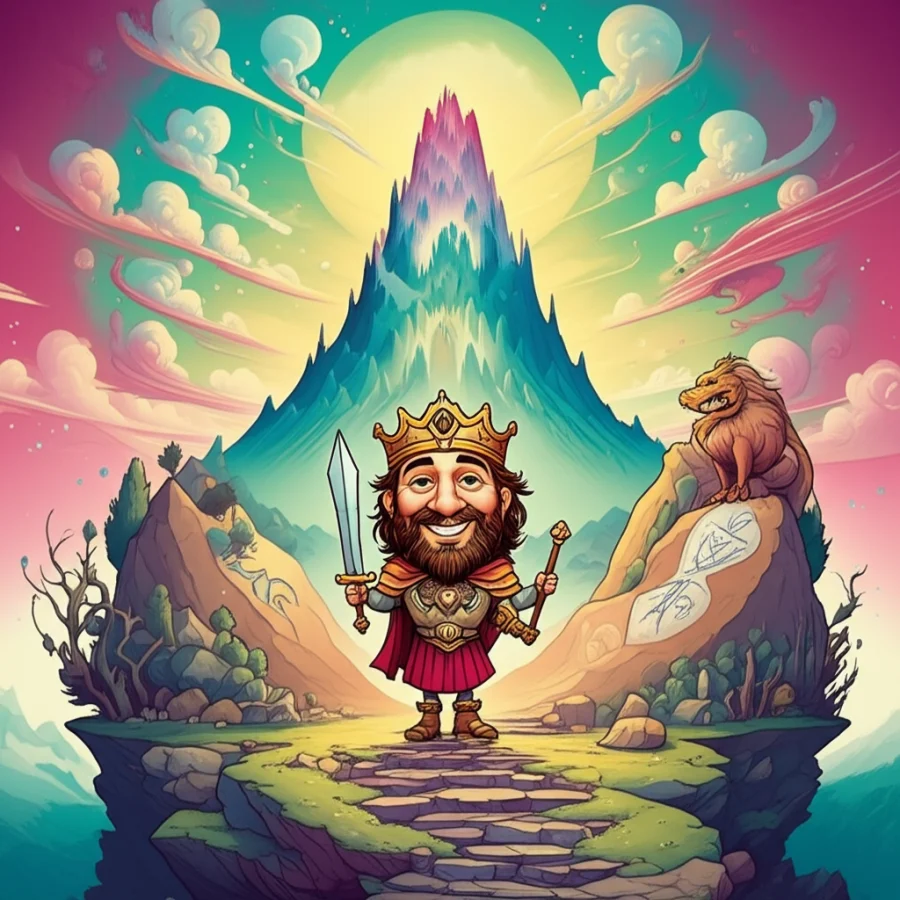
From the misty, verdant landscapes of ancient Ireland, where the veil between the physical and the mystical was often perceived as thin, comes the tale of Nuada and the Sacred Mountain. This is not a historical account, but a rich tapestry woven from the threads of mythology and folklore, a story passed down through generations by the ancient peoples who inhabited this land. These narratives, brimming with the wonder and apprehension of a world deeply intertwined with nature, offer us a glimpse into their unique understanding of existence, their awe of the natural world, and their attempts to explain the forces that shaped their lives.
The era in which such myths likely took root was a time when communities lived in close proximity to the land, their lives dictated by the rhythms of the seasons, the fertility of the soil, and the untamed power of the elements. Their worldview was often animistic, seeing spirit and consciousness not only in humans and animals but also in mountains, rivers, trees, and the very air they breathed. The world was a place of potent forces, both benevolent and dangerous, and the stories of gods, heroes, and mythical beings served as a way to navigate this complex reality, to understand its origins, and to impart moral lessons and societal values. The Sacred Mountain, in particular, would have represented a profound connection to the earth itself, a place of power, mystery, and perhaps even a conduit to the divine.
At the heart of this chronicle stands Nuada, a figure who, within the context of this mythological framework, is often depicted as a king or a prominent leader among his people, the Tuatha Dé Danann, a mythical race said to have inhabited Ireland before the arrival of the Milesians. Nuada’s significance is not necessarily tied to divine pronouncements but to his symbolic role as a ruler and protector, embodying qualities that ancient societies valued in leadership. He is often associated with justice, wisdom, and the well-being of his people. The description of Nuada in these tales is often less about physical appearance and more about his actions and his connection to the spiritual and political realm. He might be portrayed as possessing a noble bearing, a keen intellect, and an unwavering commitment to his followers. His symbolic attributes lie in his capacity to unite, to lead, and to engage with the powers that governed their world, whether through diplomacy or through direct confrontation.
The narrative of Nuada and the Sacred Mountain often unfolds around a central conflict or a significant undertaking. Imagine a time when the Tuatha Dé Danann faced a great challenge, perhaps a threat from a rival group, a natural disaster, or a spiritual imbalance that cast a shadow over their land. It is in this moment of need that the legend of the Sacred Mountain comes to the fore. This mountain, often described as towering and majestic, its peak shrouded in perpetual mist or touched by the heavens, was considered a place of immense power and sacredness. It was not merely a geographical feature but a living entity, a nexus of spiritual energy.
The story might tell of Nuada’s quest to the Sacred Mountain, perhaps seeking guidance, strength, or a crucial artifact necessary for his people’s survival. He might have to undertake arduous trials, traversing treacherous paths, facing mythical beasts, or confronting his own inner doubts. The journey itself would be fraught with symbolic meaning, representing the challenges inherent in leadership and the perseverance required to overcome adversity. Upon reaching the summit, Nuada might encounter a guardian spirit of the mountain, a powerful elemental being, or even a celestial entity. The interaction would be crucial, leading to the bestowal of a blessing, a prophecy, or the acquisition of an object of immense power, such as a magical sword or a healing chalice. The mountain, in this context, acts as a catalyst for transformation, a place where the mortal realm intersects with the divine, allowing for the renewal of strength and purpose. The ensuing events would then detail how Nuada, empowered by his experience on the Sacred Mountain, returns to his people to face their challenge, his victory serving as a testament to his leadership and the potent forces he invoked.
The symbolism embedded within the Chronicle of Nuada and the Sacred Mountain is rich and multifaceted. The Sacred Mountain itself often represents stability, permanence, and a connection to the primordial forces of creation. It could symbolize the spiritual heights that individuals and communities strive for, the place where one seeks clarity and divine intervention. Nuada, as the protagonist, embodies leadership, courage, and the responsibility to protect his people. His journey to the mountain signifies the arduous but ultimately rewarding path of seeking wisdom and strength from higher powers or from within the very fabric of existence. The trials he faces can be interpreted as allegories for the obstacles that life presents, and his success underscores the importance of resilience, faith (in the context of their belief system), and the ability to harness inner and outer resources. The myth, therefore, could have served as a moral compass, teaching about the virtues of bravery, perseverance, and the recognition of sacred spaces and powers in the world.
In the modern world, these ancient myths continue to resonate, finding new life in various forms of creative expression. The Chronicle of Nuada and the Sacred Mountain, or similar tales of heroic quests and sacred places, can be found influencing fantasy literature, where towering mountains are often imbued with magical properties and characters embark on epic journeys to uncover ancient secrets. In video games, the concept of a sacred mountain as a quest destination or a source of power is a common trope. Furthermore, in academic circles, these myths are studied in cultural anthropology and folklore to understand the belief systems, societal structures, and worldview of ancient peoples. They offer valuable insights into how humans have historically sought to make sense of their existence and their place within the vastness of the cosmos.
It is crucial to reiterate that the Chronicle of Nuada and the Sacred Mountain is a product of human imagination, a traditional story told by ancient people to explain the world around them and to impart cultural values. As Muslims, we understand that only Allah (God) is the true Creator and Sustainer of the universe. These ancient narratives, while fascinating for their cultural and historical significance, do not hold divine truth. They are echoes of a bygone era, testaments to the enduring human capacity for storytelling, for weaving tales that explore our deepest hopes, fears, and our desire to understand the mysteries of existence. By studying these myths, we not only gain an appreciation for the rich tapestry of human cultural heritage but also a deeper understanding of the diverse ways in which people have sought meaning and connection throughout history.