fufufafa
In the windswept landscapes of ancient Ireland, where mist clung to emerald hills and the whispers of the past were carried on the gales, flourished a rich tapestry of myths and legends. These were not mere tales spun for amusement, but profound narratives woven into the very fabric of daily life, offering explanations for the mysteries of existence, the cycles of nature, and the complexities of the human heart. Among these captivating stories, the chronicle of Morrigan and the Sacred Temple stands as a testament to the imaginative spirit of the Celtic peoples. It is crucial to understand that this is a traditional story, a product of ancient belief systems, shared for cultural and historical understanding, and not a reflection of contemporary religious practice or factual account.
Origins and Cultural Background: A World Alive with Spirit
The myths surrounding Morrigan and the Sacred Temple emerge from the Iron Age and early medieval periods of Celtic Ireland, a time when society was largely agrarian and deeply connected to the land. The worldview of these ancient people was animistic; they perceived the world as being imbued with spirit and consciousness. Every river, every tree, every mountain held its own essence, and the forces of nature were often personified by powerful, often capricious, deities and spirits.
Life was a delicate balance between the human realm and the supernatural. Festivals marked the changing seasons, agricultural cycles were governed by ancient rituals, and warfare, a frequent occurrence, was understood through the lens of divine intervention and fate. The Tuatha Dé Danann, the legendary race of gods and goddesses who inhabited Ireland before the arrival of the Milesians, were central figures in their cosmology, representing different aspects of the natural world, human endeavors, and the unknown. It was within this vibrant, spirit-infused world that stories of figures like Morrigan took root and flourished.
Character Description: The Multifaceted Morrigan
Morrigan, in the context of these ancient Irish tales, is not a single, easily defined entity. Instead, she is often depicted as a complex and formidable figure, a triple goddess or a collective of deities embodying different facets of fate, war, and sovereignty. Her name itself is often translated as "Great Queen" or "Phantom Queen."
Symbolically, Morrigan is associated with crows and ravens, birds often seen as omens of battle and death. Her appearance could be that of a beautiful maiden, a terrifying hag, or even a shapeshifting bird. She embodies the primal forces of life and death, the raw power of nature, and the often-unpredictable hand of destiny. She is the harbinger of doom for some, the protector of rightful rule for others, and a potent symbol of the interconnectedness of all things. Her attributes are not to be interpreted as literal divine qualities, but rather as symbolic representations of concepts vital to the ancient Irish understanding of their world.
The Chronicle of Morrigan and the Sacred Temple: A Narrative of Power and Protection
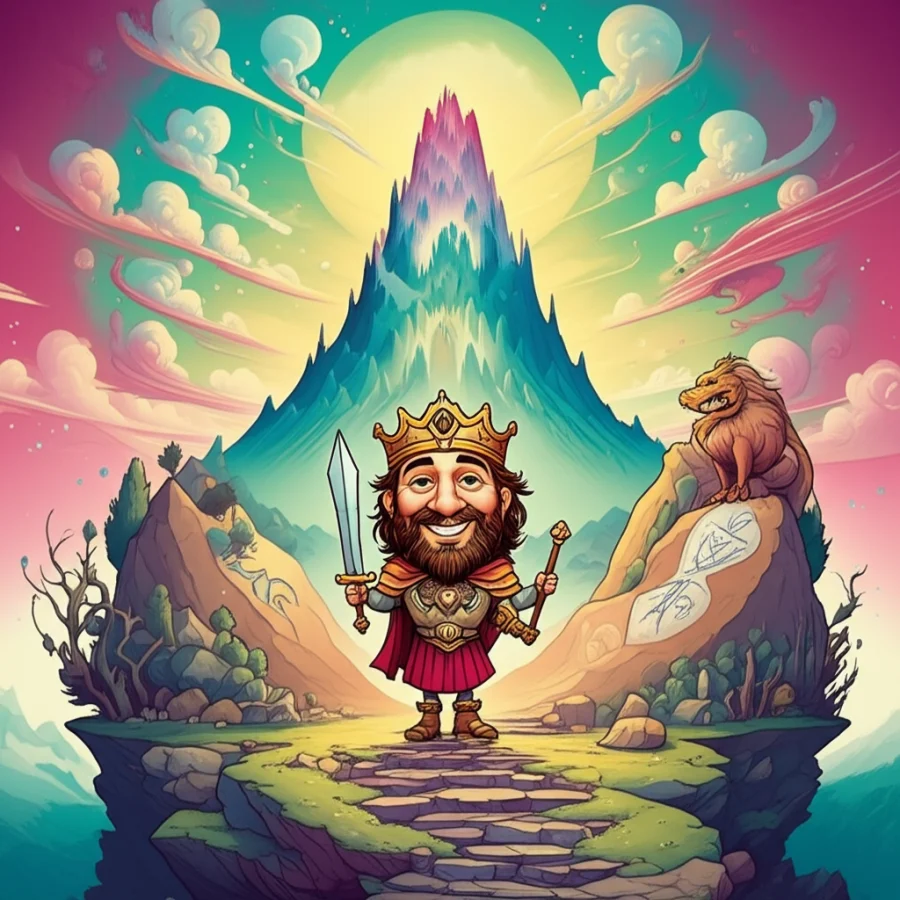
The narrative of Morrigan and the Sacred Temple often unfolds within the context of a sacred site, a place of immense spiritual significance and power, guarded by the formidable goddess. Imagine, if you will, a secluded valley, cradled by ancient, moss-covered mountains. Here, nestled amidst ancient oaks and beside a crystal-clear spring, stood the Sacred Temple. Its stones were not hewn by human hands, but seemed to have risen from the earth itself, imbued with an ageless energy. This was not a place of worship in the modern sense, but a nexus of power, a sanctuary where the veil between the mortal and the divine was thin.
The Temple was said to be the heart of Ireland’s spiritual essence, a place where the land drew its vitality and its destiny was shaped. And at its heart, its protector and embodiment, was Morrigan. She was not a benevolent deity offering gentle blessings, but a force of nature, a guardian of immense power.
In one such telling, a great host, driven by ambition and greed, sought to desecrate the Temple, to steal its power for their own nefarious ends. They marched across the land, their armor glinting ominously, their war cries echoing through the valleys. But as they approached the sacred precinct, the air grew heavy, charged with an unseen energy.
Morrigan, in her myriad forms, manifested. Sometimes, she appeared as a lone raven, her dark wings casting a shadow over the approaching army, a silent, chilling omen. At other times, she was a warrior woman, her presence radiating an aura of terrifying might, her voice a thunderous command that shook the very earth. The battlefield itself seemed to turn against the invaders. Rivers swelled, engulfing their chariots. The winds howled, tearing at their banners and disorienting their ranks. The very ground beneath their feet became treacherous, swallowing them whole.
The story often depicts Morrigan appearing to a rightful leader, offering guidance or a prophecy, a subtle influence rather than a direct intervention. She was the spirit of the land itself, defending its sanctity. The invaders, facing not just mortal opposition but the overwhelming opposition of nature and an ancient power, were driven back in disarray, their ambition crushed. The Sacred Temple remained inviolate, its power preserved, a testament to the enduring might of Morrigan, the guardian of Ireland’s soul.
Symbolism and Meaning: Reflections of an Ancient World
To the ancient Irish, the myth of Morrigan and the Sacred Temple likely held a multitude of symbolic meanings. Morrigan’s multifaceted nature represented the unpredictable currents of fate, the raw, untamed power of the natural world, and the essential connection between sovereignty and the land. Her role as a protector of the Sacred Temple underscored the profound reverence they held for their sacred sites, places believed to be imbued with the essence of their ancestors and the very spirit of Ireland.
The Temple itself could symbolize the spiritual heart of the community, the source of its strength and identity. The story of its defense against invaders would have served as a powerful allegory for the preservation of their culture, their land, and their way of life against external threats. It spoke to their understanding of the world as a place where spiritual forces played a crucial role in the affairs of mortals, where the land itself could rise up to defend its own.
Modern Perspective: Enduring Echoes in Contemporary Culture
The tales of Morrigan and the potent imagery of ancient sacred sites continue to resonate in the modern world, finding expression in various forms of media. In literature, authors draw upon the rich tapestry of Celtic mythology to create compelling characters and intricate plotlines, often featuring Morrigan as a complex anti-heroine or a force of nature. Fantasy novels and role-playing games frequently incorporate elements of Celtic lore, with Morrigan appearing as a powerful deity or a significant character influencing the narrative.
Film and television have also explored these themes, bringing ancient legends to life through visually stunning interpretations. While these portrayals are often fictionalized and adapted for entertainment purposes, they serve to keep these ancient stories alive in the collective consciousness, sparking curiosity and encouraging further exploration of their origins. Cultural studies and academic research delve into the historical and anthropological significance of these myths, seeking to understand the beliefs, values, and societal structures of the people who created them.
Conclusion: A Legacy of Storytelling
The chronicle of Morrigan and the Sacred Temple, like so many other ancient narratives, offers us a window into the imaginative world of our ancestors. It is a testament to their deep connection with nature, their understanding of life’s complexities, and their enduring capacity for storytelling. As Muslims, we recognize that only Allah (God) is the true Creator and Sustainer of all existence, the ultimate power and truth. These ancient stories, however, hold value as a reflection of human heritage, a testament to the diverse ways in which people have sought to understand their place in the universe. They remind us of the rich tapestry of human imagination and the enduring power of narrative to shape our understanding of ourselves and the world around us. The echoes of Morrigan and her Sacred Temple, though born of ancient beliefs, continue to whisper through our culture, a timeless reminder of the stories that have shaped us.