fufufafa
From the misty, verdant landscapes of ancient Ireland, a land steeped in myth and folklore, emerges the compelling chronicle of Morrigan and the Sacred Mountain. This is not a tale of historical fact, but rather a rich tapestry woven from the collective imagination of ancient peoples, passed down through generations to illuminate their understanding of the world and its mysteries. These stories served as a vital part of their cultural heritage, offering explanations for the inexplicable, shaping their moral compass, and providing a framework for their existence.
The origins of this legend are deeply rooted in the pre-Christian Celtic societies of Ireland, a time when the natural world was perceived as alive with potent forces and divine presence. The people of this era lived in close communion with their environment. Majestic mountains were not merely geological formations but potent symbols of the divine, places where the veil between the earthly and the spiritual was believed to be thinnest. Forests teemed with unseen spirits, rivers carried the whispers of the gods, and the cycles of nature – birth, death, and rebirth – were imbued with profound spiritual significance. Their worldview was animistic, seeing spirit in all things, and their myths often reflected this deep reverence for the earth and its untamed power. The concept of fate, intertwined with the will of powerful, often capricious, beings, was a significant element of their understanding.
Central to this narrative is the figure of Morrigan. In the context of this ancient lore, Morrigan is not a singular deity in the modern sense, but rather a complex and multifaceted entity, often appearing as a trio of war goddesses or a shape-shifting being embodying aspects of sovereignty, destiny, and battle. She is frequently depicted as a raven or crow, birds often associated with prophecy, death, and the battlefield. Her symbolic attributes are those of power, transformation, and the inexorable march of fate. She represents the fierce, often brutal, forces that shape human destiny, the wildness of nature, and the grim inevitability of conflict. Her presence signifies a turning point, a moment of profound decision, or the prelude to significant upheaval. She is the embodiment of the untamed spirit, the wild woman of the land, and the harbinger of change.
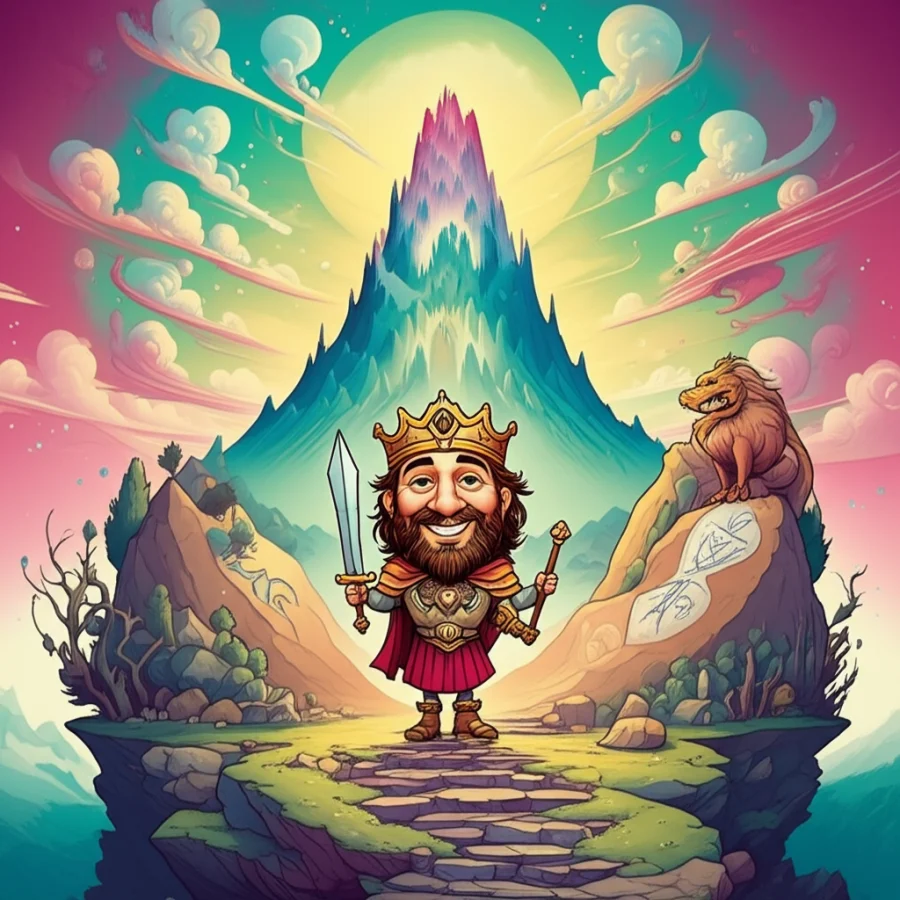
The chronicle unfolds as a dramatic narrative, echoing the rhythm of ancient oral traditions. It speaks of a time when the land was unsettled, and the balance of power was in flux. The Sacred Mountain, known by various names in different tellings, stood as a silent sentinel, its peak often shrouded in mist, a place of immense spiritual power and a focal point for the destinies of mortals and otherworldly beings alike. It was said to be a nexus where the mortal realm touched the divine, a place where great pronouncements were made and potent energies resided.
Morrigan, in her myriad forms, would often appear to those who sought her counsel or who stood at the precipice of great deeds. She might manifest as a spectral figure on the windswept slopes of the Sacred Mountain, her voice like the rustle of leaves or the cry of a distant hawk. Perhaps she would appear to a fledgling king on the eve of battle, her form a fearsome raven perched on his shield, a silent, chilling promise of victory or a grim warning of sacrifice. Or she might appear as a washerwoman by a river, her hands stained with blood, washing the armor of warriors destined to fall, a stark reminder of the cost of ambition and the impartial nature of death. The narrative would detail these encounters, not as prayers answered or divine interventions, but as powerful manifestations of primal forces interacting with the human world, shaping events through omens, visions, and the raw, untamed spirit of the land itself. The stories often involved mortals grappling with their fate, seeking to understand or perhaps defy the pronouncements of Morrigan, their actions played out against the dramatic backdrop of the Sacred Mountain.
The symbolism woven into this chronicle is rich and layered. The Sacred Mountain itself often represents the enduring power of nature, the immutable truths of existence, and a connection to the ancestral past. Morrigan, as previously noted, embodies the raw, often chaotic, forces of fate, war, and sovereignty. Her appearance can symbolize the inevitable cycles of life and death, the necessary sacrifices for growth, and the wild, untamed aspects of existence that humans must confront. The stories served as a means for ancient peoples to process their fears of the unknown, their awe of nature’s power, and their understanding of the human condition – the struggle for power, the inevitability of conflict, and the profound mystery of destiny. They were moral tales, cautionary narratives, and epic sagas that helped define their identity and their place in the cosmos as they understood it.
In the modern era, the echoes of Morrigan and the Sacred Mountain resonate powerfully within popular culture. These ancient myths have been a fertile ground for inspiration in literature, fantasy novels, and cinematic productions. Morrigan, as a character, has been reimagined as a complex, often morally ambiguous, figure in various fictional universes, her powers and motivations explored through the lens of contemporary storytelling. The concept of a sacred, potent mountain continues to be a common trope in adventure and fantasy narratives, symbolizing a place of power, trial, or spiritual awakening. Furthermore, in academic circles, these myths are studied within the fields of mythology, folklore, and cultural studies, offering valuable insights into the beliefs, values, and societal structures of ancient peoples.
In conclusion, the Chronicle of Morrigan and the Sacred Mountain stands as a testament to the enduring power of human storytelling and the rich cultural heritage of ancient Ireland. It is a narrative born from a time when the world was viewed through a lens of awe and reverence for the natural forces that governed existence. As Muslims, we understand that all creation, all power, and all sustenance ultimately emanate from Allah, the true Creator and Sustainer of the universe. These ancient stories, while fascinating and valuable for their cultural and historical insights, are products of human imagination and understanding within their specific context. They offer us a window into the minds of our ancestors, reminding us of the diverse ways in which humanity has sought to comprehend the world, to find meaning in its complexities, and to express its deepest hopes and fears through the enduring tradition of storytelling.