fufufafa
Introduction
From the volcanic landscapes of Hawai’i, a vibrant tapestry of stories has been woven over generations, passed down through oral tradition. These tales, filled with powerful deities, natural phenomena, and the struggles of humans, offer a window into the worldview of the ancient Hawaiians. Among the most captivating is the story of Pele, the goddess of volcanoes, and her connection to the water spirits known as Mo’o, all originating from the mythical homeland of Hawaiki. It’s important to remember that this is a traditional story told by ancient people to explain the world around them, a story meant to be understood within its cultural context, not as a statement of fact or belief.
Origins and Cultural Background
The stories surrounding Pele, the Mo’o, and Hawaiki originated within the Polynesian culture, specifically among the people who eventually settled the Hawaiian Islands. This settlement occurred in waves, likely beginning around the 3rd to 5th centuries CE, with later migrations continuing for several centuries. The society that developed in Hawai’i was deeply connected to the natural world. They observed the movements of the stars for navigation, understood the cycles of the ocean for fishing, and felt the power of the volcanoes beneath their feet.
Ancient Hawaiians believed in a world populated by gods and spirits, known as akua and ‘aumākua. These beings were thought to influence every aspect of life, from the success of a harvest to the outcome of a battle. Kapu, a system of sacred laws and prohibitions, governed interactions with the akua and maintained social order. The world was seen as a place of interconnectedness, where human actions had consequences for the natural world and vice versa. Stories like that of Pele served to explain natural phenomena, teach moral lessons, and reinforce the cultural values of respect for the land, the sea, and the ancestors.
Character / Creature Description
- Pele: Often depicted as a fiery woman of immense power, Pele is the goddess of volcanoes, fire, lightning, and wind. She is a force of creation and destruction, capable of carving new landscapes with her lava flows. Symbolically, Pele represents the volatile and transformative nature of fire, the power of the earth, and the passion of the human spirit. She is both revered and feared, a reminder of the immense forces at play in the natural world.
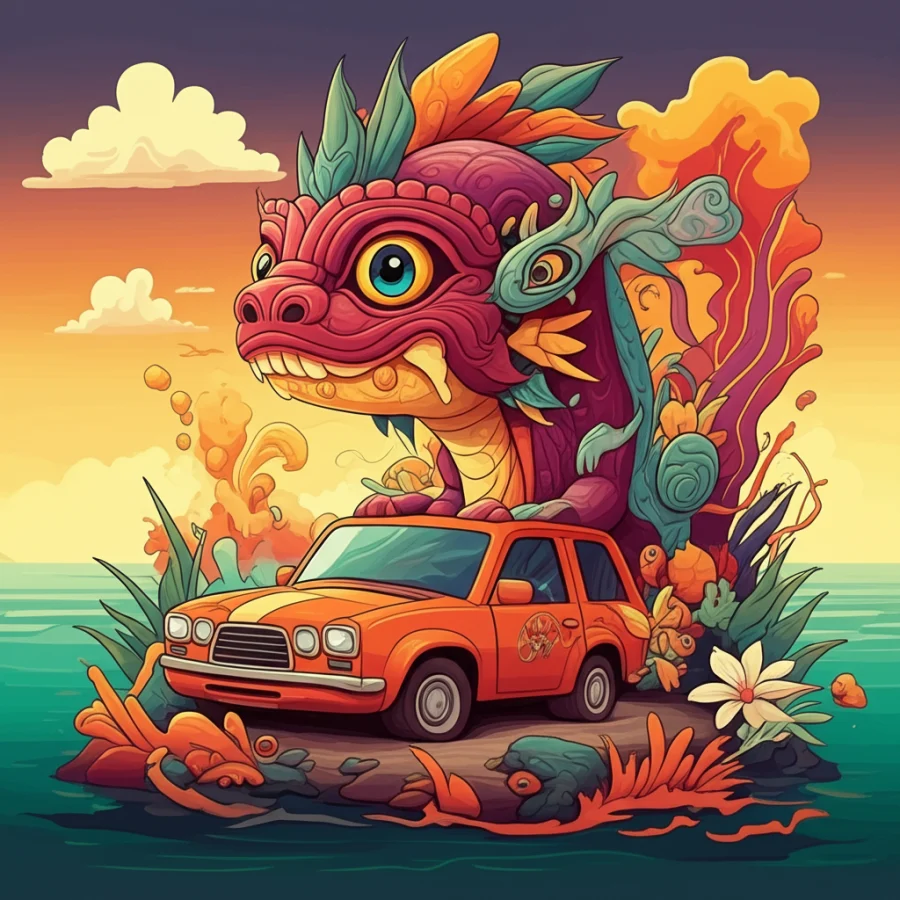
- Mo’o: The Mo’o are water spirits, often described as lizard-like creatures, sometimes possessing human-like features. They are guardians of bodies of water – ponds, lakes, and streams. In some stories, they are portrayed as malevolent beings who must be appeased or overcome. In others, they are benevolent protectors of the land and its resources. Symbolically, the Mo’o represent the life-giving and potentially dangerous power of water, the connection between the physical and spiritual realms, and the importance of respecting natural boundaries.
- Hawaiki: Hawaiki is the ancestral homeland from which the Polynesians are believed to have originated. It’s not a specific, easily identifiable geographic location, but rather a mythical place that represents the origin of their culture, their ancestors, and their spiritual connection to the past. Symbolically, Hawaiki represents the roots of identity, the importance of heritage, and the yearning for connection to a shared history. It’s a place of perfection and abundance, a source of knowledge and wisdom.
Main Story / Narrative Retelling
From the distant, mythical land of Hawaiki, Pele, the restless goddess of fire, felt a burning desire to explore. Driven by a thirst for creation, she set sail in her canoe, Honuaiakea, seeking a new home. Her journey was fraught with challenges. Her sister, Na-maka-o-kaha’i, a powerful sea goddess and wife of Pele’s brother, grew jealous of Pele’s fiery power and relentlessly pursued her across the ocean.
Pele first landed on the island of Kaua’i, digging fire pits in her search for a suitable location to build her home. However, Na-maka-o-kaha’i continued her pursuit, extinguishing Pele’s fires and driving her further eastward. Pele moved from island to island – O’ahu, Maui, and others – leaving behind remnants of her fiery presence in the form of volcanic craters and cinder cones.
On Maui, she clashed with the demigod Maui, known for his trickery and strength. He challenged her power, attempting to steal her fire. The battle was fierce, shaking the very foundations of the island, but Pele, with her fiery spirit, eventually subdued him.
Finally, Pele arrived on the youngest and largest of the Hawaiian Islands, Hawai’i Island. Here, in the heart of Kilauea volcano, she found her permanent home. It was here, too, that she battled Na-maka-o-kaha’i one last time. The two sisters engaged in a furious struggle, their powers clashing like fire and water. In the end, Pele was victorious, driving Na-maka-o-kaha’i back into the sea.
However, Pele’s dominance extended beyond the volcanic peaks. She also had to contend with the Mo’o, the water spirits who guarded the lakes and streams. One particular Mo’o, known for its immense size and power, controlled the waters of a sacred lake. Pele, in her fiery rage, challenged the Mo’o, unleashing her lava flows and scorching the land. The battle was devastating, forever altering the landscape and reminding all of the delicate balance between fire and water, creation and destruction.
Symbolism and Meaning
The story of Pele, the Mo’o, and Hawaiki is rich in symbolism. For the ancient Hawaiians, Pele represented the power of volcanoes, a force that could both create new land and destroy existing settlements. Her story served as a reminder of the volatile nature of the earth and the need to respect its power.
The Mo’o, as guardians of the water, symbolized the importance of water as a life-giving resource. Their battles with Pele highlighted the conflict between fire and water, representing the delicate balance that sustains life. The story also served as a warning against disrupting the natural order.
Hawaiki, as the ancestral homeland, symbolized the importance of cultural heritage and the connection to the past. It represented the source of their identity and the foundation of their beliefs. The journey from Hawaiki to Hawai’i Island symbolized the challenges of migration, the search for a new home, and the adaptation to a new environment.
Modern Perspective
Today, the stories of Pele, the Mo’o, and Hawaiki continue to resonate in Hawaiian culture and beyond. Pele, in particular, has become a powerful symbol of Hawaiian identity and resilience. Her story is often featured in literature, movies, and games, offering a glimpse into the rich mythology of the Hawaiian Islands.
In cultural studies, the stories are examined for their insights into the worldview of the ancient Hawaiians, their relationship with the natural world, and their cultural values. They are also used to explore themes of creation, destruction, conflict, and adaptation.
Conclusion
The story of Pele, the Mo’o, and Hawaiki is a vibrant example of the rich storytelling tradition of the ancient Hawaiians. It offers a glimpse into their worldview, their relationship with the natural world, and their cultural values. It’s a story that continues to resonate today, reminding us of the power of mythology to shape our understanding of the world.
As Muslims, we acknowledge that only Allah is the true Creator and Sustainer of the universe. These stories, though fascinating and culturally significant, are not meant to be taken as religious doctrine. They are part of a cultural heritage, a testament to the power of imagination, and a reminder of the enduring human need to understand the world around us through the art of storytelling. The tales of Pele, the Mo’o, and Hawaiki are echoes of a past, whispers of a culture, and reflections on the timeless themes of creation, destruction, and the search for home.