
 fufufafa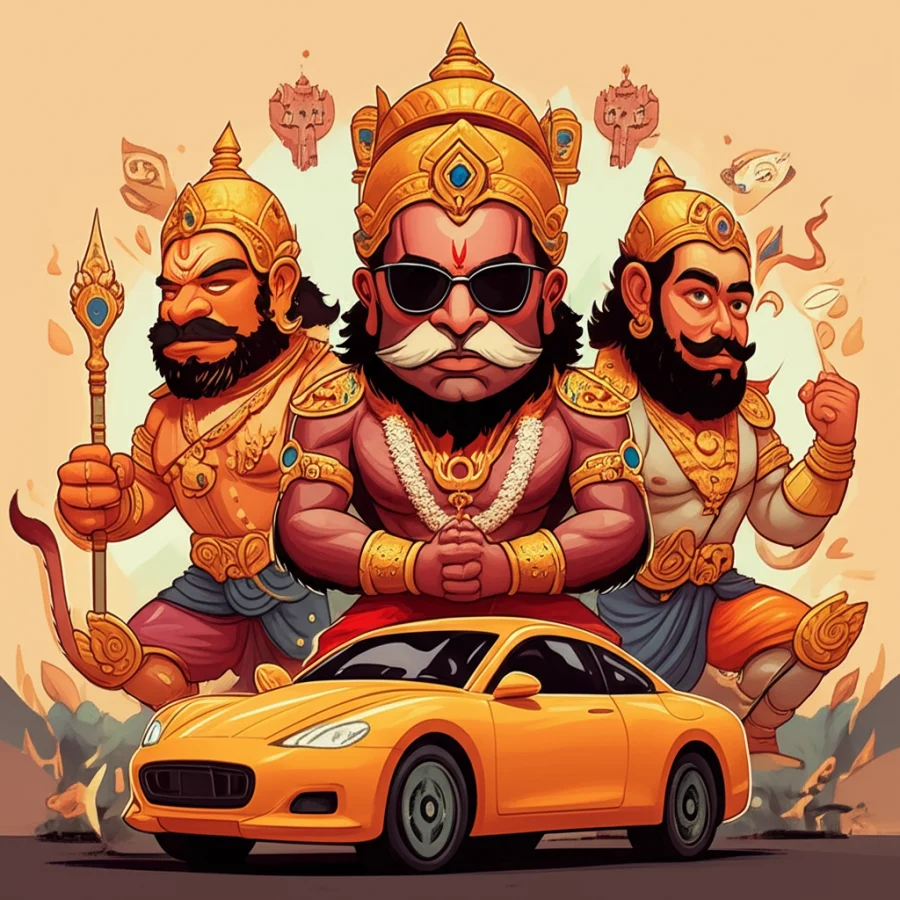
Introduction:
High in the snow-capped peaks of the Himalayas, where the air thins and the sky stretches vast and endless, lies Mount Kailash, a place revered in several ancient Asian traditions. According to Hindu, Buddhist, Jain, and Bon beliefs, Kailash is more than just a mountain; it is the abode of deities and a cosmic axis mundi, the center of the universe. Woven into the rich tapestry of myths surrounding Kailash are tales of its guardians, protectors tasked with preserving its sanctity. Among these legendary beings are the Vanara, a race of powerful, intelligent monkey-like creatures, whose stories have been passed down through generations in the Indian subcontinent. This article explores the legends of the Vanara as guardians of Kailash, acknowledging that these are traditional stories, not factual accounts, stemming from a specific cultural and historical context.
Origins and Cultural Background:
The myths and legends of the Vanara are deeply rooted in the ancient history and culture of India, particularly during the era when the epic Ramayana took shape. This period, estimated to be around 500 BCE to 300 BCE, was a time of significant social, political, and religious transformation. The people of that time lived in a world where the natural and supernatural were intricately intertwined. They saw divinity in rivers, mountains, and forests, and their lives were governed by dharma, the principle of cosmic order and righteousness.
The concept of dharma was central to their worldview. They believed that maintaining balance in the universe required adherence to one’s duty and righteous conduct. Stories like the Ramayana served as moral compasses, teaching values of loyalty, courage, and devotion. In this context, the Vanara, with their human-like intelligence and animalistic strength, represented a bridge between the human and the natural worlds. They were seen as powerful allies and protectors, capable of defending the sacred and upholding dharma. The dense forests and mountainous regions of the Indian subcontinent served as the backdrop for these tales, providing a plausible environment for the existence of such creatures in the popular imagination.
Character / Creature Description:
The Vanara, as described in ancient texts and oral traditions, are depicted as beings with a striking combination of human and simian characteristics. They possess the intelligence and social structures of humans, coupled with the strength, agility, and fur-covered bodies of monkeys. Often described as having golden fur, sharp teeth, and long tails, the Vanara are far more than just talking animals. They are skilled warriors, strategists, and loyal companions.
Their symbolic attributes are significant. Their strength represents physical prowess and the ability to overcome obstacles. Their agility signifies adaptability and resourcefulness. Their loyalty embodies devotion and unwavering commitment to a cause. These attributes, rather than promoting belief in their existence, reflect the qualities that were valued in ancient Indian society – courage, strength, intelligence, and unwavering loyalty. The Vanara, therefore, served as role models, embodying the ideal traits that people aspired to possess.
Main Story / Narrative Retelling:
Imagine a time when the world was young, and the gods walked among mortals. Mount Kailash stood tall, its peak piercing the heavens, a beacon of divine power. Legend speaks of how the Vanara, Hanuman in particular, were entrusted with protecting the sacred mountain.
Hanuman, the most famous of the Vanara, was not merely a guardian, but a devotee of immense strength and unwavering loyalty. He was said to possess the power to fly, to change his size at will, and to move mountains. He patrolled the slopes of Kailash, his eyes scanning for any sign of disturbance. Demons and malevolent spirits, envious of the mountain’s sanctity, often attempted to defile it. Hanuman, with his thunderous roar and mighty blows, repelled them all.
One day, a powerful demon king named Ravana, driven by his arrogance and desire to conquer all realms, set his sights on Mount Kailash. He intended to uproot the mountain and claim its divine power for himself. Ravana arrived at the base of Kailash, his ten heads glaring at the sacred peak. He unleashed his demonic hordes, who swarmed the mountain, attempting to breach its defenses.
Hanuman, ever vigilant, rallied the Vanara warriors. They met the demonic onslaught with fierce resistance. The battle raged across the slopes of Kailash, the clash of weapons echoing through the mountains. Hanuman, with his unmatched strength and agility, single-handedly turned the tide of the battle. He leaped and soared, striking down demons with swift and decisive blows.
Ravana, enraged by the Vanara’s resistance, confronted Hanuman himself. The two titans clashed, their battle shaking the very foundations of Kailash. Hanuman, fueled by his devotion and righteous anger, fought with unparalleled ferocity. He ultimately defeated Ravana, forcing the demon king to retreat in disgrace. Kailash was saved, its sanctity preserved by the unwavering courage and loyalty of the Vanara, led by the mighty Hanuman.
Symbolism and Meaning:
The story of the Vanara as guardians of Kailash is rich in symbolism. The Vanara themselves represent the virtues of strength, loyalty, and unwavering devotion. Their role as protectors of Kailash symbolizes the importance of safeguarding the sacred and upholding dharma.
In ancient times, this story may have served as a reminder to people of the importance of protecting their cultural heritage and maintaining moral order. The challenges faced by the Vanara in defending Kailash reflect the struggles that people faced in their own lives, the battles against internal and external forces that threatened to disrupt their peace and harmony. The victory of the Vanara over Ravana signifies the triumph of good over evil, the ultimate triumph of dharma.
Modern Perspective:
Today, the legends of the Vanara continue to resonate in popular culture. Hanuman, in particular, is a beloved figure in literature, movies, and games. He is often depicted as a symbol of strength, devotion, and selfless service.
In modern adaptations, the Vanara are often portrayed as complex characters with their own strengths and weaknesses. They are not simply mythical creatures, but beings with whom audiences can connect on a human level. Their stories are used to explore themes of courage, loyalty, and the importance of standing up for what is right. In cultural studies, the Vanara serve as a lens through which to examine the values and beliefs of ancient Indian society, providing insights into the ways in which people made sense of the world around them.
Conclusion:
The legends of the Vanara as guardians of Kailash are a testament to the power of storytelling and the enduring nature of cultural heritage. These are traditional stories, passed down through generations, reflecting the values and beliefs of a specific time and place. They are not factual accounts, but rather imaginative narratives that served to inspire, teach, and entertain.
As Muslims, we understand and believe that only Allah is the true Creator and Sustainer of the universe. While we appreciate and respect the cultural significance of these stories, we acknowledge that they are part of a rich tapestry of human imagination, not divine truth.
The tales of the Vanara remind us of the importance of preserving our cultural heritage and celebrating the power of storytelling. They offer a glimpse into the past, allowing us to connect with the wisdom and values of those who came before us, while reaffirming our faith in Allah, the one true God. Let us remember these stories as cultural artifacts, sparking our imaginations and fostering an appreciation for the diverse traditions that shape our world.







