fufufafa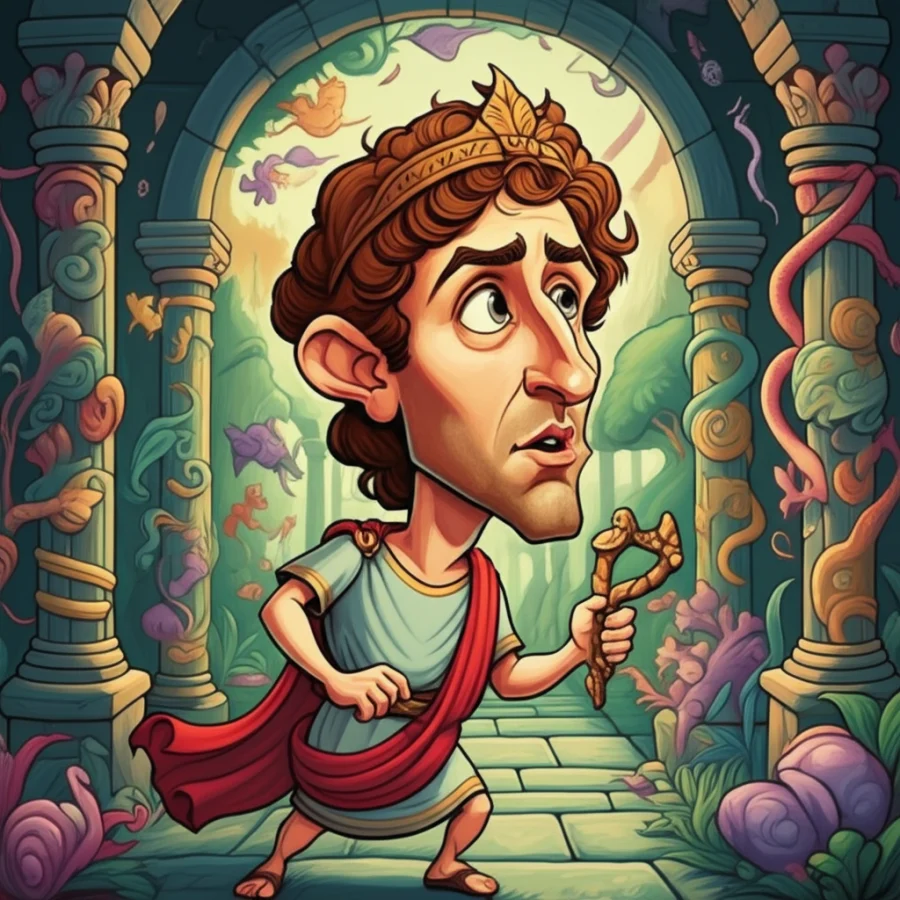
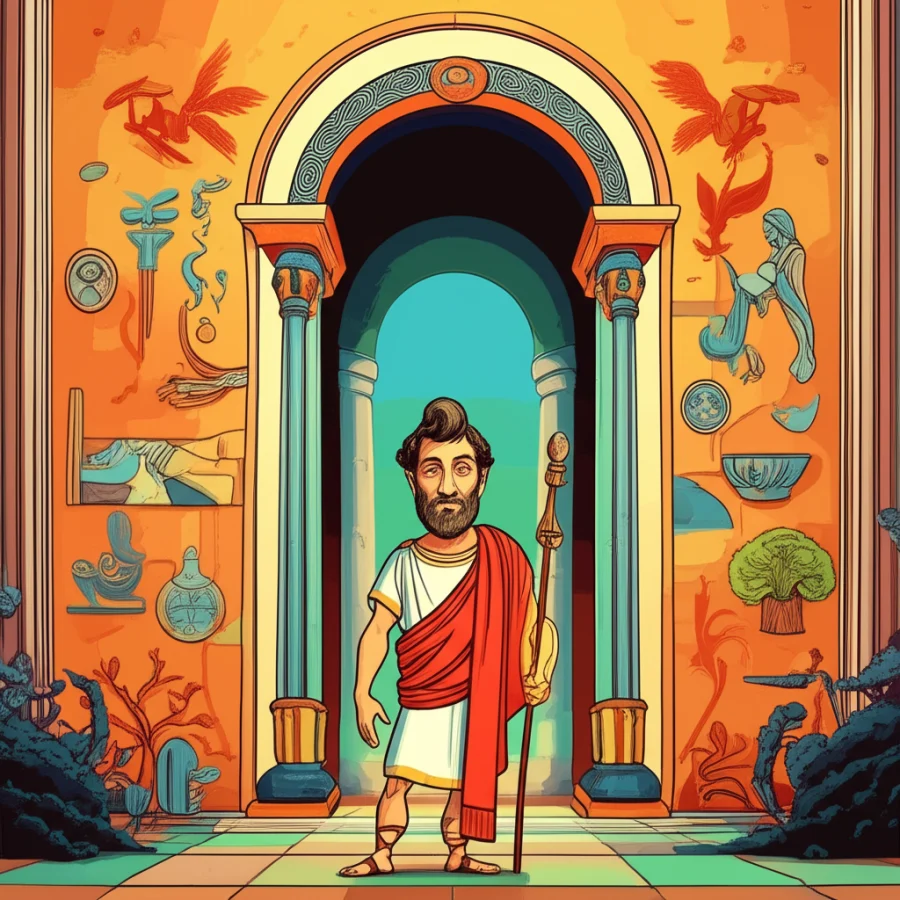
From the sun-drenched hills and olive groves of ancient Greece, a land where marble temples kissed the sky and the whispers of gods were said to echo in the rustling leaves, comes a tale that has captivated imaginations for millennia. This is the legend of Orpheus, the divinely gifted musician, and his journey into a metaphorical labyrinth, a place that, in the tapestry of ancient lore, represented the depths of human grief and the elusive nature of memory. It is crucial to understand that this narrative belongs to the realm of myth and folklore, a product of ancient storytelling, not a historical account or a guide to any form of worship.
Origins and Cultural Background: A World of Divine Presence and Mortal Struggle
The myths of ancient Greece emerged during a period characterized by a profound connection between the human and the divine. For the people of this era, the world was not a sterile, mechanistic place, but a vibrant, often unpredictable stage where the actions of gods and goddesses directly influenced mortal lives. Natural phenomena – the fury of storms, the bounty of harvests, the cycles of life and death – were attributed to the will of immortal beings. This worldview fostered a deep respect for the forces beyond human control and a rich tradition of storytelling designed to explain the unexplainable, to explore the human condition, and to offer moral guidance.
In this cultural milieu, the line between the earthly and the otherworldly was porous. Heroes were often semi-divine, and their struggles were imbued with cosmic significance. The concept of fate, or moira, played a significant role, suggesting that even the gods could not always alter the predetermined course of events. It was within this fertile ground of shared belief and imaginative interpretation that the legend of Orpheus took root.
The Bard of Thrace: Orpheus and His Lyre
At the heart of this legend stands Orpheus, a figure described not as a warrior or a king, but as a musician of unparalleled skill. Hailing from Thrace, a region known for its wild landscapes and mystical traditions, Orpheus was said to be the son of a Muse (often Calliope, the Muse of epic poetry) and Apollo, the god of music and light. This divine lineage gifted him with an extraordinary talent. His lyre, a small harp-like instrument, was not merely an object of wood and gut strings, but an extension of his soul. When Orpheus played, the very fabric of reality seemed to bend to his will.
The symbolic attributes of Orpheus are tied to the power of art, specifically music, to evoke profound emotion and to bridge seemingly insurmountable divides. His music was said to charm wild beasts, to make trees bend their branches in admiration, and even to divert the course of rivers. He represented the transformative power of creative expression, the ability of beauty and harmony to soothe the savage breast and to bring order to chaos. His lyre was a symbol of inspiration, of the divine spark that could elevate the human spirit.
The Echoes of Loss: Orpheus’s Descent into the Labyrinth of Arcadia
The most poignant and enduring tale associated with Orpheus is his tragic love for Eurydice, a beautiful nymph. Their union was a brief, incandescent joy, shattered by Eurydice’s untimely death. Bitten by a venomous serpent while fleeing from the advances of a satyr, she succumbed to the poison and descended into the underworld.
The loss of Eurydice plunged Orpheus into a despair so profound that it eclipsed even the sorrow of the gods. His music, once a source of joy and wonder, became a lament, a mournful melody that echoed his anguish across the land. Driven by an unyielding love and a desperate hope, Orpheus resolved to do what no mortal had dared before: to venture into the underworld and retrieve his beloved.
His journey was not a physical battle against monstrous guardians, but a descent into a metaphorical "Labyrinth of Arcadia." Arcadia, in ancient Greek imagination, was often depicted as an idyllic, pastoral paradise, a place of untamed beauty and rustic simplicity. However, in this context, the "Labyrinth of Arcadia" represents the complex and disorienting terrain of grief, memory, and the profound psychological underworld that loss creates. It is a place where one can become lost in the echoes of what once was, ensnared by the intricate paths of sorrow, and haunted by the specters of what might have been.
Armed only with his lyre and his unwavering love, Orpheus entered the shadowy realm of Hades. The rivers of the underworld, usually impassable, parted before his music. The spectral shades of the departed paused their eternal torments to listen. Cerberus, the monstrous three-headed dog guarding the gates, whined and wagged its tails, lulled into a temporary peace by the mournful strains.
Finally, Orpheus stood before Hades, the stern ruler of the underworld, and his queen, Persephone. His song was a testament to the depth of his love, a plea that resonated with a power even the gods of death could not entirely ignore. He sang of the joy Eurydice brought him, of the emptiness her absence left, and of his willingness to endure any torment if only she could be returned to the world of the living.
Moved by his plea, or perhaps by the sheer artistry of his despair, Hades and Persephone granted Orpheus a single, agonizing condition for Eurydice’s release. She would follow him back to the upper world, but he was forbidden, on pain of eternal loss, to look back at her until they had both emerged into the sunlight.
The journey back was an ordeal of unimaginable tension. Orpheus, leading the way, could hear the faint rustle of Eurydice’s footsteps behind him, a fragile sound in the oppressive darkness. Every rustle of his cloak, every distant whisper, sent a tremor of doubt through him. Was she truly there? Was this a cruel trick of the underworld? The silence of the path amplified his anxieties, weaving a web of uncertainty around him.
As they neared the threshold of the underworld, where the first faint glimmers of daylight pierced the gloom, Orpheus’s resolve faltered. The temptation to confirm her presence, to see her face once more, became an unbearable ache. In a moment of tragic human weakness, driven by the primal urge to see the object of his desperate quest, he turned.
And there, in the dim light, he saw her. Her eyes, filled with a sorrow that mirrored his own, met his for a fleeting instant. Then, with a sigh that seemed to carry the weight of the underworld itself, Eurydice dissolved into mist, pulled back into the shadowy depths from which she had been temporarily rescued. Orpheus was left alone, the echo of his lyre a testament to his love and his ultimate, heartbreaking failure.
Symbolism and Meaning: The Fragility of Life and the Power of Art
To the ancient Greeks, the myth of Orpheus and Eurydice served as a profound exploration of several key themes. Firstly, it underscored the fragility of life and the inescapable nature of death. Despite Orpheus’s divine gifts and his extraordinary courage, he could not ultimately conquer the natural order. His descent into the underworld was a symbolic confrontation with mortality and the limitations of human power.
Secondly, the story highlighted the destructive nature of doubt and the consequences of succumbing to fear. Orpheus’s fatal glance back represented the human tendency to be paralyzed by insecurity and to sabotage one’s own happiness. The labyrinth of his grief and his fear ultimately led him to lose what he had fought so hard to regain.
Thirdly, the myth celebrated the unparalleled power of art and music to connect with the deepest parts of the human soul and even to influence the realms beyond mortal understanding. Orpheus’s lyre was not just an instrument; it was a conduit for emotion, a force capable of moving the unmovable.
Modern Perspective: Echoes in Contemporary Culture
The story of Orpheus and Eurydice continues to resonate in modern culture, a testament to its enduring power. The narrative has been reinterpreted in countless literary works, from poems by Rilke and poems by poets of various eras to novels that explore themes of love, loss, and artistic struggle. In film, the myth has inspired visually stunning and emotionally charged adaptations. Video games often draw upon the imagery of descent into perilous realms and the pursuit of elusive goals. In academic fields like comparative mythology and literary studies, Orpheus remains a rich subject of analysis, offering insights into ancient beliefs, psychological archetypes, and the universal human experience of grief.
Conclusion: A Legacy of Storytelling
The legend of Orpheus and the Labyrinth of Arcadia stands as a powerful testament to the enduring human need to tell stories, to make sense of our experiences, and to explore the complexities of life and loss. It is a cultural narrative, a product of the imagination of ancient peoples, designed to entertain, to provoke thought, and to convey timeless truths about the human condition.
As Muslims, we recognize that only Allah (God) is the true Creator and Sustainer of all existence. Our understanding of the universe is rooted in His divine revelation. Yet, we can appreciate these ancient stories as windows into the diverse tapestry of human cultural heritage, as examples of the boundless capacity for human imagination and the enduring tradition of storytelling that shapes our understanding of ourselves and the world around us. The echo of Orpheus’s lyre, though a figment of myth, continues to remind us of the profound impact of art, the sting of loss, and the intricate pathways of the human heart.