
 fufufafa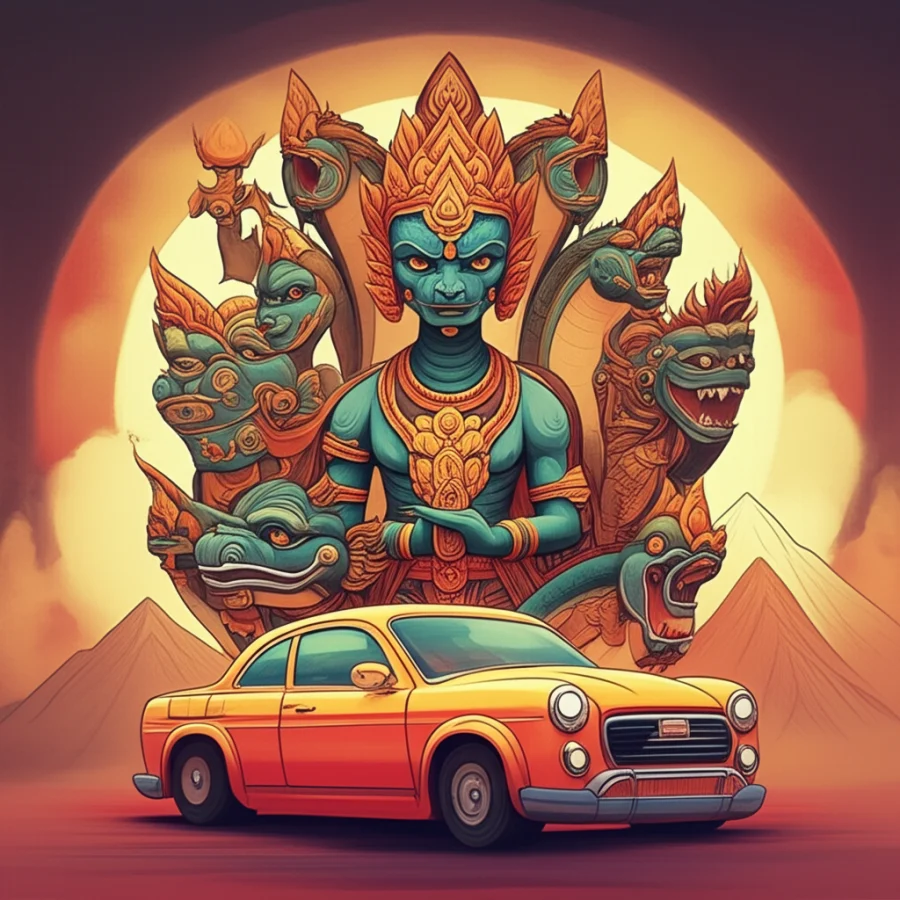
Introduction:
High in the formidable Himalayas, shrouded in mist and mystery, lies Mount Kailash, a peak revered by multiple faiths and cultures for centuries. This article explores a creature intertwined with the legends of Kailash, a being not of flesh and blood, but of myth and imagination: the Naga. This is a story drawn from the rich tapestry of ancient Hindu and Buddhist folklore, passed down through generations to explain the world and its wonders. It is a cultural narrative, and it should be understood as such. We will delve into the origins, cultural context, symbolism, and modern interpretations of the Naga within the context of Kailash, all while acknowledging that this is a traditional story, not a statement of belief.
Origins and Cultural Background:
The mythos of the Naga stretches back millennia, finding its roots in the ancient cultures of the Indian subcontinent. In the era when these stories took shape, perhaps as early as the Vedic period (c. 1500-500 BCE), the world was understood through the lens of animism and a deep connection to nature. People saw spirits and deities in rivers, mountains, and trees. The unpredictability of nature – the monsoons that brought life or destruction, the earthquakes that shook the earth – was often attributed to powerful, unseen forces.
Society was largely agrarian, reliant on the land and the rhythms of the seasons. The Naga, often associated with water, fertility, and protection, became a significant figure in this worldview. They were seen as both benevolent guardians and potentially dangerous beings, reflecting the dual nature of the natural world itself. Their association with subterranean realms also linked them to the earth’s hidden power and wealth. Storytelling was a vital part of this era, acting as a means of passing down knowledge, moral lessons, and cultural values. The Naga myths served as both entertainment and a way to understand the complex relationship between humans and the environment.
Character / Creature Description:
Nagas are often depicted as serpentine beings, sometimes with human-like features. They can range from entirely snake-like creatures to beings with human torsos and serpent tails, or even humans who can shapeshift into snakes. Their appearance is often described as majestic and awe-inspiring, with scales that shimmer like jewels and eyes that hold ancient wisdom.
In the context of Kailash, the Naga are often portrayed as guardians of the sacred mountain and its surrounding lakes. They are said to dwell in the depths of Mansarovar Lake and Rakshastal Lake, the two great lakes near Kailash. Symbolically, the Naga represent several key concepts. Their serpentine form links them to the primal forces of nature, to the cycles of life and death, and to the flow of energy. Their association with water connects them to fertility, abundance, and the subconscious mind. As guardians, they symbolize protection, wisdom, and the preservation of sacred spaces. However, it is crucial to remember that these are symbolic attributes, not literal qualities.
Main Story / Narrative Retelling:
The wind howled around the base of Mount Kailash, its icy breath whipping through the prayer flags that fluttered like nervous birds. In the sapphire depths of Mansarovar Lake, Nagaraja, King of the Nagas, stirred from his slumber. His scales, the color of jade and lapis lazuli, shimmered in the faint light that penetrated the water.
A tremor ran through the mountain. Not an earthquake, but a disturbance of a different kind. Nagaraja sensed a growing imbalance, a disharmony that threatened the sacredness of Kailash. He knew that humans, drawn by their ambitions and desires, were increasingly encroaching upon the mountain’s pristine environment.
He summoned his Naga council, a gathering of serpentine elders whose wisdom spanned centuries. They gathered in his underwater palace, a magnificent structure built of coral and shimmering pearls. The elders listened intently as Nagaraja relayed his concerns. They spoke of disrespect, of carelessness, and of the slow erosion of the spiritual essence of Kailash.
One Naga, younger and bolder than the others, suggested unleashing the full force of their power to drive the humans away. Nagaraja, however, cautioned against such drastic action. He knew that violence would only perpetuate the imbalance. Instead, he proposed a different approach.
He sent forth his most trusted emissary, a Naga named Vasuki, disguised as a humble hermit. Vasuki was tasked with guiding the humans, with teaching them the importance of respect and reverence for the sacred mountain. He was to subtly influence their actions, reminding them of the interconnectedness of all things.
Vasuki, with his shimmering emerald eyes and calming presence, traveled among the pilgrims and travelers who came to Kailash. He shared stories of the mountain’s history, of its sacredness, and of the importance of preserving its natural beauty. He reminded them that Kailash was not merely a destination, but a living entity, deserving of respect and care.
Slowly, gradually, Vasuki’s efforts began to bear fruit. The humans started to become more mindful of their actions. They cleaned up their litter, they avoided disturbing the wildlife, and they approached the mountain with a sense of reverence.
Nagaraja, observing from the depths of Mansarovar Lake, felt a sense of hope. He knew that the balance was still fragile, but he also saw the potential for harmony. The Naga, the guardians of Kailash, would continue to watch over the mountain, subtly guiding and protecting it, ensuring that its sacredness remained intact. This is a story told, a creation of imagination, not a depiction of reality.
Symbolism and Meaning:
To the people who originated these stories, the Naga of Kailash likely represented the power and mystery of the natural world. They embodied the hidden forces that shaped the landscape, the cycles of life and death, and the importance of respecting the environment. The story of Nagaraja and Vasuki could be interpreted as a cautionary tale about the consequences of human actions and the need for balance between human ambition and environmental preservation. It also highlights the importance of wisdom, patience, and subtle influence in achieving positive change. The Naga, as guardians, served as a reminder that sacred places require protection and reverence.
Modern Perspective:
Today, the Naga myths continue to resonate in literature, movies, and games. They appear in fantasy novels as powerful and enigmatic creatures, often associated with ancient wisdom and magical abilities. In films, they are sometimes depicted as benevolent protectors or as fearsome antagonists. In video games, they can be found as playable characters or as formidable bosses. The enduring appeal of the Naga lies in their symbolic complexity and their connection to the primal forces of nature. Cultural studies scholars often analyze Naga myths to understand ancient beliefs about the environment, spirituality, and the human-animal relationship.
Conclusion:
The story of the Naga, the guardians of Kailash, is a testament to the power of imagination and the enduring appeal of storytelling. It is a cultural narrative, a product of ancient beliefs and values, not a statement of fact or religious doctrine. As Muslims, we understand that Allah alone is the true Creator and Sustainer of the universe. The tales of the Naga are part of a rich cultural heritage, offering insights into the ways in which people in the past sought to understand the world around them. Let us appreciate these stories for their cultural significance and their ability to inspire our imaginations, while always remembering the truth of our faith.







