fufufafa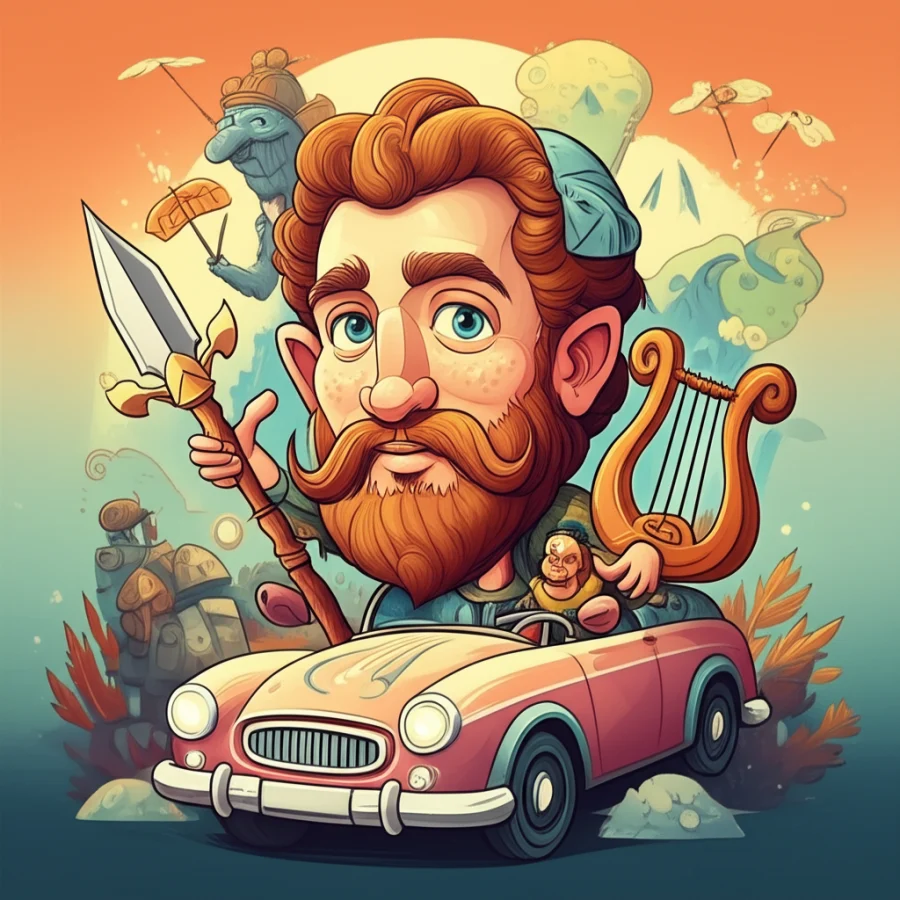
The Chronicle of Lugh and the Forgotten Mountain: A Study in Celtic Mythology
Disclaimer: This article explores a story from ancient mythology for cultural, historical, and educational purposes only. The characters, events, and beliefs described are part of a folklore tradition and are not presented as factual or to be worshipped or practiced.
Introduction
From the mist-shrouded hills and windswept coasts of ancient Ireland comes a vast tapestry of myths and legends. These tales, passed down through generations by skilled storytellers known as bards, were the lifeblood of Celtic culture. They explained the turning of the seasons, the nature of kingship, and the eternal struggle between order and chaos. Among the most compelling figures in this pantheon is Lugh, the master of all arts. While many of his deeds are recorded in famous texts like the Cath Maige Tuired (The Second Battle of Mag Tuired), other, more regional tales speak of trials that tested the full breadth of his abilities. One such legend, a story whispered around hearth fires from Leinster to Connacht, is "The Chronicle of Lugh and the Forgotten Mountain," a traditional story that illuminates the values of a people who saw wisdom and skill as the highest virtues.
Origins and Cultural Background
This legend originates from the Iron Age Celts of Ireland, a society structured around tribes, or túatha, each led by a chieftain or king. Their world was not divided into the strictly physical and spiritual; rather, it was a place where the veil between the mortal realm and the Otherworld was thin. They believed that spirits and powerful beings inhabited the landscape—the rivers, the forests, and the mountains themselves held a potent, living energy.
In this environment, storytelling was not mere entertainment; it was a sacred act. Bards were revered members of society, responsible for preserving history, genealogy, and law through epic poems and sagas. Their stories provided a framework for understanding existence, reinforcing social norms, and articulating the qualities of an ideal leader. A great hero was not just a mighty warrior but also a wise counselor, a skilled artisan, and an eloquent poet. The tale of Lugh and the Forgotten Mountain is a perfect embodiment of this cultural ideal, a narrative designed to teach that true strength lies in versatility and the mastery of the mind as well as the body.
Character Description: Lugh Samildánach
The central figure of this chronicle is Lugh, a prominent member of the mythological race known as the Tuatha Dé Danann. He is not depicted as a simple warrior god but as a master of all professions, earning him the title Samildánach, meaning "equally skilled in all the arts." He was said to possess the prowess of a champion, the knowledge of a druid, the hands of a smith and a wright, the voice of a harpist, and the strategic mind of a king.
Symbolically, Lugh represents the triumph of civilization, skill, and intellect. His command over numerous crafts signifies the importance of a well-rounded and competent society where every skill contributes to the whole. Often associated with light and brilliance, he is not a sun deity in a literal sense but rather a metaphorical bringer of enlightenment, innovation, and hope. In the stories, his appearance often heralds a turning point, a moment where brute force has failed and a more sophisticated solution is required. His legend was a cultural reminder that the greatest leaders—and the most resilient societies—are those that value knowledge and creativity as much as martial strength.
The Main Story: A Narrative Retelling
The chronicle begins in an age of uneasy peace. The Fomorians, forces of chaos and blight, had been defeated, but a shadow of their influence lingered. A strange malady began to creep across the land. It started at the fringes, a creeping grey that leached the color from the wild heather and silenced the birdsong in the ancient oaks. The cattle grew thin, the grain withered in the fields before it could ripen, and a quiet despair settled over the hearts of the people. The druids cast their runes and consulted the spirits of the water and stone, but the source of the affliction remained a mystery.
It was then that an old, blind seer, his memory stretching back through centuries, spoke of a forgotten place: Sliabh na Dearmad, the Forgotten Mountain. He recounted a legend from the dawn of time, when a great power had chained a creature of pure despair—a Gloom-Hound that fed on hope and vitality—within the mountain’s heart. The chains, he warned, were not forged of iron but of memory, song, and courage. As the people had forgotten the mountain, the chains had weakened, allowing the creature’s sorrowful essence to seep back into the world. The prophecy stated that only a hero who was a master of mind, hand, and heart could journey to the peak and restore the bonds.
All eyes turned to Lugh. While others possessed great strength or singular skills, only he embodied the complete mastery the prophecy demanded. With a determined expression, Lugh accepted the charge. He took up his flashing spear, but also slung his harp across his back and carried the tools of a craftsman at his side.
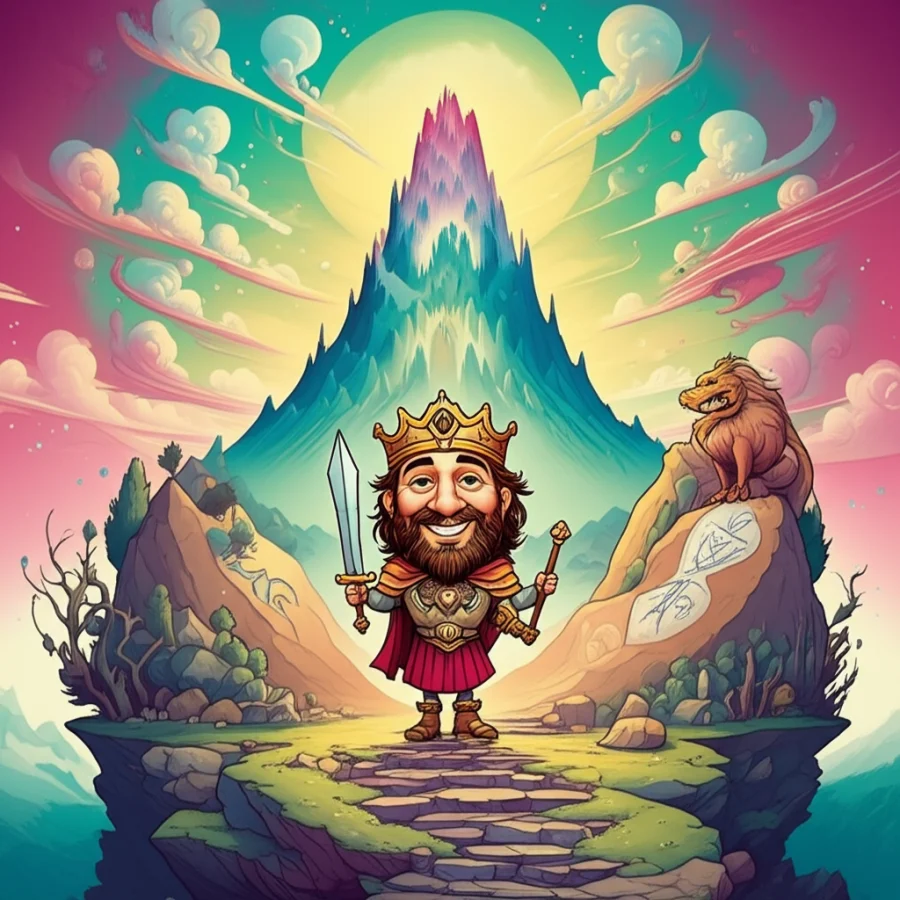
His journey to the Forgotten Mountain was a descent into silence and shadow. The vibrant, living land of Ériu gave way to a desolate landscape of grey dust and brittle, leafless trees. The mountain itself rose before him like a jagged tooth against a colorless sky, exuding an aura of profound sadness.
At the base of the mountain, his path was blocked by a silent guardian, an ancient spirit of the stone. It did not ask for a show of strength but posed a riddle of immense complexity, a question about the cyclical nature of creation and decay. A mere warrior would have failed, but Lugh, the poet and scholar, saw the pattern in the words. He answered with a verse so insightful and elegant that the spirit bowed and let him pass, the first trial of Wisdom overcome.
Further up the treacherous slope, a great chasm split the path, its depths seemingly bottomless. No man could leap it, and the sheer cliffs offered no handholds. A lesser hero might have turned back, but Lugh, the wright and the smith, saw not an obstacle but a challenge of craft. He felled the petrified trees with calculated blows, used his tools to shape the dead wood into beams, and with an engineer’s eye, constructed a sturdy bridge across the abyss. Within a day, the path was whole again, the second trial of Skill complete.
At last, he reached the summit, a barren plateau where the air was heavy with hopelessness. There, he did not find a physical beast of fang and claw. Instead, a formless shadow coalesced—the Gloom-Hound. It was a creature of anti-existence, whispering doubts into his mind, showing him visions of failure, and draining the strength from his limbs. Lugh raised his spear, but it passed through the shadow as if through smoke. He realized this was a foe that could not be fought with steel. It was a battle for the spirit.
Putting aside his weapon, Lugh unslung his harp. As the Gloom-Hound’s despairing whispers intensified, he began to play. His music was not a lament, but a powerful anthem of creation—a song of the sun rising, of the smith’s hammer striking the anvil, of the first green shoot breaking through the soil. He wove a melody of courage, light, and enduring hope. The formless shadow recoiled, weakened by the brilliant sound. As the music reached its crescendo, the Gloom-Hound shrieked and was driven back into the deep stone prison from which it had stirred. Lugh then sang a powerful chant of binding, a song of memory that reinforced the ancient wards, ensuring the mountain would not be forgotten again. The final trial of the Heart was won. As he descended, he saw color and life flowing back into the world behind him, the green returning to the land of Ériu.
Symbolism and Meaning
For the ancient Irish, this story was a profound allegory. Lugh was the personification of the ideal ruler—one who solves problems not just with force, but with intelligence, creativity, and inspiration. The creeping blight symbolized societal ills that could not be fought with swords alone, such as famine, despair, or a loss of cultural identity. The Forgotten Mountain itself represented a challenge that had long been neglected, a foundational problem that, left unaddressed, threatened to unravel the entire community.
The three trials are particularly significant. They teach that a complete leader must possess wisdom to understand a problem, practical skill to build a solution, and the emotional and spiritual fortitude (art and courage) to conquer intangible threats like fear and despair. The final victory, achieved through music rather than combat, is a powerful statement on the civilizing power of art and its ability to restore hope where all else has failed.
Modern Perspective
Today, the figure of Lugh and the archetypes within his stories continue to resonate. In literature, he appears in numerous fantasy novels, from Patricia Kennealy-Morrison’s Keltiad series to Kevin Hearne’s The Iron Druid Chronicles, often portrayed as a versatile and brilliant hero. His archetype—the "master of all trades"—is a recurring feature in video games, where characters can often master multiple skill sets, reflecting the appeal of a well-rounded protagonist. In cultural and mythological studies, Lugh is analyzed as a classic example of the Indo-European "versatile hero," a figure who embodies the highest cultural aspirations of his people. This particular chronicle, though less famous, serves as a perfect case study in how mythology functions to encode and transmit a society’s core values.
Conclusion
The Chronicle of Lugh and the Forgotten Mountain is more than just an ancient adventure story; it is a rich cultural artifact. It offers a window into the worldview of the Celtic people of Ireland, showcasing their deep respect for multifaceted leadership, ingenuity, and the life-affirming power of art. These myths are products of human imagination, crafted to make sense of the world and to inspire future generations.
As Muslims, we recognize that these are tales from a different time and culture, and we firmly hold that only Allah is the true Creator and Sustainer of the universe, the sole source of all power and wisdom.
Studying such stories allows us to appreciate the universal human impulse to find meaning, to define heroism, and to pass on wisdom through the timeless and powerful tradition of storytelling. They remain a testament to a culture’s imagination and a valuable part of our shared global heritage.