
 fufufafa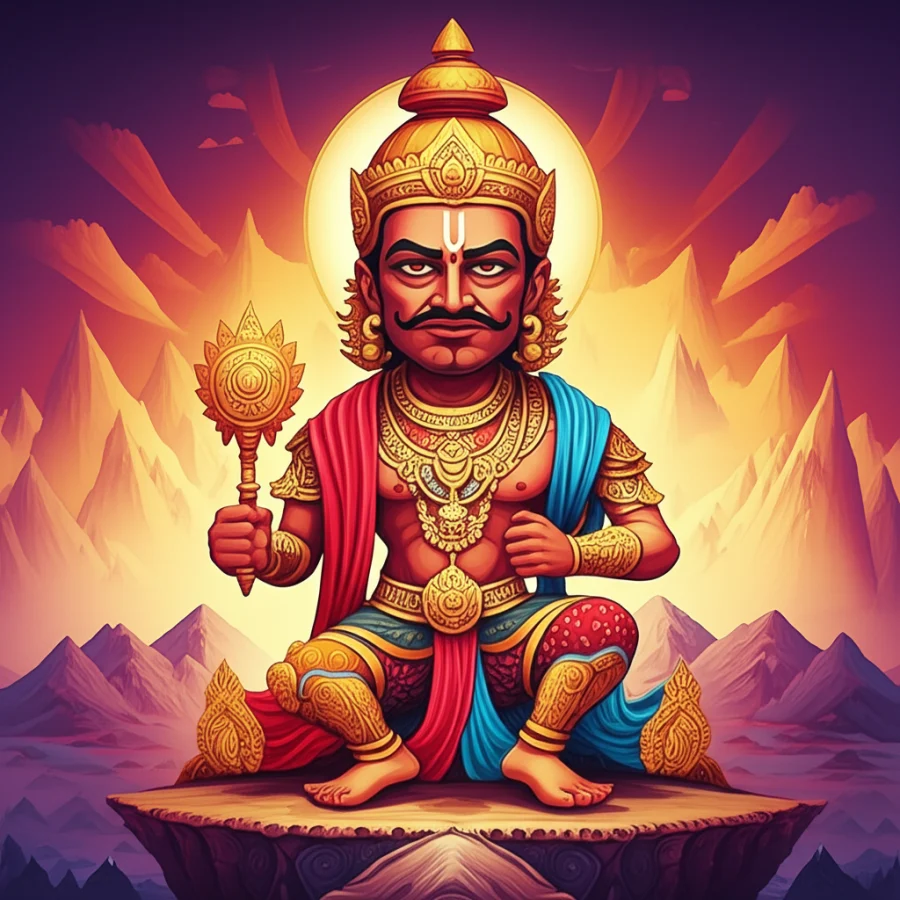
Introduction:
From the rich tapestry of ancient Hindu and Buddhist mythology emerges Garuda, a majestic figure often depicted as a divine bird-like creature, or a being with a human torso and bird-like head, wings, and talons. This is a traditional story, passed down through generations, offering insights into the values, beliefs, and understanding of the world held by people of ancient India and other regions influenced by these cultures. These narratives are not meant to be taken as factual accounts but rather as symbolic expressions of human experience and philosophical concepts.
Origins and Cultural Background:
The Garuda myth is deeply rooted in the ancient Indian subcontinent, dating back to the Vedic period (approximately 1500-500 BCE). This era witnessed the development of complex social structures, philosophical thought, and religious practices centered around deities and cosmic forces. The world was often viewed as a battleground between good and evil, with gods and demons constantly vying for power. Nature played a vital role in their lives, with the sun, wind, and rain considered divine entities. The Garuda myth likely arose within this context, reflecting the importance of birds, particularly eagles and hawks, in the natural world, and their association with strength, speed, and freedom. The society was heavily influenced by oral traditions, with stories and legends serving as a primary means of transmitting knowledge, values, and cultural identity. The tales of Garuda, therefore, were not just entertainment but also a way to impart moral lessons and explain the world around them.
Character / Creature Description:
Garuda is typically described as a magnificent being, a composite of human and avian features. He is often depicted with a golden body, a white face, red wings, and the beak and talons of an eagle. His size is immense, capable of blocking out the sun with his wings. He possesses extraordinary strength and speed, making him a formidable warrior and a swift messenger. Symbolically, Garuda represents power, courage, loyalty, and devotion. His wings signify freedom and the ability to overcome obstacles. His association with the sun connects him to light, knowledge, and the dispelling of darkness. His role as a vehicle for the deity Vishnu underscores his dedication to righteousness and the preservation of cosmic order. It’s crucial to understand these are symbolic attributes, not literal characteristics.
Main Story / Narrative Retelling:
The story of Garuda begins with his birth to Vinata and Kashyapa. Vinata, along with her sister Kadru, the mother of all snakes, were wives of Kashyapa. Through a trick, Kadru won a bet against Vinata, making Vinata her slave. Garuda, born powerful and radiant, was immediately aware of his mother’s servitude. He approached the snakes and asked how he could free his mother. The snakes demanded the nectar of immortality, Amrita, guarded by the gods, as ransom.
Driven by his devotion to his mother, Garuda embarked on a perilous journey to retrieve the Amrita. He faced numerous challenges, battling fierce demons and overcoming treacherous obstacles. He had to outsmart Indra, the king of the gods, and his army. To do this, Garuda grew to a massive size, blocking out the sun and creating a dust storm that disoriented the gods. He then plucked a massive tree from the earth and used it as a club, scattering the gods. He cleverly extinguished the protective fire around the Amrita by filling his beak with water and dousing it. Finally, he subdued the two mechanical wheels that guarded the nectar by crushing them with his immense strength.
Garuda, having secured the Amrita, flew back to the snakes. He placed the nectar before them, instructing them to bathe and purify themselves before consuming it. While the snakes were performing their ablutions, Indra seized the opportunity to reclaim the Amrita. Although the snakes did not achieve immortality, the legend says that the snakes were cut by the grass where the Amrita was placed, giving them a forked tongue. Garuda, having fulfilled his promise, freed his mother from servitude.
Impressed by Garuda’s strength, loyalty, and devotion, Vishnu, the preserver of the universe, offered him a boon. Garuda chose to become Vishnu’s vehicle, his vahana, and to be placed above Vishnu on his banner, thus symbolizing his elevated status and unwavering commitment. This alliance solidified Garuda’s position as a protector and a symbol of righteousness.
Symbolism and Meaning:
To ancient people, the story of Garuda likely represented several things. It was a testament to the power of filial piety and the importance of fulfilling one’s duty to family. Garuda’s quest for the Amrita symbolized the human struggle to overcome adversity and achieve liberation. The story also highlighted the triumph of good over evil, with Garuda representing the forces of righteousness battling against the deceitful and manipulative snakes. The association of Garuda with Vishnu underscored the importance of maintaining cosmic order and upholding dharma. The tale was also a metaphor for spiritual aspiration, with Garuda’s flight towards the sun symbolizing the soul’s journey towards enlightenment.
Modern Perspective:
Today, the Garuda myth continues to resonate in literature, movies, and games. He appears as a powerful figure in fantasy novels and video games, often as a symbol of strength, speed, and protection. In some modern interpretations, Garuda is seen as an environmental symbol, representing the importance of preserving birds and their habitats. The Garuda image is also used in the national emblem of Indonesia, reflecting the nation’s strength and independence. Cultural studies analyze the Garuda myth as a reflection of ancient social structures, power dynamics, and spiritual beliefs.
Conclusion:
The tale of Garuda, the magnificent bird-like being, is a captivating story that offers a glimpse into the rich mythological landscape of ancient India and its cultural influence. It’s important to remember that this is a traditional story, not a literal account of events, but rather a symbolic expression of human values and aspirations. As Muslims, we acknowledge that only Allah is the true Creator and Sustainer of the universe, and we approach these narratives with respect for their cultural significance while maintaining our own faith. The Garuda myth, like countless others, serves as a reminder of the power of storytelling, imagination, and the enduring legacy of human cultural heritage. It is through these stories that we can gain a deeper understanding of different cultures and the diverse ways in which people have made sense of the world around them.







