
 fufufafa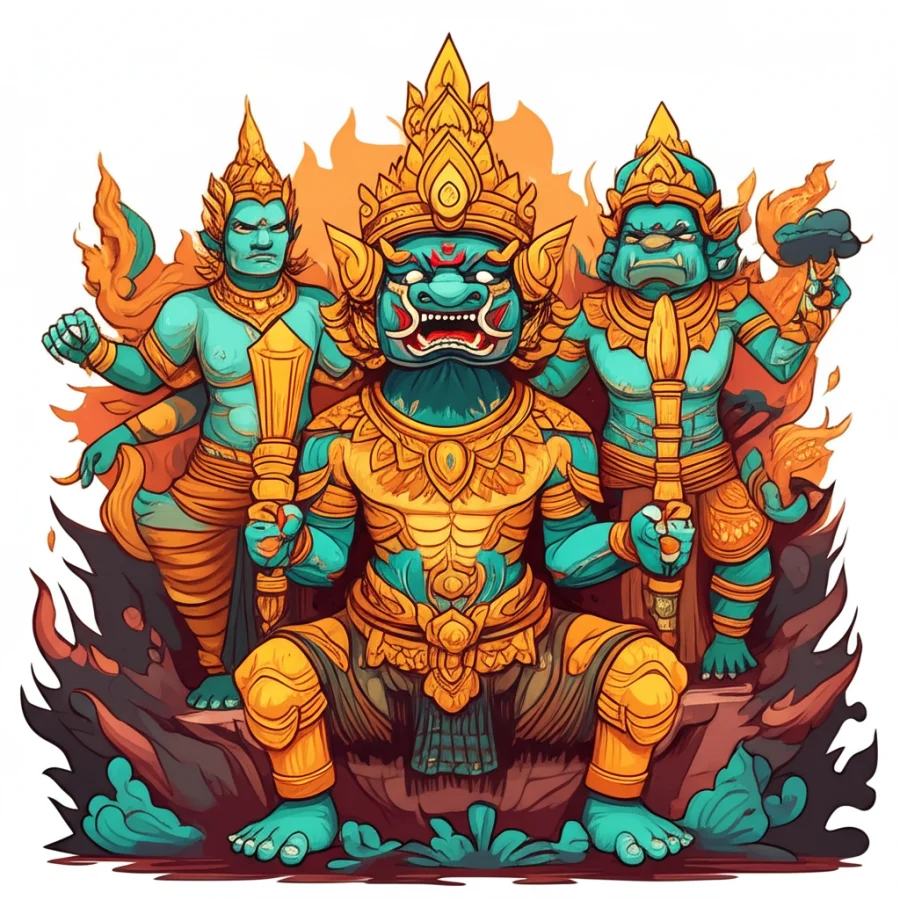
Across the vast and ancient tapestry of Indian folklore, woven with threads of epic poems, sacred scriptures, and village tales, lie narratives that seek to explain the world, its wonders, and its perceived dangers. Among these, the stories surrounding the mighty River Ganga, the very lifeblood of the subcontinent, are particularly potent. And within these tales, we encounter figures that embody both the awe-inspiring power of nature and the anxieties of the human heart. One such figure, shrouded in the mists of legend, is the Rakshasa.
This is not a story of divine intervention or historical fact, but rather a traditional narrative passed down through generations, a testament to the imaginative spirit of ancient peoples and their attempts to comprehend the forces that shaped their lives. It’s crucial to understand that these are stories, born from a particular cultural context, meant to be appreciated for their narrative power and symbolic resonance, not as literal truths.
The origins of these tales can be traced to a time when the natural world was viewed with a profound sense of both reverence and trepidation. In the ancient Indian subcontinent, life was inextricably linked to the rhythms of nature. The monsoon rains, the fertile river valleys, the dense forests – these were not merely backdrops but active participants in the daily existence of people. The world was perceived as a dynamic realm, inhabited by a multitude of beings, some benevolent, others capricious, and some undeniably formidable. This worldview, rich with personification and animism, sought to find order and meaning in the untamed forces of nature, often through the creation of powerful, symbolic figures. The stories of Rakshasa, when associated with the sacred Ganga, emerge from this vibrant cultural milieu, reflecting a society that sought to understand the river’s immense power, its potential for both life-giving bounty and destructive fury.
Within this mythological landscape, the Rakshasa is not a singular entity but a class of beings, often depicted as formidable, sometimes terrifying, and possessing immense power. They are rarely portrayed as purely evil in the modern sense, but rather as beings operating with their own inscrutable motivations and a primal connection to the wilder aspects of existence. When the legends speak of Rakshasa guarding the Ganga, these creatures are often envisioned as immense, with powerful physiques, sharp features, and an aura of raw, untamed energy. Their eyes might be described as burning embers, reflecting the primal forces they are said to embody. They are not deities to be worshipped, but rather powerful entities, capable of influencing the natural world. Their symbolic attributes might include a connection to the chaotic forces that precede creation, the untamed wilderness, or the very essence of primal strength that lies dormant within the earth and water. They represent the awe-inspiring, and sometimes fearsome, power that the ancient peoples attributed to the mighty river.
Imagine, then, the whispers of ancient storytellers by the banks of the Ganga. They would speak of the river’s journey, a monumental descent from the celestial realms, carving its path through mountains and plains, bestowing life and sustenance. But they would also speak of its guardians. Among these were the Rakshasa, colossal beings woven into the very fabric of the river’s might. These were not merely animals or spirits of the water; they were embodiments of the river’s primal force, its unyielding current, and its potential for immense, overwhelming power.
The narratives would often describe these Rakshasa dwelling in the deepest, most treacherous parts of the Ganga, in submerged caverns or amidst the churning rapids. Their presence was not a sign of benevolence, but a testament to the river’s untamed nature. When the river swelled, threatening to engulf villages, or when its currents became dangerously unpredictable, the elders would murmur that the Rakshasa were restless, their guardianship manifesting as a raw, elemental display. These beings were said to possess the strength to divert entire watercourses, to unleash floods, or to create whirlpools that could swallow ships whole. Their role, as envisioned by these ancient storytellers, was not to protect humanity, but to embody and perhaps even control the wild, untamed spirit of the Ganga itself. They were the ancient protectors of its power, a reminder that while the river gave life, it also demanded respect for its formidable, primal essence.
The symbolism embedded within these Rakshasa tales is rich and multifaceted. For the ancient peoples, they likely represented the inherent duality of nature. The Ganga was life-giving, a source of fertility and prosperity, but it was also a force of immense power that could bring destruction. The Rakshasa, in their fierce and formidable depiction, embodied this untamed, potentially destructive aspect. They could be seen as a personification of the raw power of nature that humans could not fully control, a reminder of their vulnerability in the face of elemental forces. Furthermore, the Rakshasa might have symbolized the concept of boundaries – the limits of human encroachment on the natural world. Their presence in the deeper, wilder parts of the river could have served as a cautionary tale, advising caution and respect for the river’s untamed domains. They might also have represented the ancient, primordial energies that existed before human civilization, a connection to a wilder, more chaotic past.
In the modern world, these ancient narratives continue to hold sway, albeit in transformed guises. The figure of the Rakshasa, once a guardian of mythological rivers, has found new life in contemporary literature, fantasy games, and cinematic adaptations. Authors and creators often draw upon these archetypes to populate their fictional worlds with powerful, enigmatic beings that challenge heroes and embody primal forces. In cultural studies, these myths are analyzed for their insights into ancient worldviews, their understanding of nature, and their explorations of morality and power. The Rakshasa, stripped of their literal, devotional context, become fascinating characters in the grand narrative of human imagination, prompting discussions about the enduring power of storytelling and the universal human need to explain and personify the forces that shape our existence.
It is important to reiterate that the Rakshasa, as described in these ancient stories, are figures of mythology and folklore. They are products of human imagination, born from a specific cultural context, and should be understood as such. As Muslims, we recognize that only Allah is the true Creator and Sustainer of all existence, the ultimate power behind the natural world. These ancient tales, while offering a glimpse into the rich tapestry of human heritage and the boundless creativity of storytelling, do not hold any divine truth. They serve as a valuable reminder of the diverse ways in which humanity has sought to understand its place in the universe, the power of nature, and the enduring legacy of our ancestors’ imaginations. These stories, in their vibrant narratives and symbolic depth, continue to enrich our understanding of cultural heritage, reminding us of the power of imagination and the timeless tradition of storytelling that connects us to the past.







