fufufafa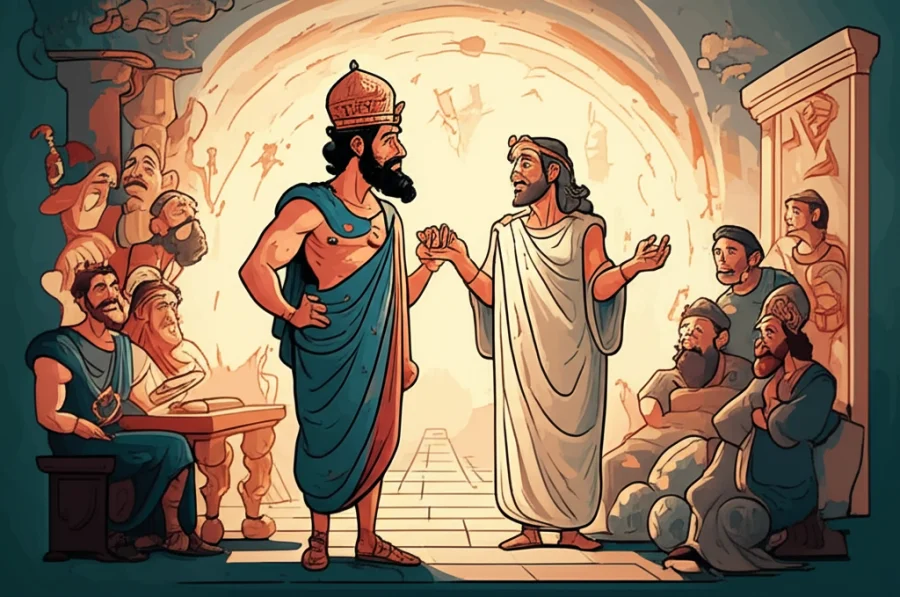
Introduction:
The story of Oedipus is a cornerstone of Western literature, a tragic tale born from the rich soil of ancient Greece. This narrative, a product of oral tradition and later formalized in the plays of Sophocles, offers a glimpse into the beliefs, values, and fears of a civilization that flourished millennia ago. It is a traditional story, a product of the human imagination, and should be approached as such – a window into the past, not a source of religious or spiritual guidance.
Origins and Cultural Background:
The myth of Oedipus takes root in ancient Greece, a civilization that blossomed between the 8th and 6th centuries BCE. This was a time of vibrant city-states (poleis), each with its own governance, customs, and patron deities. The Greeks, renowned for their intellectual curiosity, were also deeply religious, believing in a pantheon of gods and goddesses who resided on Mount Olympus and actively intervened in human affairs. Their world was populated by mythical creatures, heroes, and monsters, reflecting a worldview where the boundaries between the divine, the human, and the natural were fluid and often blurred.
Life in ancient Greece was characterized by a strong emphasis on family, honor, and civic duty. The Greeks sought to understand the world through reason and logic, but they also grappled with the unpredictable nature of fate, the power of prophecy, and the consequences of hubris (excessive pride). The Oracle of Delphi, a sacred site dedicated to the god Apollo, played a crucial role in Greek society, acting as a source of counsel and foretelling the future. The belief in prophecy and the influence of the gods shaped their understanding of events and their moral compass.
Character/Creature Description:
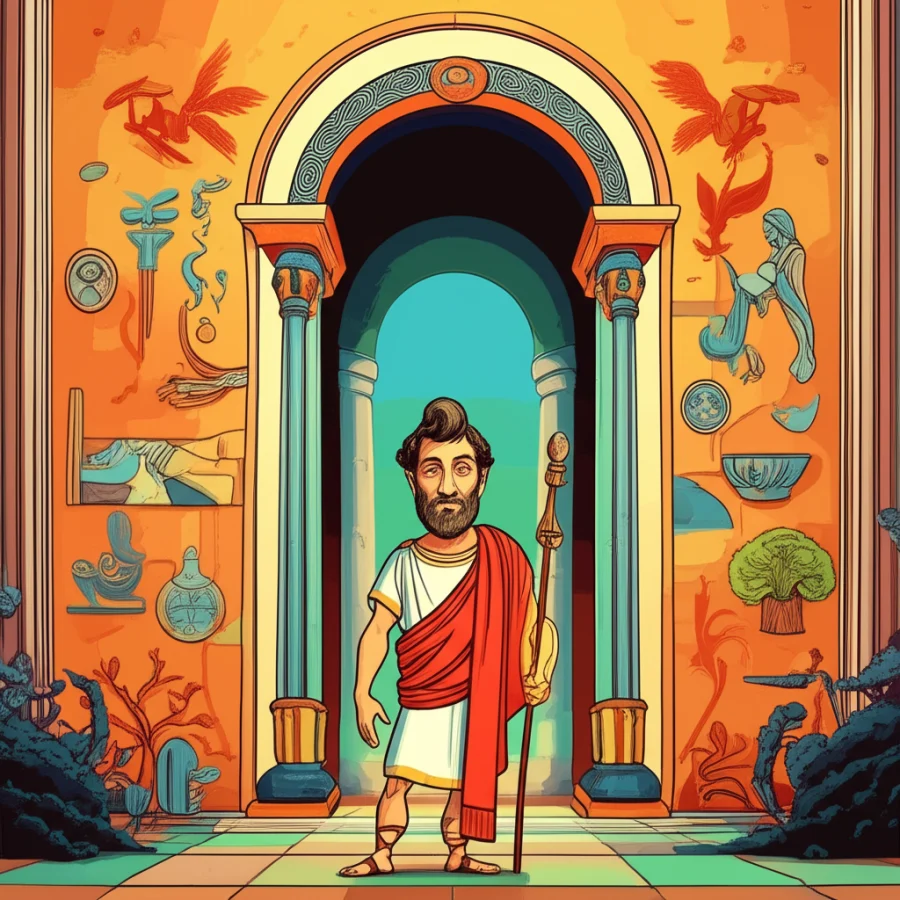
The central figure of this tragedy is Oedipus, whose name, meaning "swollen foot," alludes to the injuries he sustained as an infant. He is not presented as a divine being or a demigod, but a mortal man, albeit one of noble lineage. His defining characteristics are intelligence, courage, and a fierce determination to uncover the truth, even when it leads to devastating consequences.
The Oracle of Delphi, more a location than a creature, is a prominent element in the story. It is a sanctuary, a temple, a place where prophecies are delivered through the Pythia, a priestess said to be inspired by Apollo. The Pythia’s pronouncements, often cryptic and open to interpretation, held immense power, guiding decisions of state and personal lives. The Sphinx, a monstrous creature with the body of a lion, the wings of an eagle, and the head of a woman, guards the city of Thebes and poses riddles to travelers. Its symbolic attributes are more significant than its physical form: it represents the unknown, the challenges of life, and the price of knowledge.
Main Story / Narrative Retelling:
The tale begins with a prophecy: Oedipus, the son of King Laius and Queen Jocasta of Thebes, is destined to kill his father and marry his mother. In a desperate attempt to avert this horrifying fate, the king orders the infant Oedipus to be abandoned on a mountainside. The baby survives, rescued by a shepherd and raised as the adopted son of King Polybus and Queen Merope of Corinth.
As a young man, Oedipus, haunted by rumors of his origins, travels to the Oracle of Delphi. There, he receives a chilling prophecy: he is destined to kill his father and marry his mother. Believing Polybus and Merope to be his true parents, Oedipus flees Corinth to avoid fulfilling the prophecy.
On the road, he encounters a royal entourage and, in a fit of rage, kills a man who insults him. Unbeknownst to Oedipus, this man is King Laius, his biological father.
He arrives in Thebes, which is in turmoil, plagued by a Sphinx that terrorizes the city by posing riddles and devouring those who cannot answer. Oedipus, intelligent and resourceful, solves the Sphinx’s riddle, thus freeing the city from the monster’s grasp. As a reward, he is crowned king of Thebes and marries the widowed Queen Jocasta, unaware that she is his mother.
Years pass, and Oedipus and Jocasta have children. However, a plague descends upon Thebes, and the Oracle of Delphi is consulted once more. The prophecy reveals the cause: the murderer of King Laius must be found and punished to cleanse the city. Oedipus, driven by his unwavering pursuit of justice, vows to uncover the truth, unaware that he is the very person the city seeks.
Through a series of investigations, aided by the blind prophet Tiresias, the truth slowly unravels. Oedipus learns of his true parentage, the circumstances of his abandonment, and the identity of the man he killed on the road. The horrifying reality dawns upon him: he has unknowingly fulfilled the prophecy, killing his father and marrying his mother.
Jocasta, overwhelmed by the revelation, takes her own life. Oedipus, in a moment of utter despair, blinds himself, banishing himself from Thebes. The story ends with Oedipus, humbled and broken, facing the consequences of his actions and the cruel hand of fate.
Symbolism and Meaning:
The story of Oedipus is rich in symbolic meaning. It explores themes of fate versus free will, the nature of truth and knowledge, and the destructive power of hubris. The prophecy represents the predetermined nature of fate, the idea that certain events are ordained and cannot be avoided. Oedipus’s actions, his attempts to escape his destiny, ironically lead him to fulfill it.
The play also serves as a cautionary tale against hubris. Oedipus, initially lauded for his intelligence and courage, becomes a victim of his own pride and his relentless pursuit of knowledge. His unwavering belief in his own abilities blinds him to the truth until it is too late. The story underscores the dangers of unchecked ambition and the importance of humility.
The plague that afflicts Thebes symbolizes the moral corruption within the city. Oedipus’s actions, though unintentional, have brought ruin upon the community. The act of uncovering the truth, while necessary for the city’s cleansing, leads to immense suffering and destruction. This highlights the complex relationship between individual actions and their societal consequences.
Modern Perspective:
The myth of Oedipus continues to resonate in modern society. Sophocles’s play is still performed and studied, captivating audiences with its dramatic intensity and its exploration of timeless themes. The story has been adapted into numerous novels, films, and operas, demonstrating its enduring appeal.
The Oedipus complex, a psychoanalytic concept developed by Sigmund Freud, is another testament to the story’s influence. Freud used the myth to describe a child’s unconscious desire for the parent of the opposite sex and feelings of rivalry towards the same-sex parent. While controversial, this concept has become a part of the cultural lexicon, used to understand human behavior and relationships.
The story has also inspired countless artists, writers, and thinkers to explore themes of fate, free will, identity, and the search for truth. It remains a powerful symbol of the human condition, our capacity for both greatness and tragedy, and our struggle to understand the complexities of life.
Conclusion:
The tale of Oedipus and the Trial of Delphi is a remarkable narrative from the ancient Greek cultural heritage. It is a story rooted in the human imagination, a reflection of the beliefs, fears, and aspirations of a society long past. It is crucial to remember that this is a cultural story, not a belief system. As Muslims, we hold firm to the belief in Allah, the One True God, the Creator and Sustainer of all that exists. Our understanding of the universe, of morality, and of the ultimate truth comes from the Quran and the teachings of the Prophet Muhammad (peace be upon him).
The enduring power of the Oedipus myth lies in its capacity to spark our imagination, to provoke contemplation about the human condition, and to remind us of the power of storytelling. It offers us a chance to explore the richness of cultural heritage and to appreciate the diverse ways in which humanity has sought to understand itself and the world around it. This story, like so many others from the past, serves as a reminder of the value of reflection, the importance of empathy, and the enduring power of human creativity.