fufufafa
The gentle lapping of waves against ancient shores, the rustling of palm fronds in the tropical breeze, the whispers of stories passed down through generations – these are the enduring echoes of the Visayan people’s rich cultural heritage. Among these tales, woven into the very fabric of their ancestral lands, are myths and legends that speak of a world teeming with unseen forces and mythical beings. One such legend, whispered in the twilight hours and shared around crackling fires, speaks of the Tikbalang, a creature said to roam the wilder, untamed corners of the archipelago, and its peculiar connection to the vast, shimmering expanse of the Visayas Seas.
This is not a tale of worship or divine decree, but rather a narrative from the collective imagination of ancient peoples, a testament to their attempts to understand the mysteries of the natural world and their place within it. These stories, like the intricate patterns on ancient pottery or the rhythmic chants of traditional dances, offer a window into the mindset and worldview of those who came before us.
The Dawn of Myth: A World Alive with Spirits
The era in which these stories of the Tikbalang likely took root was one where the line between the tangible and the spiritual was blurred. For the ancient Visayans, the world was not a sterile, purely material place, but a vibrant tapestry alive with spirits, both benevolent and mischievous, that influenced every aspect of life. The dense forests, the formidable mountains, and the boundless ocean were not merely geographical features but potent realms inhabited by powerful entities.
Their understanding of the world was deeply intertwined with nature. The cycles of the sun and moon, the fury of storms, the bounty of the harvest, and the perils of the sea were all seen as manifestations of these unseen forces. Animism, the belief that spirits inhabit natural objects and phenomena, was likely a cornerstone of their spiritual framework. In such a worldview, creatures like the Tikbalang could emerge as personifications of the untamed, the unpredictable, and the wild aspects of their environment. The dense, mysterious forests, where sunlight struggled to penetrate and strange sounds echoed, were fertile ground for the imagination to conjure beings that embodied these very qualities.
The Equine Enigma: Describing the Tikbalang
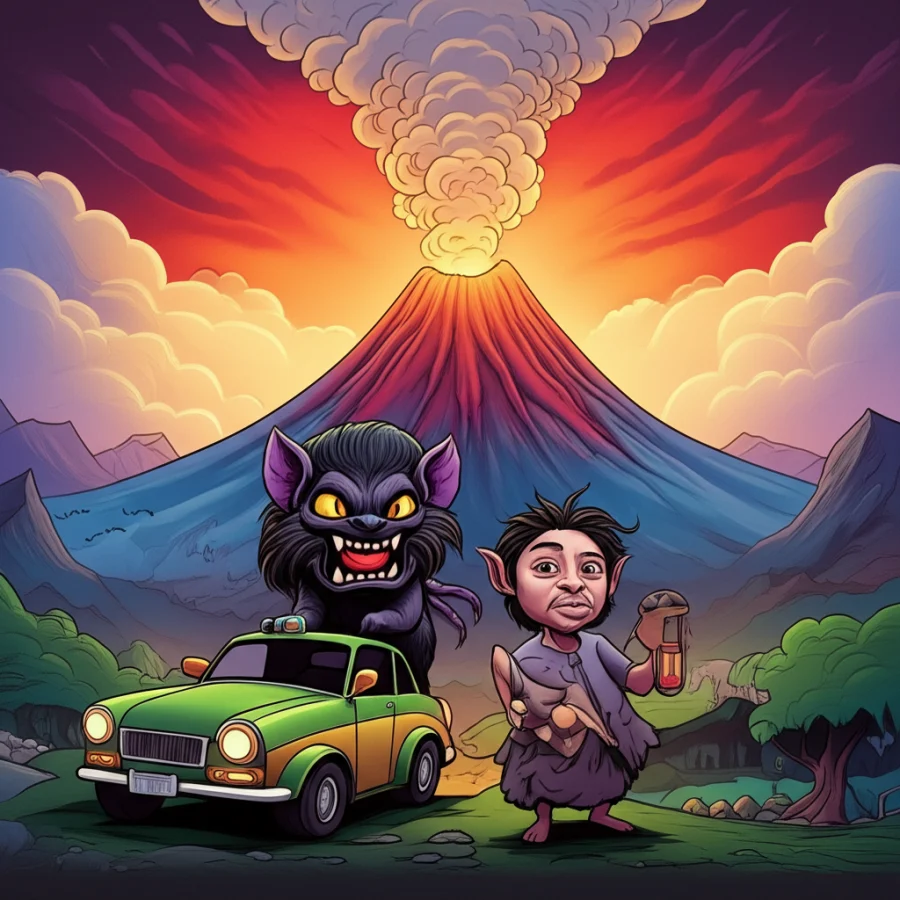
The Tikbalang, as described in these traditional stories, is a creature of striking and somewhat unsettling appearance. It is most commonly depicted as a being with the head of a horse and the body of a human. Its form is often tall and imposing, with long, spindly limbs that allow it to move with surprising speed and agility through dense undergrowth. Its eyes are said to gleam with an unnatural light, and its mane, often described as wild and unbound, cascades down its back.
Symbolically, the Tikbalang embodies a potent blend of primal energy and human-like cunning. The horse, a symbol of strength, speed, and untamed wildness, is integrated into its very being. This duality suggests a creature that is both powerful and possesses a degree of intelligence, capable of deception and trickery. Its association with forests implies a connection to the wild, untamed aspects of nature, the places where human civilization has not yet fully imposed its order. The Tikbalang can be seen as a representation of the unknown dangers lurking in these spaces, a cautionary figure that reminds people of the boundaries between their settlements and the wild.
The Whispers of the Wild: A Narrative of the Tikbalang
Imagine a time, long before the advent of modern technology, when the Visayas Islands were blanketed by ancient forests, their canopies reaching towards the sky like an emerald sea. In these primeval woods, where the air hummed with the buzz of unseen insects and the calls of exotic birds, the Tikbalang was said to dwell.
One tale tells of a young fisherman named Lito, whose village was nestled precariously on the edge of a sprawling mangrove forest that met the shimmering Visayas Sea. Lito was known for his daring and his often reckless spirit, always eager to venture further out into the waters than any of his elders advised. One sweltering afternoon, as the sun beat down relentlessly, Lito found himself caught in an unexpected squall. The winds whipped the waves into a frenzy, and the small boat he was in was tossed about like a mere leaf. Desperate, Lito steered his vessel towards the dense forest, hoping to find shelter amongst its tangled roots and shadowy interior.
As he navigated the narrow channels, the storm seemed to abate, but an eerie silence fell upon the woods. The usual cacophony of nature was replaced by a profound stillness, broken only by the distant, rhythmic thudding of what sounded like hooves. Curiosity, a trait that had often led Lito into trouble, now tugged at him. He tethered his boat and ventured deeper into the foliage, the ground beneath his feet soft with decaying leaves.
He soon found himself in a moonlit clearing, though the sun had not yet set. Standing in the center, bathed in an otherworldly glow, was a creature that made his blood run cold. It was a Tikbalang, its equine head held high, its dark eyes fixed upon him with an unnerving intelligence. The creature let out a soft neigh, a sound that was both majestic and deeply unsettling.
Lito, frozen by fear, could only stare. The Tikbalang, with a fluid, almost playful movement, began to circle him. It didn’t attack, but its presence was overwhelming. It would occasionally point a long, slender finger towards the sea, then towards the forest, as if offering a choice, or perhaps a warning. Lito, remembering the stories his grandmother used to tell, understood. The Tikbalang was a creature of the wild, a guardian of its domain, and it was reminding him of the boundaries between the human world and its own.
He realized that by seeking shelter in the depths of the forest, he had trespassed. The Tikbalang’s game was not one of malice, but of asserting its presence, of reminding him of the power and mystery that lay beyond his familiar world. With trembling hands, Lito backed away, never taking his eyes off the magnificent, terrifying creature. He found his way back to his boat, the rhythmic thudding of hooves fading behind him, replaced once again by the familiar sounds of the forest. He rowed back to his village, shaken but wiser, the image of the Tikbalang forever etched in his memory, a potent symbol of the untamed spirit of the Visayas.
The Mirror of the Wild: Symbolism and Meaning
For the ancient Visayans, stories like that of Lito and the Tikbalang served as a complex tapestry of meaning. The Tikbalang could represent the untamed and unpredictable nature of the wilderness, a reminder to respect its power and boundaries. Its equine features might have symbolized raw, untamed energy, a force that could be both destructive and awe-inspiring.
Furthermore, the creature’s mischievous and trickster-like tendencies could have been a way to explain the inexplicable. Strange noises in the forest, paths that seemed to lead nowhere, or sudden shifts in weather could all be attributed to the playful, or perhaps malevolent, interference of the Tikbalang. It served as a personification of the unknown, a way for people to grapple with the mysteries that lay beyond their immediate understanding. In a society reliant on the bounty of nature, understanding and respecting these forces, even if through myth, was crucial for survival and harmony.
Echoes in the Modern Age: Retelling and Reimagining
Today, the Tikbalang, like many other figures from folklore, has transcended its purely mythological origins and found new life in various forms of modern media. It appears in Filipino literature as a character in fantasy novels, embodying the wild spirit of the archipelago. In films and television shows, it is often depicted as a formidable antagonist or a creature of eerie fascination, its image adapted to evoke suspense and wonder. Video games frequently incorporate the Tikbalang as a challenging boss or a unique element of the game’s lore, drawing on its distinct appearance and mythical associations.
These interpretations, while often sensationalized, continue to keep the legend alive, introducing it to new audiences and sparking interest in the rich cultural heritage from which it originates. Cultural studies scholars and anthropologists also analyze these myths as valuable historical and sociological documents, offering insights into the beliefs, fears, and aspirations of past societies.
A Legacy of Storytelling
It is important to reiterate that the story of the Tikbalang and its connection to the Visayas Seas is a traditional narrative, a creation of the ancient Visayan imagination. As Muslims, we recognize that only Allah (SWT) is the true Creator and Sustainer of all that exists. Our faith teaches us that all power and creation belong solely to Him.
Yet, these ancestral stories hold a significant place in our understanding of human history and cultural evolution. They are a testament to the enduring power of human imagination, the innate desire to make sense of the world around us, and the profound connection that people have always felt with the natural environment. The echoes of the Tikbalang, like the gentle murmur of the Visayas Seas, are a reminder of the rich tapestry of human storytelling, a tradition that continues to connect us to our past and enrich our present. They are not to be believed as truth, but appreciated as valuable threads in the grand narrative of human culture and creativity.