fufufafa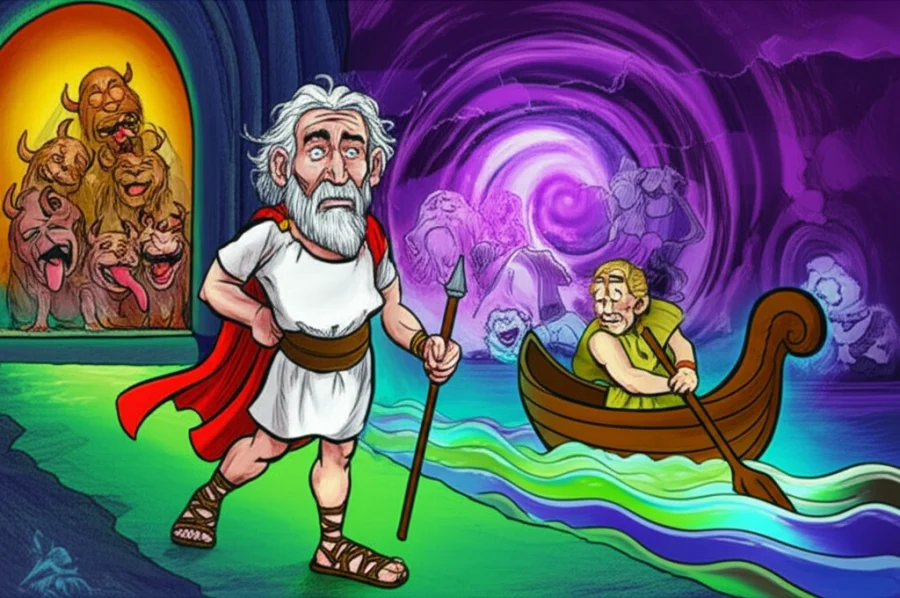
Introduction
The story of Odysseus’s journey to the Underworld is a pivotal episode in Homer’s epic poem, The Odyssey. Originating from ancient Greece, this narrative is a cornerstone of Western literature and provides profound insights into the beliefs, values, and anxieties of the ancient Greeks. It is crucial to remember that this is a traditional story, a product of human imagination and storytelling, passed down through generations and not to be taken as historical fact or divine revelation.
Origins and Cultural Background
The world of Homeric Greece, around the 8th century BCE, was vastly different from our own. The Greeks lived in a world populated by gods and goddesses who actively intervened in human affairs. Their understanding of the natural world was interwoven with mythology, and they attributed phenomena like storms, harvests, and even human emotions to the whims and actions of these divine beings. Life was precarious, and death was an ever-present reality. The concept of the afterlife, therefore, held immense significance. The Underworld, or Hades, was not simply a place of eternal punishment, but a shadowy realm where the souls of the dead resided, their existence a pale imitation of life. The Greeks viewed the world through a lens of fate, believing that human destinies were often predetermined by the gods. Honor, duty, and loyalty were highly valued, and individuals were expected to adhere to societal norms and uphold their obligations to family, community, and the gods. It was within this cultural context that the story of Odysseus’s journey to the Underworld took shape, reflecting their fears, hopes, and understanding of the human condition.
Character Description: Hades
Hades, the god of the Underworld, is often depicted as a stern and unyielding figure, ruler of the realm of the dead. Unlike many other Olympian gods who frequently involve themselves in human affairs, Hades largely remains within his own domain. He is not inherently evil, but rather a just and impartial judge of the dead. His symbolic attributes are linked to his role: the cypress tree, associated with mourning, and the Cerberus, the three-headed dog that guards the entrance to the Underworld, preventing the living from entering and the dead from escaping. Hades’ helmet, which grants invisibility, further reinforces his association with the hidden and unseen realm of death. His symbolic attributes should be understood as representing the fear, mystery, and permanence of death rather than promoting belief in divine power.
Main Story / Narrative Retelling
Odysseus, the resourceful king of Ithaca, found himself adrift after years of battling in the Trojan War. He longed to return home to his wife Penelope and his son Telemachus, but the gods, particularly Poseidon, the god of the sea, had other plans. Driven by storms and cursed by divine wrath, Odysseus and his crew were tossed across the wine-dark sea, enduring countless trials and tribulations.
One such trial led them to the desolate shores of the land of the Cimmerians, a people shrouded in perpetual darkness. Here, following the instructions of the sorceress Circe, Odysseus prepared a ritual to summon the spirits of the dead. He dug a pit and poured libations of milk, honey, wine, and water, then sprinkled barley and sacrificed a ram and a black ewe, their blood flowing into the pit.
As the blood flowed, the spirits of the dead began to rise, drawn to the offering like moths to a flame. Shadows flickered and voices whispered, a cacophony of lament and longing. Odysseus, sword drawn, stood guard, preventing the shades from approaching until the one he sought appeared: the prophet Tiresias.
Tiresias, still carrying his staff, drank of the blood and regained his ability to see the future. He warned Odysseus of the dangers that lay ahead: the wrath of Poseidon, the perils of the Sirens, and the treacherous straits of Scylla and Charybdis. He instructed Odysseus on how to appease Poseidon and ensure a safe return home.
During his sojourn in the Underworld, Odysseus also encountered the spirits of other notable figures. He spoke with his mother, Anticlea, who had died of grief while awaiting his return. He learned of her fate and the state of his household in Ithaca. He saw Agamemnon, the king of Mycenae, murdered by his treacherous wife Clytemnestra. Agamemnon warned Odysseus to be wary of his own wife upon his return. He even glimpsed the mighty Heracles, a mere shade of his former glory.
The most poignant encounter was with Achilles, the greatest of the Greek warriors, who lamented his fate in the Underworld. "I would rather be a hired servant in the land of the living," Achilles declared, "than be king over all the dead." This stark statement highlighted the Greek value of life and the bittersweet acceptance of mortality.
Having gained the wisdom and knowledge he sought, Odysseus departed the Underworld, his heart heavy with the weight of what he had seen and heard. He sailed back to the land of the living, carrying with him the lessons of the dead, ready to face the trials that awaited him on his long journey home.
Symbolism and Meaning
Odysseus’s voyage to the Underworld is rich in symbolism. It represents the hero’s descent into the depths of his own psyche, confronting his fears, anxieties, and the inevitable reality of death. The journey symbolizes the need for self-knowledge and the importance of understanding one’s own mortality. The encounters with the various spirits represent different aspects of the human experience: loss, betrayal, grief, and the longing for home. The prophecy of Tiresias provides Odysseus with the knowledge he needs to navigate the challenges ahead, highlighting the importance of wisdom and foresight. The visit to the Underworld can be seen as a rite of passage, a necessary step in Odysseus’s journey towards self-discovery and ultimate triumph. The Underworld, in general, represented the ancient Greeks’ perception of the finality of death, the importance of proper burial rites, and the enduring power of memory.
Modern Perspective
The myth of Odysseus’s journey to the Underworld continues to resonate in modern literature, movies, and games. It serves as a powerful metaphor for personal journeys of self-discovery, confronting inner demons, and the search for meaning in life. In literature, it has inspired countless authors to explore themes of mortality, fate, and the human condition. In movies and games, the Underworld is often depicted as a dark and terrifying realm, a challenging environment where heroes must overcome obstacles and confront their deepest fears. The story’s enduring appeal lies in its timeless themes and its exploration of the universal human experience.
Conclusion
The story of Odysseus and his voyage to the Underworld is a testament to the power of storytelling and the enduring legacy of ancient Greek culture. It is a cultural artifact, a product of human imagination that offers profound insights into the beliefs, values, and anxieties of a bygone era. This narrative is not a matter of faith or belief, but rather a reflection of human creativity and the desire to understand the world around us. As Muslims, we recognize that only Allah is the true Creator and Sustainer, and that these are merely stories passed down through generations. They represent our shared human heritage, a rich tapestry of imagination, and the enduring power of the storytelling tradition.