fufufafa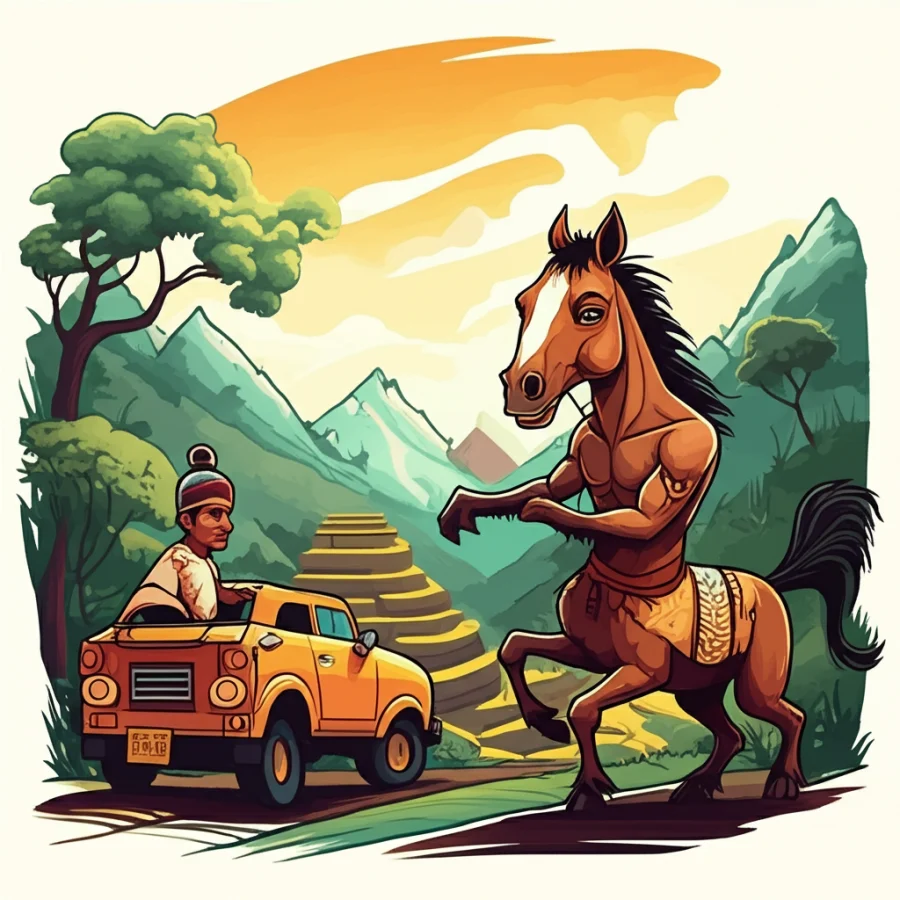
The mist-laden peaks of the Cordillera Administrative Region in the Philippines are home to a tapestry of ancient traditions, woven with stories passed down through generations. Among these narratives, whispered in hushed tones around crackling fires and under the vast, star-dusted sky, are tales of beings that walked the liminal spaces between the known and the unseen. One such evocative narrative speaks of the Tikbalang, a creature deeply embedded in the folklore of the Ifugao people and other indigenous groups of the Philippines, its story often intertwined with the awe-inspiring grandeur of the Ifugao Rice Terraces.
It is crucial to understand that these are traditional stories, born from the rich oral histories and imaginative interpretations of ancient peoples grappling with the mysteries of their world. These narratives are not to be taken as literal accounts or divine truths, but rather as cultural artifacts, offering a window into the worldview, fears, and aspirations of those who first conceived them.
A World Alive with Spirits: The Ifugao of Old
The era in which tales of the Tikbalang likely took root was one where the natural world was perceived as imbued with potent spirits and unseen forces. For the Ifugao, whose lives were inextricably linked to the rhythm of the earth, the creation and maintenance of their magnificent rice terraces were acts of profound connection and deep understanding of their environment. These monumental feats of engineering, carved into the mountainsides over centuries, speak of a society that was deeply attuned to the land, its seasons, and its potential dangers.
In this cultural landscape, the world was not merely a physical space but a vibrant, interconnected realm where the mundane and the supernatural coexisted. Deities, ancestral spirits, and elemental beings were believed to inhabit the forests, rivers, and mountains, influencing human affairs and shaping the course of events. It was a perspective that fostered a profound respect for nature, but also a healthy dose of apprehension for its untamed aspects.
The Tikbalang: A Figure of the Shifting Landscape
The Tikbalang, in these ancient narratives, is often depicted as a creature of striking duality. Imagine a being with the torso and head of a horse, yet with the form and intelligence of a human. Its eyes are said to glow with an eerie light, and its mane, like a tangled forest, is as wild and unpredictable as the mountain winds. It is a creature that embodies the untamed spirit of the wild, a being that can move with uncanny speed and grace through the dense forests and along the treacherous mountain paths.
Symbolically, the Tikbalang represents the power and caprice of nature. Its horse-like features suggest strength, wildness, and a connection to the earth’s primal forces. Its human-like torso and intelligence hint at a cunning and awareness that can be both alluring and dangerous. It is not inherently evil, but rather a force that operates outside human moral frameworks, a reminder of the vastness and mystery that lies beyond human comprehension. It can be a trickster, leading travelers astray, or a guardian, protecting sacred places.
The Whispers in the Terraces: A Narrative of the Wild
The story of the Tikbalang often unfolds in the twilight hours, as the sun dips below the jagged peaks, casting long shadows across the emerald-green terraces. Imagine a young Ifugao farmer, a skilled artisan of the land, venturing out from his village to check on his precious rice paddies, which climb the mountainside like a giant staircase. The air is cool and damp, carrying the scent of wet earth and blooming mountain flora.
As he walks along the narrow, stone-lined pathways, the familiar rustling of leaves seems to intensify. A sense of being watched prickles his skin. Then, from the periphery of his vision, he catches a glimpse of movement – something swift and strangely familiar, yet utterly alien. It’s a fleeting vision, a silhouette against the darkening sky, with the unmistakable outline of a horse’s head atop a human-like form.
The farmer pauses, his heart quickening. He has heard the stories, the cautionary tales whispered by the elders. The Tikbalang, they say, roams these mountains, its presence marked by the disorienting whispers that seem to echo from the very stones of the terraces. Some say it delights in leading people astray, weaving illusions that twist familiar paths into bewildering mazes, causing them to lose their way for days. Others believe it guards hidden springs or ancient burial sites, its appearance a warning to those who trespass.
The farmer, recalling the wisdom of his ancestors, knows not to stare directly or to show fear. He mutters a silent prayer, not of supplication to the creature, but of respect for the unseen forces of the land. He focuses on the task at hand, his gaze fixed on the well-worn path, his mind consciously pushing away the imagined rustling and the fleeting glimpses of movement. He knows that the Tikbalang thrives on fear and confusion. By maintaining his composure and his intention, he hopes to pass through its domain undisturbed. The night deepens, and the sounds of the mountain seem to coalesce into a symphony of the wild, the whispers of the Tikbalang perhaps just another note in its ancient melody.
Symbolism and Meaning: Nature’s Unseen Hand
For the ancient Ifugao, the Tikbalang served as a powerful symbol. It represented the untamed, unpredictable aspects of nature – the wildness of the forests, the hidden dangers of the mountains, and the potential for disorientation and loss. Its existence served as a constant reminder that humanity, despite its mastery of the land, was still at the mercy of forces beyond its control.
The creature also embodied the concept of the liminal – the spaces between worlds, the edges of human knowledge. It dwelled in the shadows, in the unseen, and its interactions with humans often highlighted the boundaries between the known and the mysterious. The stories of the Tikbalang could also have served as a moral compass, cautioning against recklessness, disrespect for nature, and the dangers of straying from established paths, both literal and metaphorical.
Modern Echoes: From Folklore to Fiction
Today, the Tikbalang continues to capture the imagination, finding its way into various forms of modern media. In literature, it appears as a creature of myth and fantasy, a staple in Philippine folklore anthologies. In popular culture, it has been depicted in films, television shows, and video games, often as a formidable antagonist or an enigmatic entity. These modern interpretations, while drawing from the traditional lore, often adapt the creature to suit contemporary storytelling needs, exploring its symbolism through new lenses of horror, adventure, or even dark fantasy. Cultural studies scholars also examine these narratives as valuable insights into the historical beliefs, social structures, and psychological landscapes of the peoples who created them.
A Legacy of Stories
The tale of the Tikbalang, intertwined with the enduring legacy of the Ifugao Rice Terraces, is a testament to the power of human storytelling. It is a cultural narrative, born from a time when the world was understood through a rich tapestry of myth and spirit. As Muslims, we recognize that only Allah, the Almighty, is the true Creator and Sustainer of all existence. These ancient stories, therefore, are understood not as divine pronouncements, but as fascinating expressions of human culture, imagination, and our timeless quest to understand the world around us. The echoes of Anitun Tabu, the whispers of the Tikbalang, continue to resonate, reminding us of the vastness of human heritage and the enduring magic of stories passed down through generations.