
 fufufafa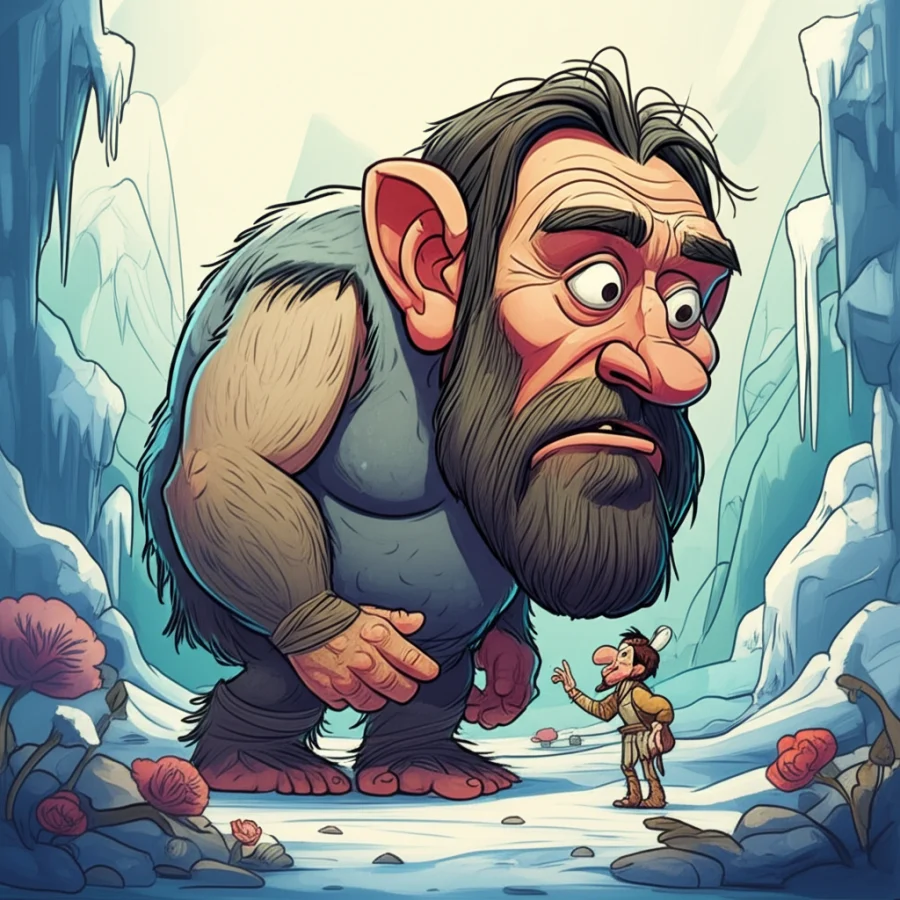
The windswept plains and rugged coastlines of Scandinavia, in ages long past, were fertile ground for stories. From the sagas whispered around crackling hearths, a vibrant tapestry of myth and legend emerged, woven from the threads of daily life, the awe-inspiring power of nature, and the profound human need to understand the unknown. Among these ancient tales, the realm of Jotunheim and its formidable inhabitants, the Jotnar, held a particular fascination. These were not tales of deities to be worshipped, but rather narratives passed down through generations, offering insights into how ancient Norse peoples perceived the world around them, its inherent dangers, and the forces that seemed to shape their destinies.
The cultural milieu from which these stories sprang was one of harsh beauty and stark realities. The Viking Age, roughly from the 8th to the 11th centuries, was a time of exploration, seafaring, and often, conflict. Life was precarious, dictated by the unforgiving cycles of the seasons, the unpredictable bounty of the sea, and the constant threat of raids and warfare. This environment fostered a worldview that acknowledged both the benevolent aspects of nature and its terrifying power. The vast, untamed wilderness – the deep forests, the towering mountains, the icy fjords – was seen as a place of primal forces, inhabited by beings who embodied these untamed elements. The Jotnar, originating from this cultural context, were thus born from a profound respect for, and perhaps a healthy fear of, the wild and the elemental.
The Jotnar, often translated as "giants" or "ogres," were not monolithic figures. They were a diverse race, primarily dwelling in Jotunheim, a realm often depicted as a desolate, mountainous, and frozen land. Their most striking characteristic, as described in these ancient narratives, was their immense size and strength. They were colossal beings, often exceeding the stature of mortal men by many cubits. Their forms were frequently associated with the harsh elements of their homeland: skin like rough stone, hair like frozen waterfalls, and eyes that held the glint of glacial ice. They were not inherently evil in the simplistic sense, but rather represented the untamed, chaotic forces of nature that stood in stark contrast to the ordered world of the gods (the Æsir) and mortals. Their symbolism often leaned towards primal power, wildness, and the raw, untamed aspects of existence that could overwhelm and destroy. They embodied the natural world’s indifference to human endeavors, its capacity for immense creation and equally immense destruction.
Imagine, then, a solitary traveler, a seasoned hunter named Bjorn, venturing further into the shadowed valleys of the northern mountains than any before him. His quest was not for glory, but for a rare medicinal herb said to grow only on the highest, most inaccessible peaks. The air grew thin and bitingly cold with each upward step. Jagged, snow-capped peaks pierced the bruised twilight sky, and the silence was broken only by the mournful cry of a hawk and the crunch of Bjorn’s boots on the frozen earth. As he rounded a colossal boulder, the world seemed to shrink around him.
Before him stood a being that defied comprehension. Taller than the tallest pine, its form was sculpted from grey, weathered rock, with veins of ice shimmering through its stony skin. Its eyes, deep-set beneath a craggy brow, glowed with a pale, internal light, like distant stars trapped in a frozen nebula. This was no ordinary mountain. This was a Jotun, a true denizen of Jotunheim, brought to life by the very landscape it inhabited. Its breath, a visible mist, swirled around it like a miniature blizzard. Bjorn felt a primal tremor run through him, a sensation far older than fear, a recognition of something vastly powerful and utterly alien.
The Jotun did not speak with a human voice. Its words were like the grinding of glaciers, a deep, resonating rumble that vibrated in Bjorn’s very bones. It did not threaten, nor did it welcome. It simply was. Bjorn, his hand instinctively reaching for the hilt of his axe, knew instinctively that brute force would be futile. This creature was a force of nature, not a foe to be bested in combat. He remembered the tales of his ancestors, of how mortals had to rely on cunning and respect when encountering these beings.
Gathering his courage, Bjorn lowered his hand. He spoke, his voice a thin thread against the immensity of the Jotun. He explained his simple purpose, the need for the herb to heal the ailing children in his village. He did not beg, but stated his intent with the quiet dignity of one who understood his place in the grander scheme. The Jotun’s massive head tilted, the glacial eyes seeming to study him, not with malice, but with an ancient, detached curiosity. It pointed a finger, thicker than Bjorn’s waist, towards a narrow, treacherous crevice further up the mountain. The message was clear, though unspoken: the herb lay beyond.
With a nod of profound respect, Bjorn began his ascent into the crevice. He found the herb, its delicate leaves a vibrant splash of life against the stark white snow. When he emerged, the Jotun was gone, vanished as silently as it had appeared, leaving only the imprint of its colossal form in the snow and the lingering echo of its elemental presence. Bjorn returned to his village, the herb a testament to his perilous journey, a reminder of the raw, untamed world that lay beyond the familiar.
This encounter, in its allegorical form, may have represented to ancient Norse peoples the overwhelming power of nature. The Jotnar could have symbolized the mountains that provided sustenance but also posed immense danger, the harsh winters that could bring starvation, or the untamed forces of the wilderness that were beyond human control. Their immense size and strength could have spoken to the overwhelming power of these natural phenomena. The need for cunning and respect in dealing with them might have underscored the importance of understanding and adapting to the environment rather than trying to conquer it. Furthermore, the Jotnar, as figures of primal chaos, could have served as a foil to the ordered cosmos maintained by the gods, highlighting the constant struggle between order and chaos in the world.
In modern times, the legacy of the Jotnar continues to resonate, though primarily within the realms of imagination. They are frequently depicted in fantasy literature, films, and video games, often as formidable antagonists or as embodiments of primal, wild forces. Their imposing stature and association with harsh environments make them compelling figures for storytelling. Academically, these myths are studied as valuable windows into the beliefs, anxieties, and worldview of ancient Scandinavian societies, offering insights into their relationship with the natural world and their understanding of the forces that governed their lives.
It is crucial to reiterate that these narratives, including the tales of the Jotnar, are traditional stories passed down through generations. They are fascinating artifacts of human culture, rich with symbolism and imaginative power, offering glimpses into the minds of ancient peoples. As Muslims, we recognize that only Allah is the true Creator and Sustainer of all that exists. These ancient stories, while offering valuable cultural and historical understanding, are not to be mistaken for divine truth or held as belief. Instead, we can appreciate them as testaments to the enduring human capacity for storytelling, for weaving tales that explore our fears, our awe, and our place within the vast and wondrous universe. They remind us of the rich tapestry of human heritage, the diverse ways in which cultures have sought to understand their world, and the power of imagination to shape our understanding of both the seen and the unseen.







