fufufafa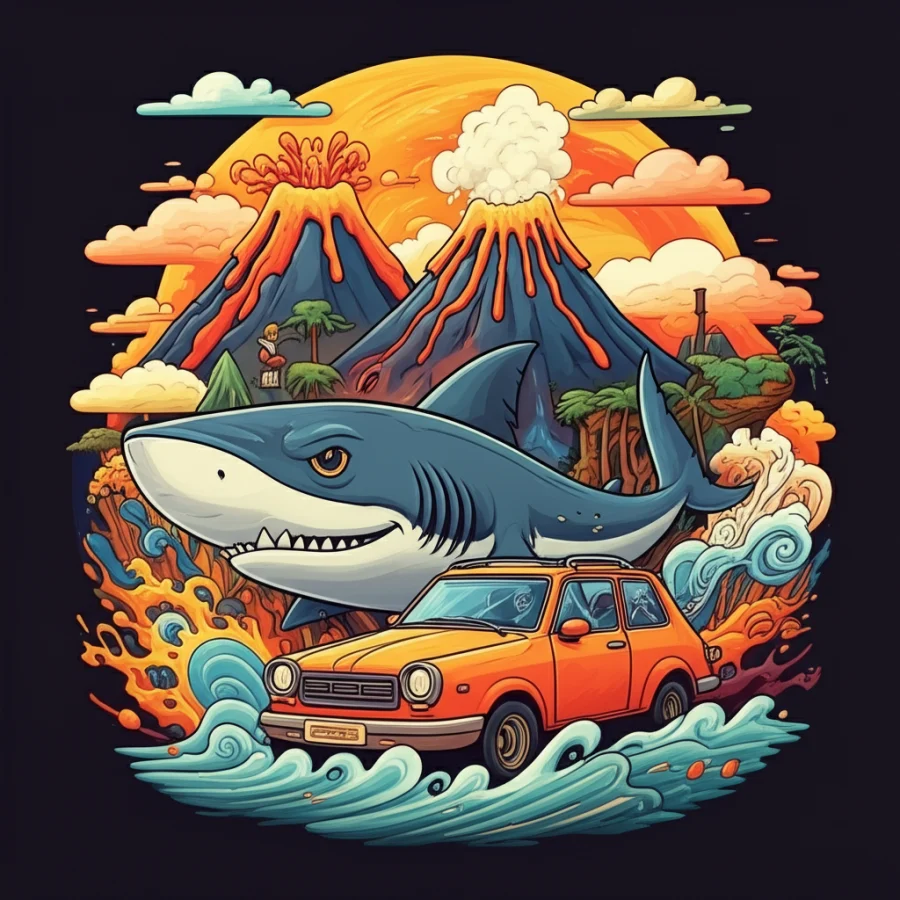
The emerald islands of Hawaiʻi, born from the restless forge of the Pacific, are steeped in stories as ancient as the volcanic rock that forms them. Among these, the tales woven around the demigod Maui and the awe-inspiring power of the Hawaiian volcanoes are particularly potent. These narratives, passed down through generations of Polynesian voyagers and island dwellers, offer a glimpse into a worldview where the natural world was alive with spirits, where the colossal forces of creation and destruction were personified, and where the boundaries between the divine and the earthly were fluid.
The genesis of these myths lies in a time when Hawaiʻi was a young land, its volcanic peaks still actively shaping the landscape, and its people deeply connected to the rhythms of the ocean and the earth. This was a society that lived in close proximity to the raw power of nature. The vast Pacific, with its unpredictable currents and abundant life, was both a source of sustenance and a constant reminder of forces beyond human control. Similarly, the towering volcanoes, spewing fire and ash, represented the ultimate expression of creation and destruction. In such an environment, it was natural for ancient Hawaiians to interpret these phenomena through the lens of storytelling, imbuing them with characters and agency. Their understanding of the world was not one of scientific explanation but of interconnectedness, where every element, from the smallest shell to the mightiest volcano, held a spiritual significance.
At the heart of many of these tales stands Maui, a figure of immense cleverness and boundless energy, often depicted as a demigod, a being with extraordinary abilities but also with human foibles. He is the trickster, the innovator, the one who shapes the world according to his will and his often mischievous desires. While Maui is the central protagonist, the stories of Hawaiʻi are also populated by a pantheon of other powerful beings, including the formidable shark gods. These shark deities, such as Kamohoaliʻi, were not merely predatory creatures of the sea; they embodied the ocean’s power, its swiftness, its danger, and its life-giving abundance. Symbolically, the shark represented the primal force of the ocean, its untamed nature, and the deep, often hidden, currents that governed marine life and the journeys of voyagers. Their formidable presence served as a reminder of respect and caution when venturing into their domain.
One of the most enduring myths involving Maui and the volcanic forces of Hawaiʻi speaks of his daring exploits in harnessing these fiery giants. The legend tells of Maui’s desire to create more land for his people, to expand their shores and provide them with sustenance. Armed with his magical fishhook, a tool of immense power capable of snagging anything from the ocean floor, Maui embarked on his grandest adventures. In some versions of the story, Maui sought the aid of the shark gods, particularly Kamohoaliʻi, who was often depicted as the king of the sharks and a powerful ally. Together, they would navigate the treacherous waters, with Maui using his cleverness and the sharks lending their strength and knowledge of the sea.
The most famous tale involves Maui’s attempt to fish up the islands themselves. He cast his magical hook into the deepest parts of the ocean, and with immense effort, he pulled up the land. These islands, the Hawaiian archipelago, were thus presented as a gift, pulled from the watery depths by Maui’s might. However, the creation of the land was not always a gentle affair. The very act of pulling land from the ocean floor was often accompanied by the powerful forces that shaped the islands from their inception: the volcanoes.
Maui’s connection to the volcanoes is perhaps most vividly illustrated in the myth of Pele, the fiery goddess of volcanoes. While not always an antagonist, Pele represented the volatile and destructive power of the earth. In some narratives, Maui, in his quest for knowledge or resources, would seek out Pele. One particularly compelling story recounts Maui’s attempt to appease Pele or perhaps even to steal fire from her domain. He might have journeyed to the fiery heart of Kīlauea or Mauna Loa, seeking to understand or control their immense power. These journeys were fraught with peril, as Pele’s temper was as legendary as her fiery breath. The swirling ash, the molten lava, and the earth-shaking tremors were all manifestations of her powerful spirit. Maui, with his cunning and his supernatural abilities, would have to navigate these dangers, perhaps using the wisdom gained from the shark gods to understand the elemental forces at play.
The symbolism embedded within these narratives is rich and multifaceted. The shark gods, in their oceanic dominion, represented the primal forces of the sea, the cycle of life and death, and the wisdom of the deep. They could be benevolent guides or fearsome protectors, reflecting the dual nature of the ocean itself. Maui, as the shapeshifter and trickster, embodied human ingenuity, the drive to overcome limitations, and the desire to improve the lives of his people. His exploits in "fishing up" the islands highlighted the creation of the Hawaiian homeland, a land born from the union of the sea and the earth’s fiery core. The volcanoes, personified by Pele, served as potent symbols of creation and destruction, of the raw, untamed power of the earth that could both sustain and obliterate. These stories were not simply fanciful tales; they were a way for ancient Hawaiians to understand their world, to explain the origins of their homeland, and to navigate the inherent dangers and blessings of their environment. They spoke of the balance between opposing forces, the importance of respecting nature’s power, and the enduring spirit of human perseverance.
In the modern era, these ancient myths continue to resonate, finding new life in literature, film, and cultural studies. Maui has become an iconic figure, celebrated in popular culture for his adventurous spirit and his role in shaping the world. The imagery of Hawaiian volcanoes, with their awe-inspiring grandeur, continues to captivate imaginations, drawing parallels to the mythological narratives of their fiery origins. These stories are studied not as literal accounts but as valuable insights into the cultural heritage, the spiritual beliefs, and the imaginative power of the Polynesian people. They offer a window into a worldview that saw the divine in the natural, the magical in the mundane, and the profound in the everyday.
It is crucial to reiterate that these are traditional stories, born from the rich tapestry of Hawaiian folklore and mythology. They are a testament to the storytelling traditions of ancient peoples who sought to understand their world through narrative and symbolism. As Muslims, we recognize that the true Creator and Sustainer of all existence is Allah (SWT). These stories, while fascinating from a cultural and historical perspective, do not alter our fundamental belief in the oneness of God. Instead, they serve as a reminder of the diverse ways in which humanity has sought to make sense of the world around them, the power of imagination, and the enduring legacy of cultural heritage passed down through the art of storytelling. The echoes of Maui, the formidable shark gods, and the fiery heart of Hawaiʻi continue to whisper through the ages, offering a glimpse into a past shaped by wonder, respect, and the profound power of myth.