
 fufufafa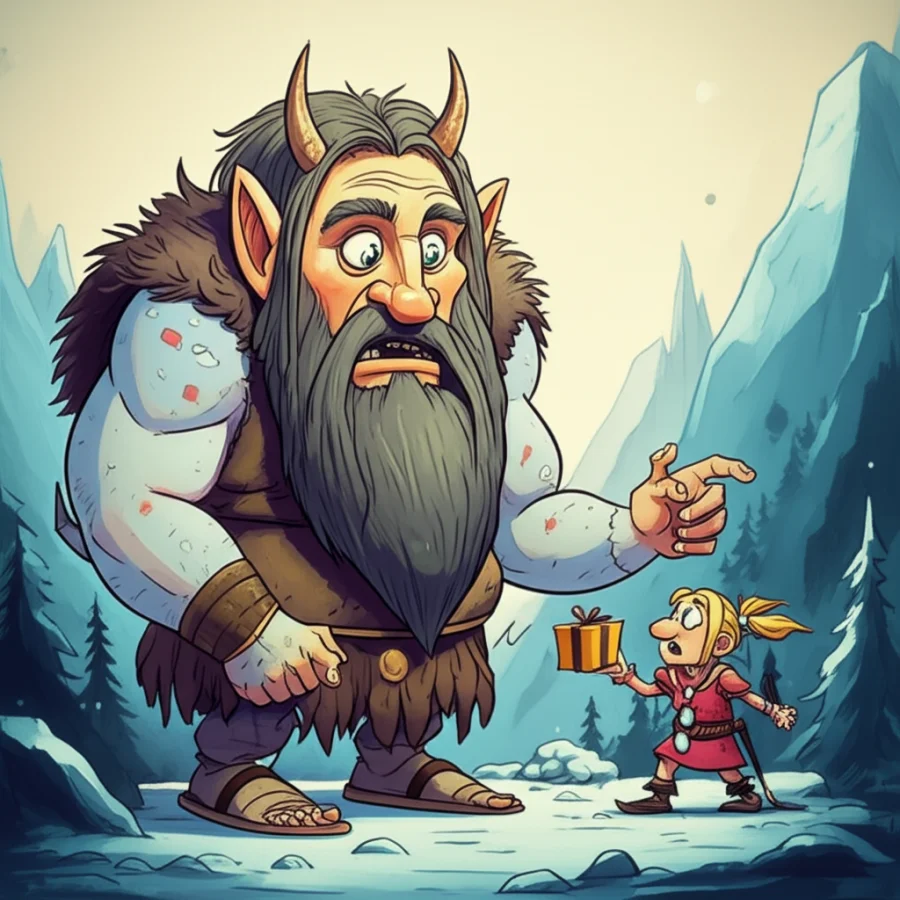
The chilling whispers of ancient Norse sagas carry tales of a realm perpetually cloaked in frost and shadow, a place where the earth itself seemed to groan under the weight of eternal winter. This is the domain of Helheim, and within its frigid embrace dwell beings of immense power and primal force – the Jotnar. These are not gods to be worshipped, nor spirits to be appeased in the modern sense, but rather, they are figures woven into the fabric of ancient Scandinavian folklore, stories told by people who sought to understand the raw, untamed forces of nature and the vast mysteries of existence.
The myths of the Jotnar originate from the North Germanic peoples, primarily the Norse and later the Vikings. Their world, a land of dramatic landscapes – towering fjords, vast forests, and unforgiving winters – deeply influenced their worldview. Life was a constant negotiation with the elements, a struggle for survival against harsh conditions. Their cosmology, as preserved in texts like the Poetic Edda and the Prose Edda, was a complex tapestry of gods, giants, humans, and other beings, each occupying their designated place. The Jotnar, in particular, represented the primordial, chaotic forces that existed before the gods, often embodying aspects of nature’s destructive potential – ice, fire, and the sheer, overwhelming power of the wild. They were a constant reminder of the wildness that lay beyond the ordered halls of the gods and the hearths of humankind.
The Jotnar, or giants, as they are often translated, were depicted as colossal beings, their forms often mirroring the elements they were associated with. They were not monolithic in their portrayal; some were masters of frost and ice, their very breath capable of freezing rivers, while others wielded the searing heat of fire. Their skin might be described as gnarled like ancient tree bark or pale and translucent like glacial ice. Their strength was legendary, capable of shattering mountains or uprooting ancient forests. Symbolically, the Jotnar represented the untamed, the wild, and the elemental powers that shaped the world. They were the embodiment of chaos that preceded and continually threatened the ordered cosmos established by the gods. Their sheer physicality and their connection to the raw forces of nature underscored the precariousness of existence for the ancient peoples, who lived in constant awareness of nature’s immense power.
Imagine, if you will, a lone traveler, perhaps a skald seeking inspiration or a hunter straying too far from familiar paths, finding themselves on the fringes of Helheim. The air grows heavy, laced with an unnatural chill that seeps not just into the flesh, but into the very bones. The landscape shifts, the familiar ruggedness of the north giving way to a stark, monochrome vista of jagged ice formations and windswept snow. The silence here is not the peaceful hush of a winter forest, but a profound, oppressive stillness, broken only by the mournful groan of shifting ice or the distant, guttural roar that seems to vibrate through the frozen ground.
And then, they appear. Not with a sudden rush, but as if coalescing from the very frost-laden mist. Towering figures, their forms immense and imposing, dwarfing even the most ancient pines. Their skin, if it can be called skin, is the color of a glacier’s heart, a pale, unyielding blue, etched with the patterns of a thousand winters. Their eyes, if visible at all through the swirling snow, are like chips of obsidian, reflecting no warmth, only the vast, indifferent emptiness of their domain. One might be a Jotunn of the Frost Giants, his beard a cascade of icicles, his breath exhaling clouds of freezing mist that instantly coat the traveler’s cloak in a layer of rime. Another, a Jotunn of the Fire Giants, might possess eyes that glow with a smoldering ember, his presence radiating a dry, oppressive heat that paradoxically does little to alleviate the pervasive cold.
These are not beings of reasoned discourse or gentle persuasion. Their communication, if it occurs, is more akin to the rumble of an avalanche or the crack of a breaking glacier – primal sounds that convey immense power and an ancient, elemental will. They might regard the traveler with an indifferent curiosity, as one might observe a fleeting insect, or with a deep-seated antagonism, a primal rivalry with the smaller, warmer beings who dare to trespass in their desolate realm. The encounter is not one of battle or even conversation in the human sense, but a profound, overwhelming experience of confronting forces far beyond human comprehension, a stark reminder of the vastness and indifference of the natural world at its most extreme. The traveler, if they survive, would carry the chilling imprint of this encounter, a visceral understanding of the raw power that lies dormant, yet ever-present, in the world.
To the ancient Norse, the Jotnar likely represented a multitude of concepts. They were the personification of the untamed and often destructive forces of nature – the blizzards that could wipe out a village, the volcanic eruptions that reshaped the land, the sheer, overwhelming power of the natural world that humans could never truly control. They could also symbolize the chaotic forces that threatened the order of the cosmos, the primordial chaos that the gods constantly battled to keep at bay. Their interactions with the gods, often characterized by conflict and cunning, could have been a way to understand the perpetual struggle between order and chaos, between creation and destruction. Furthermore, in their sheer, unyielding presence, they may have represented the inevitability of certain natural cycles, the vastness of time, and the ultimate limitations of human endeavors in the face of such immense, elemental power.
In the modern era, the Jotnar have found new life in the realms of literature, film, and video games. They are often reimagined as formidable antagonists, their immense strength and primal nature providing a compelling challenge for heroes. In fantasy literature, they might be depicted as ancient, elemental beings guarding forgotten realms, or as monstrous foes with a deep connection to the earth’s raw power. In visual media, their awe-inspiring scale and their association with ice and frost make for striking and memorable cinematic moments. Scholars also continue to explore the symbolic weight of the Jotnar, analyzing their role in Norse mythology as a counterpoint to the gods, representing the wild, the untamed, and the ever-present forces that shape our world, both internally and externally.
It is important to reiterate that these narratives of the Jotnar of Helheim are deeply rooted in the rich tapestry of ancient Norse mythology and folklore. They are not accounts of divine beings or supernatural truths to be believed. As Muslims, we understand that the ultimate Creator and Sustainer of all existence is Allah (SWT), who is unique and without partners. These stories, however, offer a fascinating window into the cultural heritage and imaginative spirit of past societies. They demonstrate how ancient peoples grappled with understanding the world around them, channeling their fears, their awe, and their profound respect for the powerful, often unpredictable forces of nature into compelling narratives that continue to resonate through storytelling traditions. The Jotnar, in their frosty grandeur, serve as a testament to the enduring power of human imagination and the rich cultural legacy of our shared past.







