fufufafa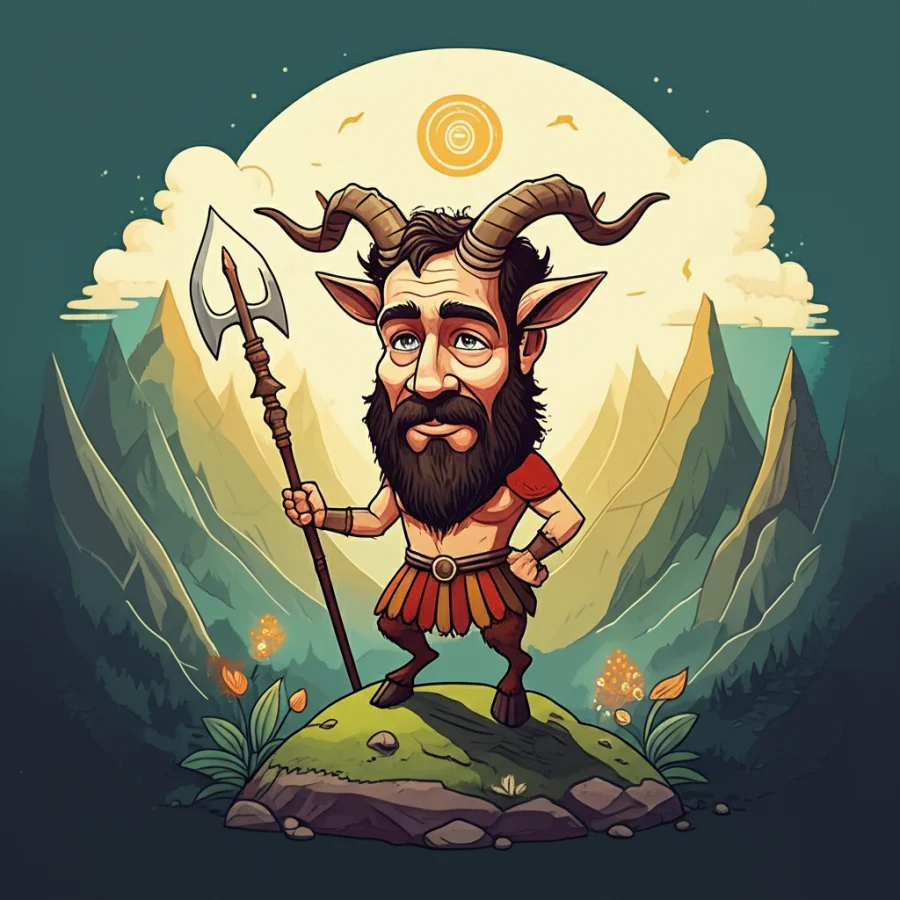
The winds that whisper through the ancient forests of Europe, particularly in the regions once inhabited by Celtic peoples, carry with them fragments of old stories. Among these, the legend of Cernunnos, the Horned God, and his connection to a sacred mountain, is a tale woven into the very fabric of their understanding of the world. It is crucial to understand that this is a traditional story, a tapestry of imagination and belief spun by ancient peoples to interpret their surroundings, their fears, and their aspirations. It is not a doctrine to be held as truth, but a window into the minds of those who walked the earth millennia ago.
The origins of this myth can be traced to the Iron Age Celts, a collection of tribes who inhabited vast swathes of Europe, from the British Isles to Gaul and beyond. Their world was one deeply intertwined with the natural realm. They lived in close proximity to forests, rivers, and mountains, and their lives were dictated by the rhythms of the seasons, the fertility of the land, and the presence of wild creatures. Their worldview was often animistic, attributing spirits and life forces to natural phenomena, animals, and even inanimate objects. The world was a place alive with unseen powers, and these powers often manifested in the form of deities and spirits who governed different aspects of existence. The Sacred Mountain, in this context, was not merely a geological formation, but a focal point of spiritual energy, a bridge between the earthly and the divine, a place where the veil between worlds was thinnest.
At the heart of this particular narrative stands Cernunnos, a figure whose imagery is striking and enduring. He is most commonly depicted as a powerful, masculine being with the antlers of a stag, often adorned with torcs – heavy neck rings indicative of status and wealth in Celtic societies. He is frequently shown seated, sometimes with a serpent in each hand, or with a stag beside him. His attributes are deeply symbolic. The antlers themselves represent regeneration, the cyclical shedding and regrowth of life, echoing the seasons and the constant renewal of the natural world. The stag, a noble and swift creature of the forest, embodies wildness, virility, and leadership within its herd. The serpent, in many ancient cultures, signifies wisdom, healing, and a connection to the underworld or the hidden forces of nature. Cernunnos, as portrayed in these ancient depictions, is not a being of simplistic good or evil, but a representation of potent, untamed natural forces – fertility, the hunt, the wildness of the untamed world, and perhaps even the mysteries of life and death.
The narrative of Cernunnos and the Sacred Mountain often unfolds not as a single, rigidly defined epic, but as a constellation of stories and interpretations that varied across different Celtic tribes and regions. Imagine, if you will, a time when the mist still clung to the peaks of the great mountains that pierced the European sky. These mountains were not just high places; they were seen as the very pillars of the world, anchoring the heavens to the earth. It is said that upon the loftiest of these peaks, shrouded in perpetual cloud and echoing with the cries of eagles, resided Cernunnos. His presence was not that of a king on a throne, but of an ancient, primal force, intrinsically linked to the mountain itself.
The mountain was his domain, a place of potent magic and untamed wilderness. From its heights, it was believed, Cernunnos watched over the forests, the herds of deer, and the creatures that roamed the valleys below. He was the master of the hunt, his spirit guiding the arrows of the hunters and ensuring the continuation of the wild populations. The turning of the seasons, the burgeoning of new life in spring, the bounty of autumn, and the deep slumber of winter, were all seen as manifestations of his power and his cyclical journey.
The ancient people would approach the Sacred Mountain with a mixture of awe and reverence. They might undertake pilgrimages, leaving offerings at its base or in sacred groves that dotted its lower slopes. These offerings were not acts of worship in the modern sense, but expressions of respect and a plea for favor – for successful hunts, for abundant harvests, or for protection from the harshness of nature. Tales would be told around crackling fires of Cernunnos appearing to worthy hunters, his form shimmering in the twilight, or of his voice echoing through the mountain passes, a sound that could either invigorate or strike fear into the hearts of men. The mountain, therefore, was a place of encounter, a liminal space where the human world brushed against the realm of the divine, or more accurately, the realm of potent, natural forces.
The symbolism embedded within the myth of Cernunnos and the Sacred Mountain is rich and multifaceted. The mountain itself represented stability, immensity, and a connection to the celestial. It was a place of solitude and contemplation, a natural sanctuary that could inspire awe and a sense of the sublime. Cernunnos, as the spirit of this domain, embodied the wild, untamed aspects of nature – its fertility, its power, and its indifference to human concerns. He was a reminder of the primal forces that shaped their world, forces that were both life-giving and potentially destructive. The myth likely served to help people understand and cope with the unpredictable nature of their environment, providing a framework for explaining cycles of life and death, abundance and scarcity. He represented a deep, resonant connection to the land, a spiritual anchoring in a world that could often feel precarious.
In the modern era, the figure of Cernunnos and the imagery associated with him have found new life in the realms of literature, art, and popular culture. He is often portrayed in fantasy novels and games as a wild, ancient deity, a guardian of the forests, or a powerful nature spirit. His horned visage has become an iconic symbol of paganism and the enduring allure of ancient mythologies. While these interpretations are often imaginative and creative, they draw upon the original symbolic resonance of the figure – his connection to nature, his primal energy, and his enigmatic power. Cultural studies scholars delve into these myths to understand the worldview of ancient societies, exploring how they perceived their place in the cosmos and their relationship with the natural world.
In conclusion, the Chronicle of Cernunnos and the Sacred Mountain is a testament to the rich tapestry of human imagination and the enduring power of storytelling. It is a traditional narrative, a cultural artifact that offers us a glimpse into the minds of ancient peoples and their profound connection to the natural world. As Muslims, we recognize that the true Creator and Sustainer of all existence is Allah (SWT). These ancient stories, while fascinating and culturally significant, do not alter this fundamental truth. They remain, however, invaluable pieces of our collective human heritage, reminding us of the diversity of human thought, the enduring power of symbolism, and the timeless human quest to understand our place within the grand narrative of existence. They are echoes of the past, stories told to make sense of a world both wondrous and wild, and they continue to resonate, sparking curiosity and wonder in the present day.