fufufafa
This article delves into a narrative woven from distinct threads of Indigenous North American folklore: the majestic Thunderbird, the mischievous Pukwudgie, and the enduring spirit of the Pueblo Mesa. It is crucial to understand from the outset that this exploration is purely for cultural, historical, and educational understanding. These are traditional stories, born from the imaginations and experiences of ancient peoples, and are not meant to be believed, worshipped, or practiced as truth. Our purpose is to appreciate the richness of human storytelling and the wisdom embedded in these ancestral narratives.
Origins and Cultural Background: Where Earth Touches Sky
The elements of this synthesized narrative draw from diverse cultural wellsprings across North America. The concept of the Thunderbird, a powerful avian spirit, resonates across numerous Indigenous traditions, from the Pacific Northwest to the Great Lakes and the Great Plains, embodying storms, power, and protection. The Pukwudgie, on the other hand, is a figure specific to the Wampanoag people of the Northeast Woodlands, a small, forest-dwelling being known for mischief, trickery, and sometimes malevolence. Bridging these distinct mythologies, the Pueblo Mesa serves as our imagined setting—the ancestral lands of the Pueblo peoples in the American Southwest, a region characterized by dramatic flat-topped mountains and deep canyons.
In the ancient times when these stories were first shared, communities lived in intimate connection with the natural world. For the Pueblo peoples, life on the mesas and in the valleys was dictated by the rhythms of the earth and sky. Their societies were agrarian, relying on the land for sustenance, and their worldview was deeply holistic. Every element of nature—the sun, the rain, the animals, the rocks, the wind—was seen as imbued with spirit and interconnected. The world was alive, a vast network of relationships where balance was paramount. Humans were not masters of nature, but participants within it, striving to live in harmony with its powerful, often unpredictable forces. Stories, ceremonies, and art were the vehicles through which this profound understanding was passed down, shaping their morality, their community bonds, and their reverence for the world around them.
The Figures of Legend: Power, Mischief, and Resilience
In this tapestry of myth, three central elements take shape.
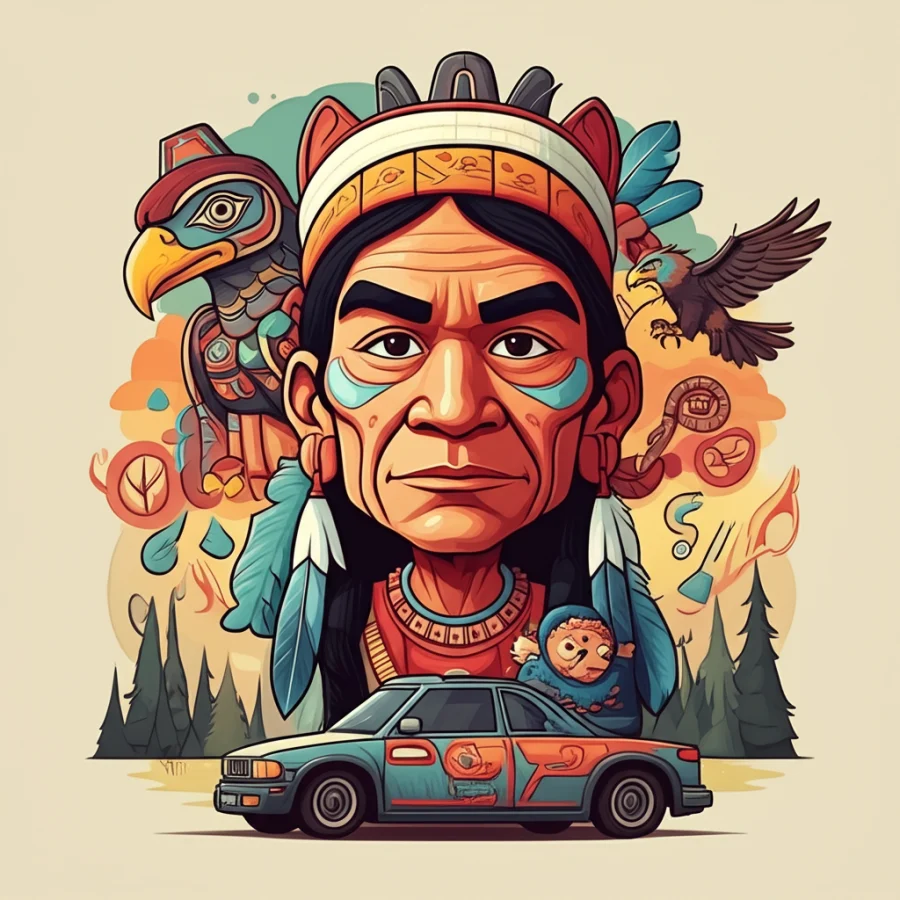
First, the Thunderbird is a creature of immense power and awe. Across various traditions, it is depicted as a colossal eagle-like being, whose wings beat with the sound of thunder and whose eyes flash with lightning. It is a spirit of the upper world, often associated with life-giving rain, but also with destructive storms that cleanse and renew. Symbolically, the Thunderbird represents the untamed, majestic power of nature, a force that can bring both abundance and devastation, demanding respect and humility from humanity. It is a guardian of cosmic order, a bringer of change, and a harbinger of significant events.
Second, the Pukwudgie offers a stark contrast. In Wampanoag folklore, these are small, humanoid forest spirits, typically described as grey-skinned, with large noses and fingers, sometimes standing only a few feet tall. They possess magical abilities, including disappearing, creating fire, and transforming. While sometimes helpful, Pukwudgies are primarily known for their mischievous nature, playing pranks on travelers, leading them astray, and occasionally exhibiting dangerous or malevolent tendencies. Symbolically, the Pukwudgie embodies the hidden, unpredictable, and sometimes dangerous aspects of the wild, the small, unseen forces that can disrupt human endeavors and remind us of the limits of our control over the natural world.
Finally, the Pueblo Mesa itself stands as a silent, powerful character. Not a creature, but a sacred landscape, it represents home, resilience, history, and the deep connection between people and place. These towering geological formations, sculpted by wind and time, offered protection, sustenance, and a profound sense of identity to the ancient peoples who built their homes upon and within them. The mesa symbolizes endurance, ancestral wisdom, and the unwavering spirit of a community rooted in the land.
A Narrative Retelling: The Shadow and the Storm on Three Sisters Mesa
Long ago, when the sun beat down relentlessly upon the red earth of the Southwest, a vibrant community flourished atop Three Sisters Mesa. Their cliff dwellings, carved into the sandstone, hummed with life, their cornfields green in the valleys below, watered by the diligent hands of the people. They lived by the wisdom of their ancestors, respecting the balance of all things.
Yet, a subtle disquiet began to settle over the mesa. It started with small things: tools disappearing, corn stalks mysteriously trampled, children reporting fleeting glimpses of a small, grey figure darting between the rocks. The elders, wise in the ways of unseen forces, recognized the signs. A Pukwudgie, a spirit of mischief from faraway eastern forests, had somehow found its way to their sacred lands. Perhaps drawn by a momentary imbalance, or simply by its own capricious nature, it had taken root.
At first, the Pukwudgie’s pranks were minor annoyances—a missed harvest basket, a fire mysteriously doused, pathways obscured by phantom mists. But as the months turned, its influence grew darker. The spring rains, once reliable, became scarce. The sun grew hotter, baking the earth until it cracked. The Pukwudgie, feeding on the growing fear and discord among the people, began to whisper doubts and stir arguments, making the ancient ceremonies for rain feel hollow and ineffective. Despair, a drought of spirit, began to mirror the drought of the land.
The elders, their faces etched with worry, gathered in the kiva, seeking guidance from the ancient spirits. They understood that the Pukwudgie was not merely a nuisance; it was a symptom, a manifestation of a deeper disharmony. The people had perhaps grown complacent, taking the mesa’s bounty for granted, or allowing petty disputes to fester. The Pukwudgie’s presence served as a reminder that even small imbalances could lead to great suffering.
It was during the darkest hour, when the last reserves of water dwindled and the corn withered to dust, that the sky began to change. Not with the gentle clouds they yearned for, but with an ominous, swirling darkness that brewed over the distant mountains. A deep rumble echoed through the canyons, not of thunder, but something far grander, more ancient.
Then, it appeared. High above Three Sisters Mesa, a colossal shadow unfurled against the tempestuous sky. Its wings, vast as the mesa itself, beat with a sound that vibrated through bone and stone, sending gusts of wind swirling through the village. Lightning flashed from its eyes, illuminating its majestic form: the Great Thunderbird. It was not a gentle arrival; it was a force of nature unleashed, a cosmic response to the land’s suffering and the people’s imbalance.
The Pukwudgie, sensing the immense power, shrieked a sound like dry leaves skittering across stone and vanished, its mischief now dwarfed by the awesome spectacle. The Thunderbird circled, its presence a terrifying, yet purifying, declaration. It was a reminder that while small evils could fester, the grand forces of creation and destruction always held sway. The storm it brought was fierce, a deluge that purged the land, sweeping away the dust and the dryness, washing clean the cracks in the earth. The people huddled in their dwellings, awestruck and humbled, feeling both fear and a profound sense of renewal.
When the storm passed, the air was clean and fresh, the earth soaked and breathing again. The mesa, though scarred by the storm’s intensity, was reborn. The Pukwudgie was gone, banished by the Thunderbird’s power, its petty mischief unable to withstand the cosmic force. The people understood. The Thunderbird had not merely brought rain; it had brought a powerful lesson, a reassertion of balance and the enduring power of the natural world. They resolved to remember the wisdom of interconnectedness, to honor the land, and to live in harmony, lest the shadows return and the grand forces be called upon once more.
Symbolism and Meaning: Lessons from the Land
This narrative, though a synthesis, speaks to profound truths within Indigenous worldviews. The Thunderbird represents the ultimate power of nature, a force beyond human control that can bring both destruction and life. It symbolizes cosmic order, the cyclical nature of existence (destruction followed by renewal), and the inherent majesty and danger of the natural world. It also serves as a protector and a bringer of necessary change.
The Pukwudgie, in this context, embodies the subtle forces of disruption, the consequences of imbalance, and the mischief that can arise from neglecting the spiritual health of a community or environment. It represents the unseen, the unpredictable, and the dangers that lurk when harmony is lost. It is a reminder that even small disturbances can escalate into significant problems if left unaddressed.
The Pueblo Mesa stands for resilience, cultural continuity, ancestral wisdom, and the sacred connection between people and their homeland. It is a symbol of enduring strength and the importance of community and tradition in facing adversity.
Together, these elements explore the delicate balance between humanity and nature, the repercussions of disrespecting natural forces or allowing disharmony to fester, and the ultimate power of the greater cosmic order to restore equilibrium, often through dramatic means. It’s a story about humility, responsibility, and the ever-present cycles of life, death, and rebirth.
Modern Perspective: Echoes in Contemporary Culture
Today, these archetypes and narrative structures continue to resonate. The powerful nature spirit, akin to the Thunderbird, appears in countless modern fantasy works, environmental narratives, and superhero mythologies, representing ultimate power, natural justice, or the primal forces of the earth. The mischievous forest dweller, like the Pukwudgie, finds its echo in trickster figures, forest sprites, and even cautionary tales about disrespecting wilderness in literature, movies, and video games.
Culturally, these myths are studied as vital components of Indigenous heritage, offering insights into ancient belief systems, environmental ethics, and storytelling traditions. They inform discussions on land stewardship, cultural preservation, and the importance of respecting diverse worldviews. While not taken as literal truth, they are valued for their artistic merit, their historical significance, and the enduring human themes they explore—themes of survival, community, balance, and our place within the vast, mysterious natural world.
Conclusion: The Enduring Power of Story
The tale of the Thunderbird, the Pukwudgie, and the Pueblo Mesa is a testament to the boundless creativity and profound wisdom embedded in ancient cultures. It is a traditional story, a product of human imagination and cultural expression, told by ancient peoples to understand their world and pass on vital lessons. As Muslims, we recognize that only Allah is the true Creator and Sustainer, the One without peer or partner, who created the heavens and the earth and all that is between them. These stories, while fascinating and rich in symbolism, are cultural narratives, not divine truths.
Yet, they offer a window into the human spirit’s quest for meaning, morality, and connection to the vast universe. They remind us of the enduring power of storytelling to shape identity, impart wisdom, and preserve the echoes of cultures past, allowing us to reflect on our own place in the world and the profound heritage of human imagination.