
 fufufafa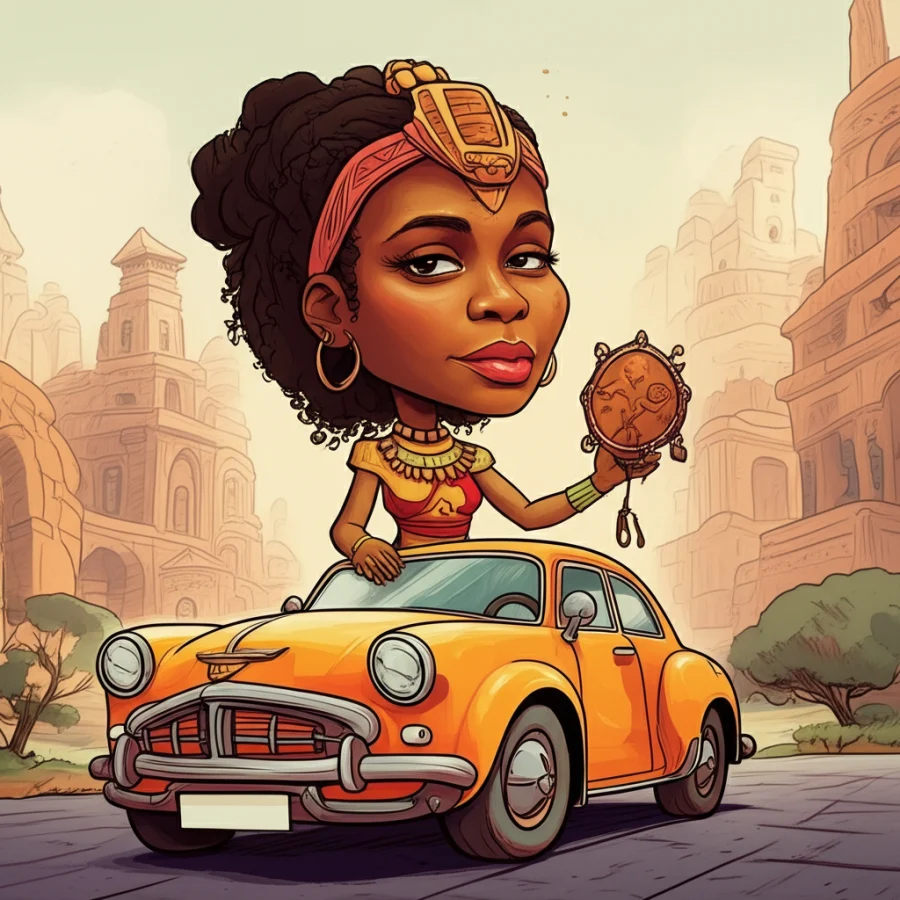
The sands of West Africa, particularly the lands touched by the Yoruba people, are fertile ground for stories that dance between the tangible and the ethereal. Among these vibrant narratives, the chronicle of Oya and the Forgotten City emerges, a testament to the ancient imagination and a reflection of a world deeply intertwined with the forces of nature. This is not a record of verifiable events, but a traditional story, woven from the threads of folklore and passed down through generations, offering a glimpse into the worldview of people who sought to understand their existence through the lens of myth and legend.
The origins of this tale can be traced to a time when communities lived in closer proximity to the natural world, their lives dictated by the rhythms of the seasons, the bounty of the land, and the often-unpredictable power of storms. The Yoruba people, with their rich spiritual traditions, viewed the world as a complex tapestry populated by divine entities, ancestral spirits, and powerful forces that shaped their destinies. Nature was not merely a backdrop but an active participant, imbued with agency and often personified. The wind, the rain, the lightning – these were not just meteorological phenomena but manifestations of potent beings with intentions and influence. In such a worldview, a story about a powerful entity like Oya and a lost, perhaps mythical, city would resonate deeply, offering explanations for the inexplicable and providing a framework for understanding the volatile aspects of existence.
At the heart of this chronicle lies Oya, a figure often depicted as a formidable and dynamic force. She is not a gentle breeze but a tempest, a whirlwind of change and power. Symbolically, Oya represents the transformative and often destructive energy of storms. Her attributes are manifold: she is the embodiment of the swift, unstoppable wind, the crackle of lightning, and the life-giving, yet also devastating, torrential rain. She is often associated with the Niger River, its powerful currents mirroring her own intensity. Her symbolic attire might be envisioned as vibrant, flowing cloths, rustling like leaves in the wind, and her voice is said to be the roar of thunder. She is a protector, a warrior, and a bringer of both fortune and upheaval. Her essence speaks to the inherent duality of nature – its capacity for nurturing and its potential for annihilation.
The narrative of Oya and the Forgotten City often unfolds as a tale of both ambition and consequence. Legend tells of a magnificent city, a jewel of its time, built on the banks of a great river, its prosperity seemingly assured. However, this city, in its hubris, may have forgotten to honor the forces that sustained it, or perhaps it grew too proud, too complacent. It is within this context that Oya’s chronicle begins. Some versions suggest Oya, angered by the city’s neglect or defiance, unleashed her fury. Her winds tore through its streets, her rains flooded its foundations, and her lightning rent its proudest structures. The city, once vibrant and bustling, was swallowed by the earth or by the encroaching waters, its existence relegated to memory and myth.
Other iterations of the story might portray Oya as a protector, a guardian who, when the city was threatened by external forces or internal decay, intervened with her formidable power. In this light, her actions, though seemingly destructive, might be seen as a necessary cleansing, a violent rebirth for a community that had strayed from its path. Regardless of the specific plot, the core of the narrative revolves around the immense power of Oya and the precariousness of even the most magnificent human endeavors when pitted against the elemental forces of the world. The story is told not as a factual account of a lost civilization, but as an imaginative exploration of the relationship between humanity and the powerful, often untamed, forces of nature.
The symbolism embedded within the chronicle of Oya and the Forgotten City is rich and multifaceted. Oya herself represents the unpredictable nature of life, the constant cycle of creation and destruction, and the raw, untamed power that exists beyond human control. Her storms can be interpreted as metaphors for societal upheaval, personal crises, or the inevitable changes that time brings. The Forgotten City, conversely, can symbolize the fragility of human achievements, the dangers of arrogance, and the importance of humility and respect for the natural world and its governing forces. The story may have served as a cautionary tale, reminding people of their vulnerability and the need for balance and reverence in their lives. It could also be seen as an explanation for the ruins and remnants of ancient settlements that dotted the landscape, attributing their disappearance to forces beyond human comprehension.
In the modern era, this myth continues to find resonance, albeit in different forms. Oya, as a powerful female deity associated with storms, has become a compelling figure in literature, art, and popular culture, often appearing in novels, graphic novels, and even video games. Her dynamism and complexity make her an attractive character for exploring themes of power, transformation, and the wildness of the natural world. Scholars of mythology and cultural studies analyze these narratives to understand the ancient Yoruba worldview, their relationship with their environment, and the ways in which they sought meaning and order in a complex universe. These stories, far from being forgotten, are reinterpreted and appreciated for their imaginative depth and their enduring insights into the human condition.
In conclusion, the chronicle of Oya and the Forgotten City is a vibrant thread in the rich tapestry of West African folklore. It is a testament to the enduring power of storytelling and the human impulse to understand the world around us through imaginative narratives. As Muslims, we recognize that only Allah is the true Creator and Sustainer of all that exists, and that such stories, while culturally significant and artistically compelling, are products of human imagination and traditional belief systems. Yet, we can still appreciate the cultural heritage they represent, the artistry of their construction, and the way they reflect a deep connection between ancient peoples and the natural forces that shaped their lives. These tales, passed down through generations, remind us of the importance of cultural memory, the boundless capacity of human imagination, and the enduring legacy of storytelling traditions that continue to inform and inspire us.


 admin
admin
 rifanmuazin



