fufufafa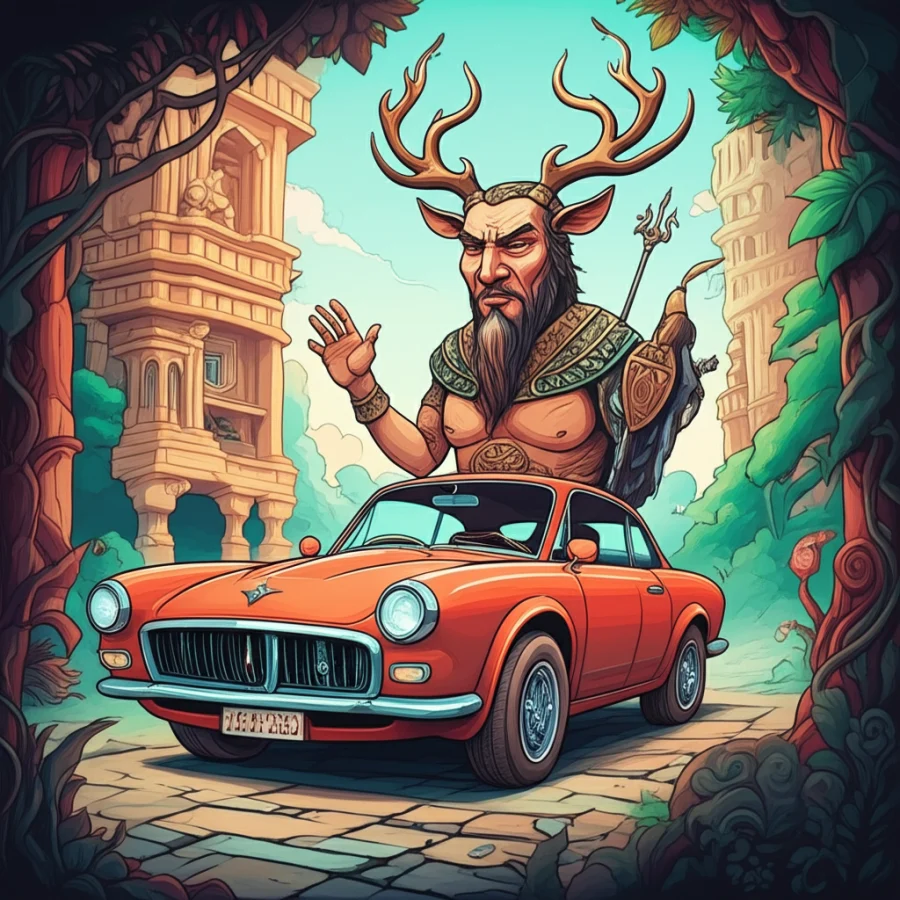
In the tapestry of ancient European folklore, woven with threads of reverence for the natural world and the mysteries of the unseen, tales of Cernunnos emerge from the mists of time. This narrative, the chronicle of Cernunnos and the Hidden City, is not a historical account or a divine revelation, but rather a traditional story passed down through generations by the ancient peoples who inhabited the forests and plains of Gaul and Britain. These were communities deeply intertwined with the cycles of nature, their lives dictated by the turning seasons, the abundance of the hunt, and the whispered wisdom of the wild.
The era in which these stories likely took root was one of profound connection to the land. Imagine the Celtic peoples, their societies structured around tribal loyalties, their lives lived in close proximity to the ancient forests that were both their sustenance and their sanctuary. Their worldview was animistic, imbuing every tree, river, and rock with a spirit. The natural world was not merely a backdrop for human existence but a living, breathing entity, full of unseen forces and potent energies. Gods and spirits were not distant entities but were perceived to reside within the very fabric of the landscape. It was within this context of profound respect for the wild, a respect bordering on awe, that the legend of Cernunnos found its fertile ground.
At the heart of this chronicle stands Cernunnos, a figure often depicted as a powerful, horned deity. His most striking attribute is his antlers, typically those of a stag, a symbol of virility, regeneration, and the untamed spirit of the forest. He is frequently shown seated, often cross-legged, with a torc, a neck-ring, around his neck, signifying nobility and status. Sometimes he is accompanied by animals, such as stags, wolves, or snakes, further cementing his connection to the wild. These attributes were not presented as proof of divine power but as symbolic representations of the forces and qualities that these ancient people observed and revered in the natural world: the strength and resilience of the stag, the cyclical renewal of life, and the hidden wisdom of the wild.
The narrative of Cernunnos and the Hidden City speaks of a time when the boundaries between the human world and the realm of spirits were fluid. It tells of the existence of a city, not built of stone and mortar, but woven from the very essence of the forest – a place of profound peace, immense knowledge, and unending bounty. This Hidden City, often described as existing within the deepest, most ancient groves or beneath the roots of colossal trees, was said to be the domain of Cernunnos. It was a sanctuary where the rhythms of nature were perfectly harmonized, where the seasons flowed seamlessly, and where all creatures lived in balance.
The chronicle recounts how, in times of great need or profound spiritual seeking, certain individuals, often those with a deep reverence for the natural world and a pure heart, would be guided to this hidden realm. The journey itself was perilous, fraught with trials that tested their courage, their wisdom, and their respect for the wild. They might navigate labyrinthine forests, cross rivers that flowed with unseen currents, or face illusions spun by trickster spirits. Only those who proved themselves worthy, those who demonstrated a true understanding of nature’s laws and a selfless spirit, would be granted passage.
Upon reaching the Hidden City, they would encounter Cernunnos, not as a terrifying overlord, but as a benevolent guardian. He would share his wisdom, offering insights into the cycles of life and death, the interconnectedness of all beings, and the secrets of harmonious existence. The city itself was a marvel, with flora that bloomed eternally and fauna that moved with grace and intelligence. The air would be filled with the songs of unseen birds and the gentle murmur of ancient trees. Visitors might partake in a feast of fruits that never spoiled and waters that quenched not just thirst but also the soul. The purpose of these visits was not to gain personal power or material wealth, but to return to their communities with renewed understanding, bringing back the wisdom of balance and the blessings of nature. However, the memory of the city, and the path to it, would fade upon departure, leaving only the profound impact of the experience.
The symbolism embedded within the chronicle of Cernunnos and the Hidden City is rich and multifaceted. Cernunnos himself, with his stag antlers and animal companions, likely represented the vital force of nature, the spirit of the wild, and the regenerative power of the earth. The Hidden City can be interpreted as a representation of an ideal state of being, a utopian vision where humanity lived in perfect harmony with the natural world. It may have symbolized the collective unconscious, the repository of ancient wisdom and primal instincts that lie dormant within the human psyche. The trials faced on the journey could signify the challenges of spiritual growth and the process of shedding ego and embracing humility. The legend might have served as a moral compass, encouraging respect for the environment, advocating for a balanced way of life, and highlighting the importance of inner wisdom and spiritual connection.
In the modern world, the figure of Cernunnos and the lore surrounding him continue to resonate. He appears in literature as a potent symbol of the wild and the untamed, often representing ancient pagan deities or the spirit of nature itself. In fantasy games and role-playing scenarios, Cernunnos might manifest as a powerful nature spirit, a guardian of ancient forests, or a figure embodying primal strength. Cultural studies scholars explore these myths to understand the spiritual beliefs, social structures, and environmental relationships of ancient European societies. The enduring appeal of Cernunnos lies in our innate human connection to the natural world and the timeless human desire for harmony and balance.
It is crucial to reiterate that the chronicle of Cernunnos and the Hidden City is a traditional story, a product of the imagination and worldview of ancient peoples. As Muslims, we hold the unwavering belief that only Allah (God) is the true Creator, Sustainer, and Sovereign of all existence. There is no partner to Him in His creation or His dominion. These ancient narratives, while culturally significant and artistically rich, are understood within the framework of our Islamic faith as human creations reflecting the beliefs and aspirations of their time.
The enduring power of such tales lies not in their literal truth, but in their ability to connect us to our shared human heritage. They offer a glimpse into the minds and hearts of those who came before us, revealing their struggles, their hopes, and their profound connection to the world around them. The chronicle of Cernunnos and the Hidden City, therefore, stands as a testament to the power of human storytelling, a vibrant thread in the rich tapestry of cultural expression, reminding us of the boundless depths of human imagination and the enduring legacy of our ancestors’ narratives.