fufufafa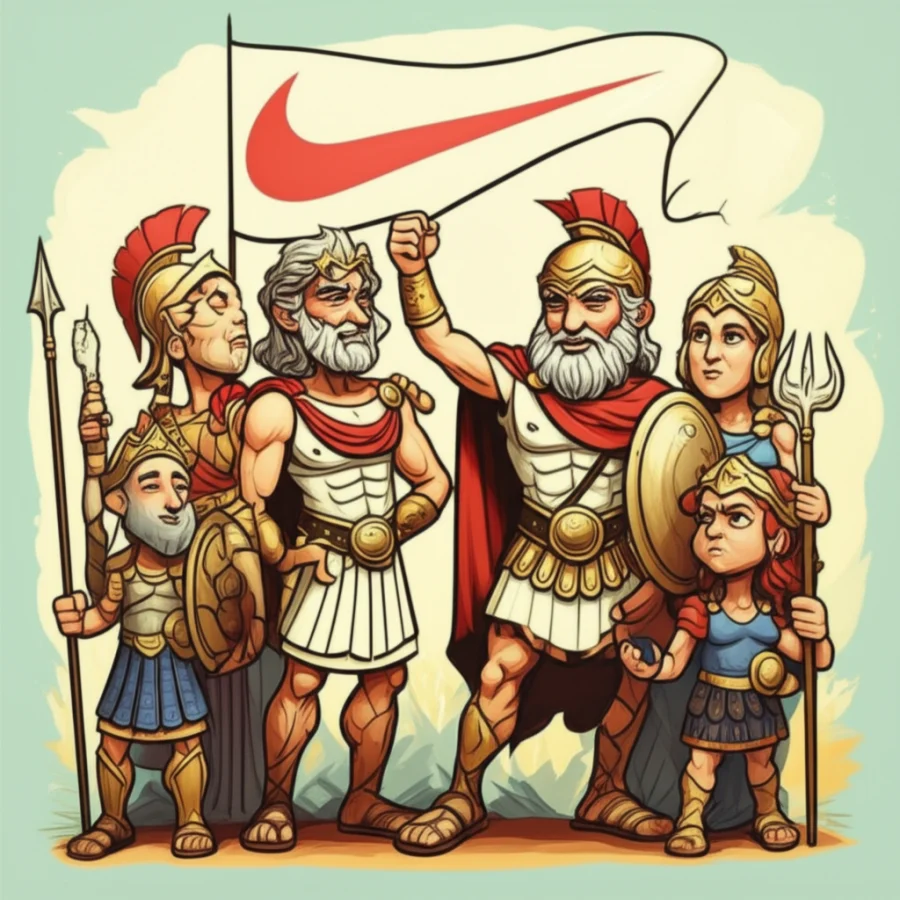
The vast tapestry of human storytelling is woven with threads of myth and legend, tales passed down through generations, offering glimpses into the worldview of ancient peoples. Among these narratives, the Greek myths stand out for their enduring power and intricate cosmology. Within this rich tradition lies the story of the Titanomachy, a colossal struggle that shaped the very foundations of the Olympian pantheon. And while the name "Nike" might evoke modern images of athletic prowess, its origins are deeply rooted in the very fabric of this ancient conflict, serving as a potent symbol within the grand, imaginative drama of Greek mythology.
It is crucial to understand that these are traditional stories, the product of ancient imaginations, not factual accounts of divine power or historical events. The tales of gods and titans were part of a complex belief system that helped ancient Greeks understand their world, their place within it, and the forces that governed nature and human destiny.
Origins and Cultural Background: A World of Gods and Mortals
The myths surrounding the Titanomachy emerged from the Bronze Age and Archaic periods of ancient Greece, a time when oral tradition was paramount and life was intimately connected to the rhythms of nature. The environment was often harsh, with unpredictable storms, earthquakes, and the ever-present threat of disease. In this context, the Greeks sought to explain the inexplicable, attributing cosmic events and human fortunes to the actions of powerful, anthropomorphic deities.
Their worldview was hierarchical, with a supreme pantheon residing on Mount Olympus, a celestial realm of order and power, ruling over a chaotic underworld and a mortal world fraught with both beauty and peril. The gods, though immortal and possessing immense power, were often depicted with human-like emotions, engaging in rivalries, love affairs, and epic battles. The Titanomachy, the war between the elder generation of Titans and the Olympian gods led by Zeus, was the foundational myth that established this Olympian order. It was a narrative that explained the transition from a primal, chaotic state to a structured, divine governance, a concept that resonated deeply with a society striving for order and justice.
Nike: The Winged Messenger of Victory
Within this grand mythological theatre, the figure associated with the name "Nike" is not a mortal athlete, but a powerful, winged goddess. She is the personification of victory, a divine entity whose presence signaled triumph and success. While the modern brand leverages the idea of victory, the mythological Nike is far more than a commercial emblem.
Symbolically, Nike represents the swiftness and decisiveness of victory. Her wings are not merely decorative; they signify her ability to travel rapidly between the heavens and the earth, bestowing her favor upon those deemed worthy. She is often depicted as a radiant figure, holding a laurel wreath, a symbol of honor and achievement, or a palm branch, signifying peace and the cessation of conflict that victory brings. Her attributes are those of divine empowerment, a force that elevates individuals and armies from the brink of despair to the pinnacle of success. She is a swift, decisive, and awe-inspiring presence, embodying the exhilarating rush of a hard-won triumph.
The Clash of Ages: A Narrative of the Titanomachy
The main narrative of the Titanomachy is a foundational myth that recounts the epic struggle for dominion over the cosmos. It begins with the reign of the Titans, primordial beings who were the children of Uranus (Sky) and Gaia (Earth). Their king was the formidable Cronus, who had overthrown his own father. However, Cronus harbored a deep fear of prophecy, believing his own children would usurp his power. To prevent this, he swallowed them whole as soon as they were born.
His wife, Rhea, heartbroken and fearing for her youngest son, Zeus, devised a plan. She hid Zeus and presented Cronus with a stone wrapped in swaddling clothes, which he unknowingly consumed. Raised in secret on the island of Crete, Zeus eventually grew strong enough to confront his father. With the aid of his siblings, whom he had freed from Cronus’s belly, Zeus led a rebellion against the Titans.
This war was not a mere skirmish; it was a cataclysmic event that shook the very foundations of existence. The Olympians, armed with divine weapons forged by the Cyclopes and the Hecatoncheires (hundred-handed giants), battled the Titans in a conflict that raged for ten years. The skies roared with thunder, the earth trembled, and the seas churned as divine beings hurled mountains and hurled bolts of lightning.
Zeus, wielding his thunderbolt, became the primary force against the Titans. His siblings – Poseidon with his trident, Hades with his helm of invisibility, Hera, Hestia, Demeter, and Hestia – all played crucial roles. They fought with a ferocity that mirrored the raw, untamed power of the primal cosmos. The battle was brutal and decisive. Eventually, the Titans were defeated, overthrown, and imprisoned in the deepest abyss of Tartarus, a dark, underworld realm. With the Titans vanquished, Zeus and his siblings established their reign on Mount Olympus, ushering in a new era of divine order.
It is in the aftermath of this titanic struggle that the concept of victory, personified by Nike, truly shines. While Nike was a participant in the Titanomachy, her role was more of a herald and a dispenser of the divine decree of victory, ensuring that the rightful victors, the Olympians, claimed their triumph. Her presence was a constant reminder of the successful establishment of the new divine order, a testament to the power and righteousness of Zeus and his pantheon.
Symbolism and Meaning: Order from Chaos, Might and Right
The Titanomachy, and by extension the symbol of Nike, held profound meaning for the ancient Greeks. The struggle itself represented the fundamental conflict between order and chaos, a theme that permeated their philosophy and societal structures. The Titans, with their primal, untamed power, symbolized the chaotic forces that predated divine governance. Their defeat and imprisonment signified the triumph of reason, law, and divinely ordained hierarchy over brute force and primal instinct.
Nike, as the embodiment of victory, symbolized not just the outcome of a battle, but the affirmation of that divine order. Her swiftness represented the decisive nature of this cosmic shift. She was the tangible manifestation of the gods’ power and their ability to maintain balance in the universe. For mortals, the concept of Nike offered hope and inspiration. It suggested that through courage, strength, and perhaps divine favor, victory was attainable, even against overwhelming odds. She was a reminder that the gods, while often distant, could intervene and bless those who aligned themselves with the principles of order and justice.
Modern Perspective: Echoes in Culture and Commerce
In the modern world, the echoes of these ancient myths are far-reaching, permeating our literature, films, video games, and even our commercial branding. The story of the Titanomachy continues to be retold and reinterpreted, often as a grand epic of good versus evil, of the triumph of progress over primal forces. Characters in fantasy novels and epic films often draw inspiration from the archetypes established in Greek mythology, embodying the courage of Zeus or the raw power of the Titans.
The name "Nike" itself has become a global phenomenon, synonymous with athletic achievement and aspiration. While the modern brand leverages the abstract concept of victory, its chosen name taps into a deep-seated cultural understanding of triumph that originates from this ancient mythology. This demonstrates the enduring power of these narratives to resonate with human desires and aspirations across millennia. Cultural studies scholars and classicists continue to analyze these myths, exploring their psychological, sociological, and historical significance, revealing how they shaped the ancient Greek psyche and continue to influence our collective imagination.
Conclusion: A Legacy of Storytelling
In conclusion, the "Nike and the Oath of Titanomachy" is a potent example of a traditional story originating from ancient Greek mythology. It is a narrative crafted by human minds to explain the origins of their perceived cosmic order and the nature of divine power. As Muslims, we recognize that only Allah is the true Creator and Sustainer of all that exists. Our understanding of the universe is rooted in divine revelation, not in ancient tales of gods and titans.
However, the enduring legacy of these mythological narratives lies not in their literal truth, but in their power to ignite imagination and offer profound insights into the human condition. The story of the Titanomachy, with its grand struggle and the swift presence of Nike, reminds us of the timeless human desire for order, the pursuit of triumph, and the enduring power of storytelling to connect us to our cultural heritage and to the boundless creativity of the human spirit. These myths, like the whispers of Olympus, continue to echo, reminding us of the rich tapestry of human imagination that has shaped our understanding of the world for millennia.