fufufafa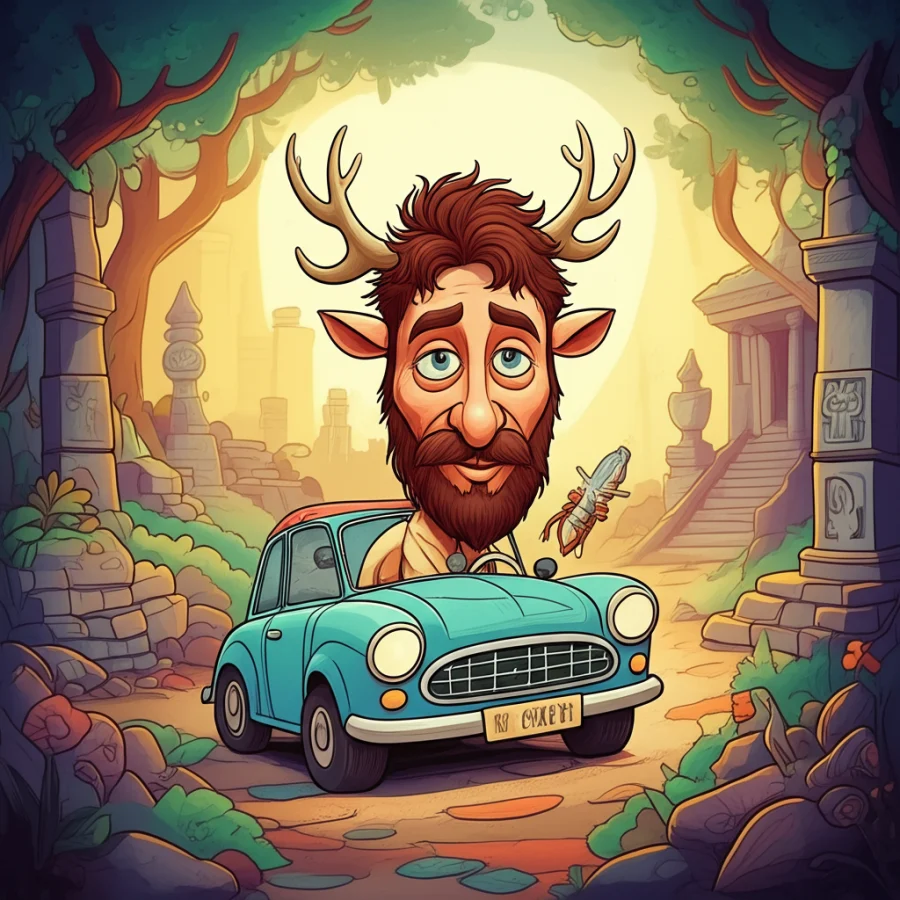
The mists that cling to the ancient forests of Gaul, a region encompassing much of modern-day France, Belgium, and parts of Switzerland, whisper tales of figures deeply woven into the fabric of pre-Roman European folklore. Among these, the enigmatic deity known as Cernunnos holds a unique and enduring place. The chronicle of Cernunnos and his forgotten temple is not a historical account, nor a sacred text in the traditional sense, but rather a collection of ancient beliefs and stories passed down through oral traditions by the Celtic peoples, the indigenous inhabitants of these lands millennia ago. These narratives offer a window into a worldview shaped by the raw power of nature, the cycles of life and death, and the intricate connections between the human and the wild.
The cultural era in which these myths flourished was a time before the pervasive influence of empires and widespread literacy. The Celts were a diverse collection of tribes, deeply connected to the land they inhabited. Their lives were dictated by the seasons, the fertility of the soil, the movements of animals, and the unpredictable forces of weather. They viewed the world as alive, imbued with spirits and energies that resided in rivers, mountains, trees, and the very earth itself. Nature was not merely a backdrop but an active participant in their lives, a source of both sustenance and profound mystery. Their understanding of the cosmos was animistic, attributing consciousness and agency to the natural world, and their deities often embodied aspects of this powerful, untamed existence. Rituals and stories served as vital mechanisms for navigating this complex relationship, seeking balance, and appeasing the forces that governed their destinies.
At the heart of this chronicle stands Cernunnos, a figure whose depiction is as varied as the myths themselves, yet remarkably consistent in his core attributes. He is most famously known as the "Horned God," a powerful being characterized by the magnificent antlers of a stag adorning his head. Often, he is depicted seated, cross-legged, in a posture of repose or contemplation, sometimes with serpents entwined around his arms or clutched in his hands. His body might be adorned with torcs, heavy gold neck rings that signified status and power among the Celts. The symbolic attributes of Cernunnos are rich and multifaceted. The stag, a noble and wild creature of the forest, represents virility, regeneration, and the cyclical nature of life and death. His antlers, shed and regrown annually, perfectly embody this concept of renewal. The serpents, creatures of the earth, are often associated with wisdom, healing, and the chthonic forces that lie beneath the surface. His horned aspect connects him to the primal energy of the wild, the untamed spirit of the natural world. He is not a distant, anthropomorphic deity, but a being deeply rooted in the earth, a guardian of its secrets and a master of its cycles.
The narrative of Cernunnos and his forgotten temple unfolds not as a linear historical event, but as a tapestry of interwoven legends. Imagine, if you will, the ancient forests of Gaul, a vast expanse of towering oaks, ancient pines, and moss-laden boughs. Sunlight filters through the canopy in dappled patterns, illuminating patches of vibrant green and dark, earthy loam. Here, in a secluded clearing, hidden from the prying eyes of encroaching civilizations, stood a temple unlike any other. It was not built of stone and mortar, but rather sculpted by the very essence of the forest. Ancient trees, their roots intertwined like the sinews of a slumbering giant, formed its walls. A massive, gnarled oak, its branches reaching towards the heavens like supplicating arms, served as its central altar. The air thrummed with an unseen energy, a palpable reverence for the wild spirit that resided there.
This was the sanctuary of Cernunnos, the Lord of the Wild. The tribes of the region, the Aedui, the Arverni, and others, would venture into these sacred depths during times of great need or significant change. They came seeking guidance, blessings for the hunt, or solace in the face of hardship. They would leave offerings of grain, finely crafted tools, or symbols of their respect – not in supplication to a demanding god, but in acknowledgment of their place within the grand tapestry of existence. The stories told around crackling campfires spoke of Cernunnos appearing to those deemed worthy, his form a majestic silhouette against the twilight, his presence exuding an aura of ancient power and profound connection to the earth. He was the silent observer of the forest’s rhythm, the keeper of its secrets, and the embodiment of its untamed spirit. Yet, as the tides of history turned, as Roman legions marched and their influence spread, the old ways began to recede. The forests were cleared, the old gods were challenged, and the pathways to the forgotten temple, once trodden by generations, became overgrown and lost. The whispers of Cernunnos, once carried on the wind through the trees, grew fainter, his sanctuary fading into the realm of myth and memory.
The symbolism embedded within the chronicle of Cernunnos and his forgotten temple is rich and enduring. For the ancient Celts, Cernunnos represented the fundamental principles of nature: the fertility of the earth, the abundance of the hunt, and the inevitable cycle of life, death, and rebirth. He embodied the untamed, wild aspect of existence, a force that commanded respect and awe. His connection to the stag and the serpent highlighted themes of virility, regeneration, wisdom, and the deep, hidden energies of the natural world. The forgotten temple, in turn, symbolized the sacred spaces that existed within the natural landscape, places where humanity could commune with the spiritual forces that governed their lives. It spoke of a time when the boundaries between the human and the divine were more fluid, when the natural world was revered as a living entity.
In the modern world, the figure of Cernunnos has experienced a resurgence, not as a deity to be worshipped, but as a potent symbol within contemporary culture. He frequently appears in literature, particularly within fantasy genres, as a primal force of nature or a wise, ancient guardian. In popular culture, he has been a source of inspiration for characters in films, television shows, and video games, often depicted as a powerful, enigmatic figure embodying the wild and the mysterious. Furthermore, within the academic study of mythology and folklore, Cernunnos remains a fascinating subject, offering insights into the spiritual beliefs, social structures, and environmental relationships of ancient Celtic societies. His iconography continues to be analyzed for its symbolic depth and its reflection of a worldview profoundly different from our own.
In conclusion, the chronicle of Cernunnos and the forgotten temple is a testament to the enduring power of human storytelling and the rich tapestry of ancient beliefs. It is a traditional narrative, a product of the imagination of people who lived in a world deeply intertwined with the natural environment. As Muslims, we recognize that the only true Creator and Sustainer of all existence is Allah (SWT), the Almighty. These ancient stories, while culturally significant, do not hold divine truth. However, by exploring them, we gain a deeper appreciation for the diversity of human heritage, the imaginative spirit that drives storytelling, and the ways in which past cultures sought to understand their place in the world. The whispers of Cernunnos, though echoes of a bygone era, continue to resonate, reminding us of the profound and often mysterious connections that bind us to the natural world and to the stories that shape our understanding of ourselves.