fufufafa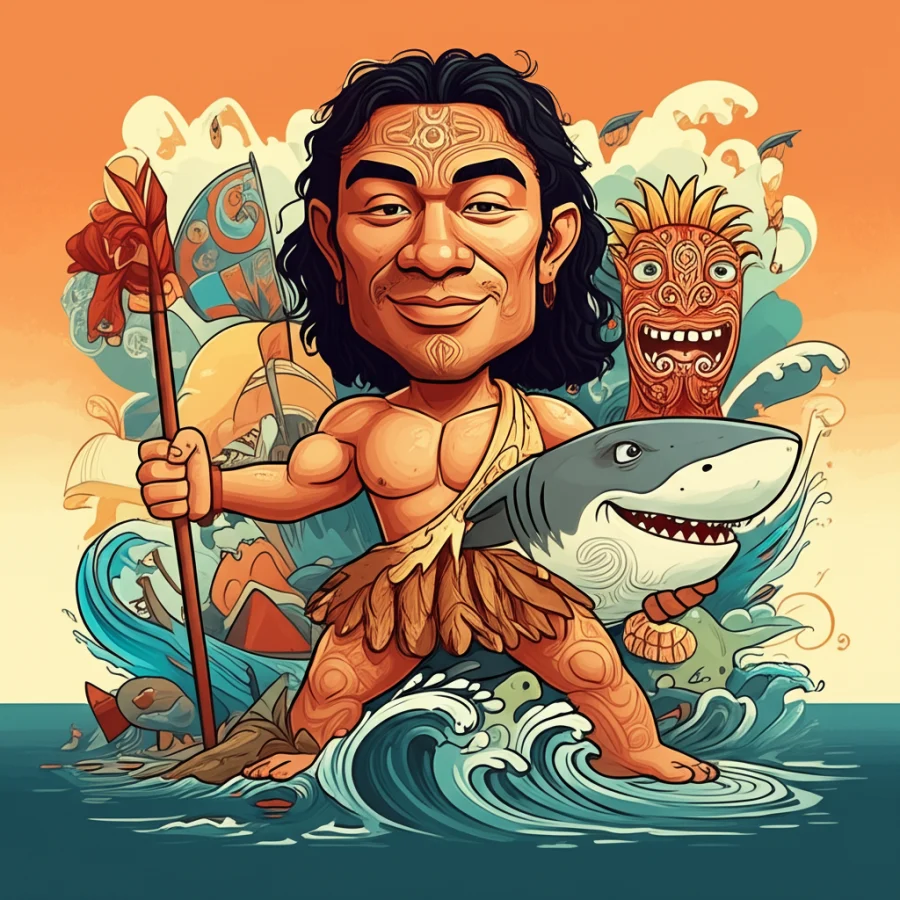
Across the vast and shimmering expanse of the Pacific Ocean, where turquoise waters meet emerald isles, lies a rich tapestry of ancient tales. Among these, the stories of demigods and mythical beings hold a special place, weaving together the very fabric of cultural identity and understanding. This particular narrative, echoing from the shores of Aotearoa (New Zealand) and touching upon the legendary figure of Maui, delves into the realm of shark gods – a testament to the profound connection ancient Polynesian peoples felt with the ocean and its creatures. It is crucial to remember that these are traditional stories, passed down through generations, offering insights into the worldview of ancient peoples, and not intended as literal truth or belief.
The era in which these myths took root was one of deep immersion in the natural world. For the Polynesian voyagers who navigated these waters, the ocean was not merely a barrier but a lifeblood, a source of sustenance, and a powerful, unpredictable force. Their lives were inextricably linked to the rhythm of the tides, the patterns of the stars, and the behaviour of marine life. The cosmos was understood as a vibrant, interconnected entity, where the spiritual and the physical realms were not distinctly separate but fluid and responsive to one another. Deities and ancestral spirits were believed to inhabit the land, sea, and sky, influencing the daily lives of humans. In this worldview, the natural world was imbued with potent forces, and the actions of humans were often interpreted through the lens of these powerful beings.
Central to many Polynesian myths is the figure of Maui. While his specific exploits vary across different island groups, he is often depicted as a trickster demigod, a culture hero, and a masterful navigator and fisherman. In some traditions, Maui’s lineage and powers are deeply intertwined with the ocean. This narrative speaks of his encounters with beings that embody the formidable presence of sharks. These shark gods were not simply animals; they were personifications of the ocean’s power, its ferocity, and its vital role in the ecosystem. Their symbolic attributes often included immense strength, primal instinct, and an ancient wisdom that predated human existence. They represented the raw, untamed power of the sea, capable of both destruction and provision. The sheer size and predatory prowess of sharks would have naturally inspired awe and a degree of fear in those who relied on the ocean for their survival.
The story unfolds on the distant shores of Aotearoa, a land of dramatic landscapes and abundant marine life. Maui, ever the adventurer and innovator, was known for his desire to harness the ocean’s bounty for his people. It is said that he, or figures associated with his lineage, engaged in contests or interactions with these formidable shark deities. Imagine Maui, a figure of immense skill and determination, venturing into the deep, his waka (canoe) cutting through the waves. He might have been seeking to understand the secrets of the ocean, to secure its resources, or perhaps even to assert human ingenuity against the raw power of nature.
The narrative could describe Maui observing the immense, silent glide of these shark gods through the water, their forms powerful and ancient. Perhaps in a moment of daring, he challenged them, not necessarily with aggression, but with a spirit of understanding and negotiation. He might have sought to learn their ways, their fishing grounds, or even to persuade them to share their abundance. The story could depict a tense standoff, a silent exchange of power, where the keen senses and primal force of the sharks met Maui’s cleverness and his deep connection to the ocean. It’s a tale of a human striving to understand and coexist with the mighty forces of the natural world, represented by these awe-inspiring shark beings.
The symbolism within these stories is multifaceted. The shark gods, in their imposing presence, could represent the inherent dangers and mysteries of the ocean. Their power was a reminder of the respect and caution that the sea demanded. For ancient peoples, these narratives might have served to explain the unexplainable, to provide context for the unpredictable nature of storms, the abundance or scarcity of fish, and the ever-present risk of the sea. They could also symbolize the primal instincts that govern survival, both in the wild and within human society. Maui’s interactions, in turn, might have represented humanity’s drive to conquer challenges, to innovate, and to establish a harmonious relationship with the natural world, even when faced with overwhelming power. They could also reflect a desire for leadership and the responsibility to secure sustenance for one’s community.
In the modern world, these ancient myths continue to resonate, albeit in different forms. The figure of Maui is a beloved icon in Polynesian culture, appearing in literature, children’s books, and popular media like Disney’s "Moana." While the specific tales of shark gods might not be as widely known as Maui’s other exploits, they contribute to the broader understanding of Polynesian cosmology and their deep reverence for the ocean. These stories are studied in cultural anthropology, folklore, and indigenous studies programs, offering valuable insights into the beliefs, values, and artistic expressions of ancient Pacific societies. They are a testament to the enduring power of oral tradition and the human need to make sense of the world through narrative.
In conclusion, the echoes of Maui and the shark gods on Aotearoa’s shores are a profound reminder of our shared human heritage of storytelling. These are not tales to be believed as factual accounts, but rather cultural narratives that illuminate the worldview of ancient peoples. As Muslims, we recognize that only Allah, the Almighty, is the true Creator and Sustainer of all that exists. These stories, however, serve as a valuable window into the imagination, the respect for nature, and the complex understanding of the world that characterized past societies. They highlight the enduring power of myth and legend to connect us to our ancestors, to inspire wonder, and to remind us of the rich tapestry of human culture and imagination.