fufufafa
Introduction:
The tale of Fujin, the Japanese god of wind, and his role in the creation of the islands is a vibrant thread woven into the rich tapestry of Japanese folklore. This is a traditional story, passed down through generations by the ancient people of Japan, a narrative meant to explain the world around them, their origins, and the forces that shaped their land. It is a story rooted in the beliefs and imagination of a time long past. We explore this myth here solely for the purpose of understanding its cultural significance and historical context, not to endorse or validate its claims.
Origins and Cultural Background:
The story of Fujin belongs to the Shinto and Buddhist traditions of ancient Japan, primarily emerging during the Heian period (794-1185 CE), a time of flourishing arts, literature, and religious syncretism. This era witnessed a fusion of indigenous Shinto beliefs, which revered spirits and natural forces (kami), with the philosophical and cosmological ideas of Buddhism. The environment heavily influenced their worldview. Living on an archipelago, the ancient Japanese were acutely aware of the power of the natural world: the volatile earthquakes, the devastating tsunamis, and the ever-present winds that shaped the landscape and impacted their lives. They saw the world as a place populated by spirits, both benevolent and malevolent, and sought to understand and appease these forces through rituals, prayers, and stories. The creation myths served to explain the origins of the world and their place within it, providing a framework for understanding their environment and navigating the complexities of life.
Character / Creature Description:
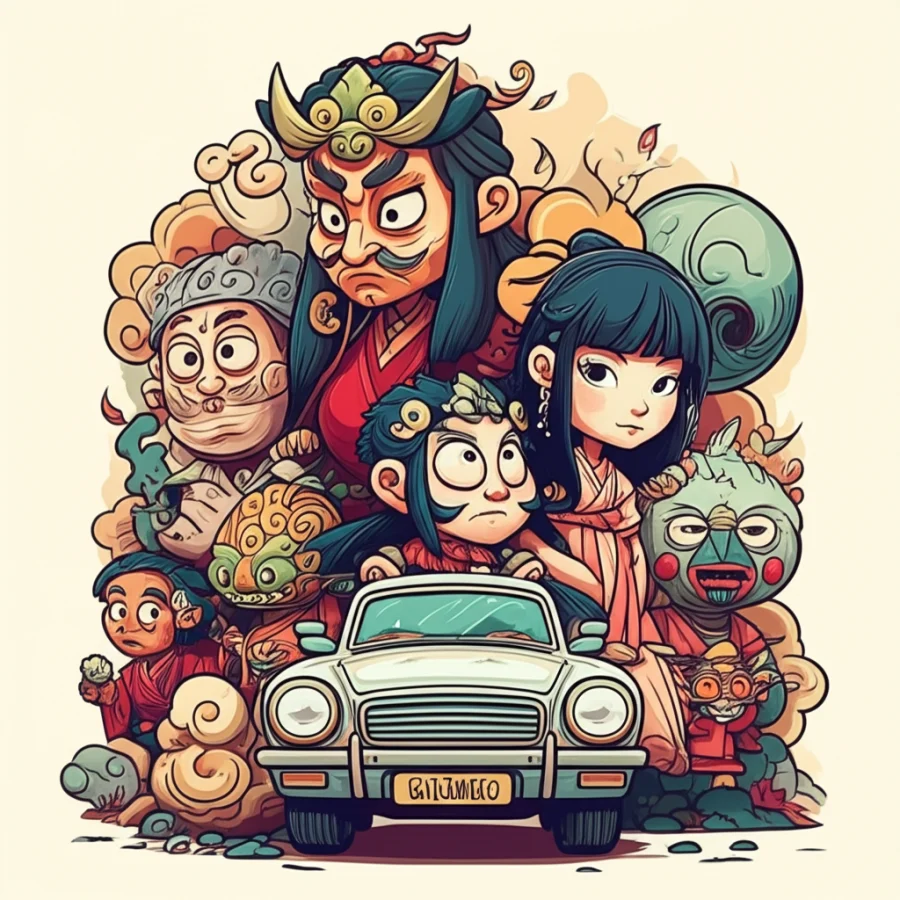
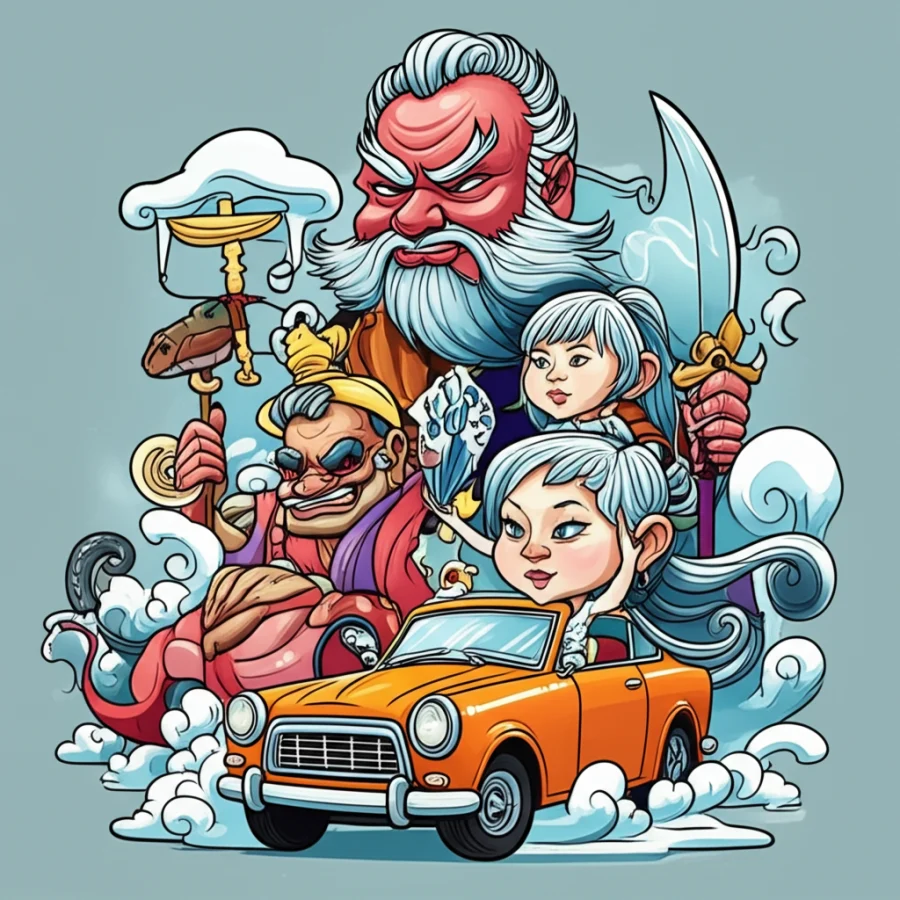
Fujin, the wind god, is often depicted as a fearsome, wizened figure. He is typically portrayed as a humanoid creature with a wild, almost demonic appearance. His skin is usually green or red, reflecting the unpredictable nature of the wind and the fiery aspects of his power. He is often depicted with a bulging, skeletal frame and long, claw-like fingers. But his most defining feature is the large sack he carries, filled with the winds he controls. This sack is the source of the blustery gales, the gentle breezes, and the destructive typhoons that can sweep across the islands. Symbolically, Fujin embodies the untamed and often destructive force of nature. He represents the unpredictability and power of the wind, both a vital element for life, providing the air for breathing and the winds that carried boats, and a potential source of great devastation. He is a reminder of the raw power that exists beyond human control.
Main Story / Narrative Retelling:
In the primordial chaos, before the islands of Japan had fully taken shape, the world was a swirling sea of churning waters and formless mists. The gods, still young and struggling to bring order to the chaos, faced a daunting task: to solidify the land from the ocean’s depths. Among these gods was Izanagi and Izanami, the primal couple, who used a jeweled spear to stir the murky waters, and then the spear brought forth the first island, Onogoro-shima.
However, the land was not yet complete. The seas remained turbulent, and the winds, though present, were not yet tamed. It was then that Fujin, a being of immense power, emerged from the mists. He, like the other gods, possessed the power of creation. Yet, his domain was the wind itself. He carried with him a great sack, the source of all the winds, which he could open or close at will.
Fujin, fueled by a desire to bring balance to the world, saw the necessity of shaping the landscape. The winds he commanded would play a vital role. He saw the potential for the land to be formed, for the islands to be sculpted from the primordial waters. He decided to help bring order to the swirling chaos of the creation, a role often contested by the mischievous and destructive Raijin, the god of thunder and storms. The two would engage in battles that echoed across the new land. The winds would lash the shore, shaping the coastlines, eroding the mountains, and carving out valleys. He blew his winds upon the newly formed mountains, shaping them. His winds would also blow away the clouds, revealing the sun, and the mountains became visible. Fujin’s winds were the means through which the land would finally be shaped. He worked tirelessly, shaping the land.
His battles with Raijin were particularly fierce, the clash of wind and thunder shaking the nascent islands to their core. Fujin, in his raw elemental fury, would unleash gusts of such power that they would rip through the clouds, clearing the skies. Raijin, with his drums of thunder, would answer with crashing roars. The battles were long and often seemed to push the limits of the new world’s resilience. But Fujin persevered. He understood the need for the winds, the role they played.
The winds, as Fujin wielded them, carried the seeds that would give rise to the forests and plains. The winds also carried the first whispers of life, spreading across the islands. He had brought a form of order to the world.
As the islands solidified, Fujin continued to guard the winds, ensuring they brought life and sustenance, while also maintaining their power to cleanse and reshape. The ancient people, witnessing the power of the wind, came to revere Fujin, though with a healthy respect for his unpredictable nature. They built shrines to him, offering prayers for protection from the storms and for gentle breezes to aid their crops and boats.
Symbolism and Meaning:
The story of Fujin, like other creation myths, reflects the ancient Japanese people’s deep connection to nature and their attempt to understand its forces. Fujin represents the raw power of the wind, a force both life-giving and destructive. The wind is crucial for transportation, crop pollination, and weather patterns. The winds also carried seeds, spreading life across the land. The depiction of Fujin as a fearsome figure highlights the respect and fear the ancient Japanese held for the unpredictable power of nature. The story also shows the constant struggle to bring order to chaos, a theme that resonates across many cultures. His sack of winds symbolizes control over nature, even as the wildness of his appearance suggests that true control is limited. The battles with Raijin may represent the inherent conflict within nature, the interplay of opposing forces that shape the world. The myth served to explain the world’s origins, the role of natural forces, and the balance between creation and destruction.
Modern Perspective:
Today, the myth of Fujin is still relevant in Japanese culture. He is a popular subject in art, appearing in woodblock prints, paintings, and sculptures. He is often paired with Raijin, forming a classic image representing the elemental forces of nature. The story continues to inspire artists, writers, and filmmakers, who reinterpret the myth in modern contexts. In literature, Fujin can represent the destructive forces of the world, or the potential for growth. In games, he’s a symbol of power, capable of controlling weather. The myth is studied in cultural studies and is a testament to the enduring power of storytelling and the human need to explain the world.
Conclusion:
The tale of Fujin and the War of Creation of the Islands is a powerful narrative, a testament to the imagination and cultural heritage of ancient Japan. It offers a glimpse into the worldview of a people deeply connected to the natural world and their attempts to understand the origins of their land. It’s important to recognize that this is a story, a cultural artifact. We, as Muslims, recognize that only Allah is the true Creator and Sustainer of all things. The beauty of this myth lies in its imaginative power, its exploration of the forces of nature, and its reflection of the human desire to make sense of the world. It reminds us of the power of storytelling to preserve cultural memory, to spark our imagination, and to connect us to the past.