fufufafa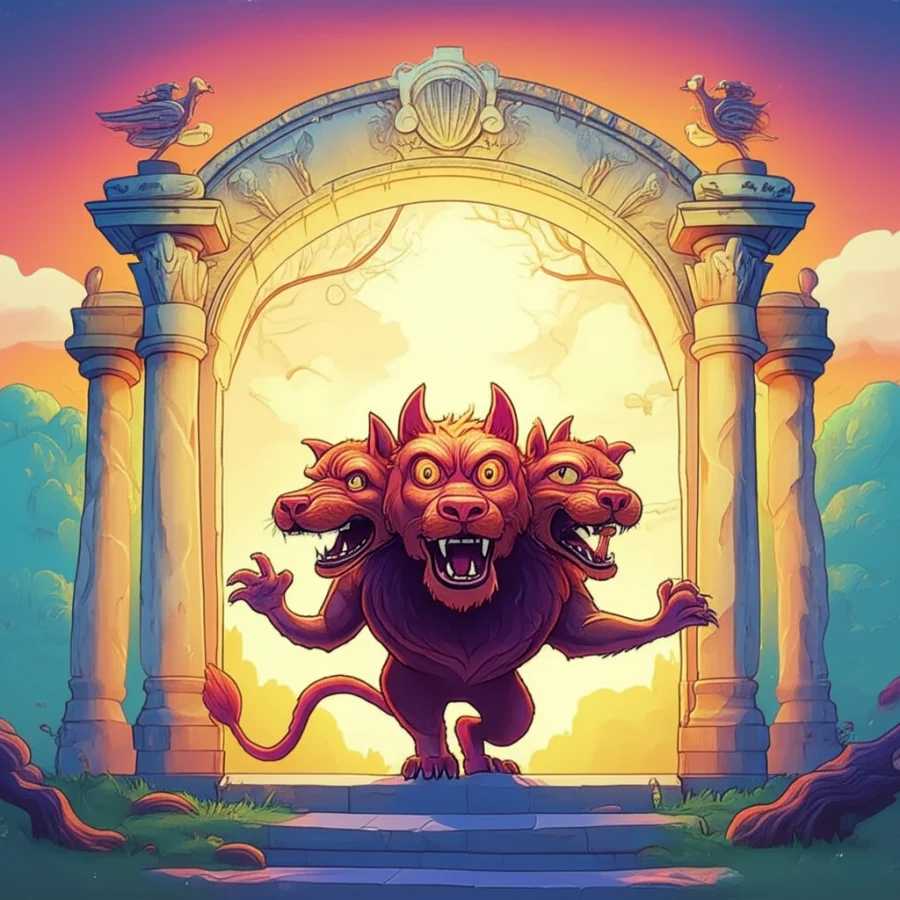
From the sun-drenched shores of the Aegean Sea, where the sapphire waters meet rugged coastlines, emerged a rich tapestry of myths and legends that have echoed through millennia. These tales, woven by the ancient Greeks, were not mere flights of fancy but served as intricate explanations for the world around them, their fears, their hopes, and their understanding of the cosmos. Among these enduring narratives is the story of Cerberus, the formidable guardian of the underworld, and the enigmatic concept of the Gate of Dawn, a symbolic threshold often associated with passage and transition. It is crucial to understand that these are traditional stories, born from the imagination of ancient peoples, offering a window into their cultural landscape, not a literal depiction of reality.
The cultural milieu in which these stories flourished was one of burgeoning city-states, intellectual inquiry, and a profound connection to the natural world. Ancient Greece, particularly during the Archaic and Classical periods, was a society that grappled with the mysteries of life and death. The omnipresent forces of nature – the scorching sun, the unpredictable seas, the fertile earth, and the chilling darkness of night – were often personified and imbued with divine power. Their worldview was anthropocentric, with gods and goddesses who mirrored human emotions and flaws, intervening in mortal affairs. The concept of the afterlife, while varied and often shadowy, was a constant source of contemplation, fueling the need for stories that explained what lay beyond the mortal coil. The underworld, a place of eternal gloom and judgment, was a natural focal point for their anxieties about mortality and the consequences of one’s actions.
At the heart of this particular narrative stands Cerberus, a creature of formidable and chilling description. This monstrous hound, famously depicted as possessing three heads, is the quintessential guardian of the gates of the underworld. Each head, often described with burning eyes and dripping fangs, represented a different aspect of the abyss: one for the past, one for the present, and one for the future; or perhaps, one for vigilance, one for ferocity, and one for insatiable hunger. His serpentine tail, a mane of snakes writhing along his back, and the lion’s claws further emphasized his terrifying nature. Cerberus was not a creature to be appeased with offerings of praise, but rather a force of nature, an embodiment of the finality of death and the unyielding boundary between the living and the dead. His attributes were symbolic of the ultimate, inescapable nature of the underworld and the absolute authority of its ruler, Hades.
The narrative often unfolds as a perilous journey for heroes who, for various reasons, must venture into the realm of the dead. The most famous of these is the epic labor of Heracles, who was tasked with capturing Cerberus and bringing him back to the surface as proof of his strength. Picture the descent into the Stygian depths, a realm shrouded in perpetual twilight, where the air hung heavy with the lamentations of lost souls. The River Styx, a murky, impassable barrier, was the first hurdle, often navigated by the ferryman Charon, who demanded a coin for passage. Upon reaching the infernal shores, the adventurer would inevitably be confronted by Cerberus, a terrifying spectacle of primal ferocity. His three heads would bark in unison, a cacophony of doom that echoed through the caverns. The scent of the living would ignite his predatory instincts, and he would advance, a living embodiment of death’s unyielding grip. The hero, armed with courage and often divine aid, would have to overcome this guardian through wit, strength, or a combination of both. Some tales speak of Heracles subduing Cerberus with his bare hands, others of using a silver chain forged by Hephaestus, and still others of using honey cakes laced with soporific herbs to lull the beast to sleep. The successful passage past Cerberus symbolized not just the triumph of a mortal over a monstrous entity, but the ability to confront and overcome one’s deepest fears and the ultimate fear of death itself.
The concept of the "Gate of Dawn", while not always explicitly linked to Cerberus in every iteration of Greek mythology, often serves as a metaphorical counterpoint to the darkness of the underworld. It represents a threshold, a point of transition, and the promise of renewal. While Cerberus guards the entrance to oblivion, the Gate of Dawn, imagined as a luminous portal, signifies emergence, rebirth, or the beginning of a new cycle. It could be the dawn of a new day, the dawn of understanding, or even, in more esoteric interpretations, a spiritual awakening. The juxtaposition of these two concepts highlights the ancient Greek fascination with duality: light and darkness, life and death, beginning and end. Cerberus, in his grim vigil, represents the irreversible nature of the underworld’s embrace, while the Gate of Dawn embodies the hope for something beyond that finality, a return to the light.
The symbolism embedded within these narratives is rich and multifaceted. Cerberus, as a guardian, could symbolize the natural order of things, the inevitability of death, and the consequences of transgressing boundaries. His three heads might represent the inexorable march of time, reminding mortals that their present existence is fleeting. The underworld itself was a place of judgment, where the deeds of a lifetime were weighed, thus Cerberus also served as a grim reminder of moral accountability. The Gate of Dawn, on the other hand, can be seen as a symbol of hope, resurrection, and the cyclical nature of existence, mirroring the sunrise after the darkest night. It speaks to the human desire for continuity and the belief in renewal, even in the face of ultimate cessation.
In contemporary culture, the figures of Cerberus and the metaphorical Gate of Dawn continue to resonate. Cerberus frequently appears in literature, film, and video games as a formidable antagonist, a guardian of forbidden places, or a symbol of primal danger. From the iconic depiction in Disney’s "Hercules" to its more menacing portrayals in fantasy novels, the three-headed hound remains a potent image of dread. The Gate of Dawn, though less concretely defined, often manifests as a powerful symbol in storytelling, representing a moment of profound change, a new beginning, or a spiritual enlightenment. Its presence in various forms underscores humanity’s enduring fascination with thresholds and the transformative power of passage.
It is vital to reiterate that these are captivating stories, woven from the rich cultural heritage of ancient Greece. They offer invaluable insights into the worldview, fears, and aspirations of a civilization long past. As Muslims, we recognize that the true Creator and Sustainer of all existence is Allah alone. These ancient narratives, while fascinating from a cultural and historical perspective, do not reflect our beliefs. Nevertheless, engaging with such traditional stories allows us to appreciate the depth of human imagination, the power of storytelling to explain the world, and the enduring legacy of cultural heritage that continues to shape our understanding of mythology and folklore. They serve as a testament to the human need to make sense of the profound mysteries of life and death, a quest that transcends time and culture.