
 fufufafa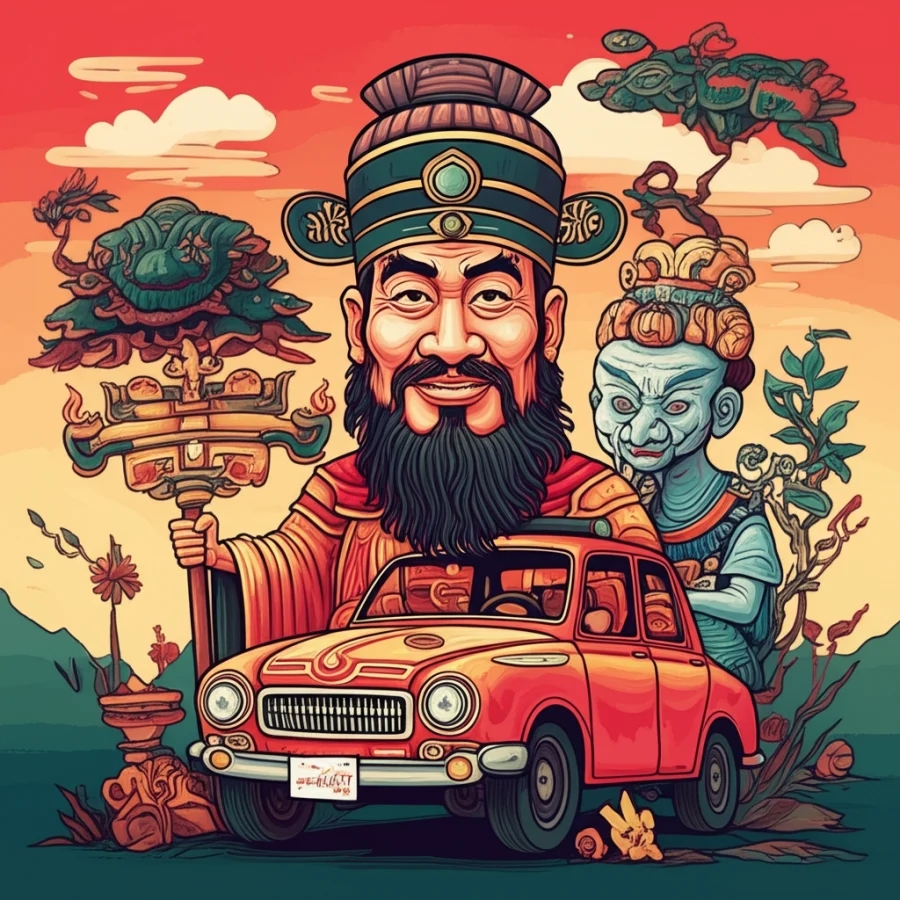
The mist-shrouded peaks and verdant valleys of the Korean peninsula have long been fertile ground for stories, weaving together the aspirations, fears, and understandings of ancient peoples. Among these rich tapestries of folklore, tales concerning Hwanung, a celestial prince, and the spectral beings known as Gwisin, particularly within the historical context of the Silla Kingdom, offer a fascinating glimpse into the worldview of a bygone era. These are not historical accounts in the modern sense, but rather traditional narratives passed down through generations, reflecting the imaginative interpretations of life by ancient communities.
The period in which these stories likely took root and flourished was one of emerging kingdoms and evolving societal structures. For the people of what would become the Silla Kingdom (57 BCE – 935 CE), the world was a dynamic place, intricately connected to both the visible and the unseen. Nature was not merely a backdrop but an active participant in human affairs. Mountains were sacred, rivers held spirits, and the changing seasons were imbued with meaning. Their understanding of the cosmos was often hierarchical, with celestial realms influencing the earthly plane. This was a world where the lines between the tangible and the spiritual were fluid, and where the actions of powerful beings, whether divine or spectral, could profoundly impact human destiny. The Silla era, in particular, was a time of significant cultural development, marked by advancements in art, Buddhism, and a strong sense of national identity, all of which would have shaped the narratives they told.
Central to some of these narratives is the figure of Hwanung, often depicted as the son of the supreme deity, Hwanin, the Lord of Heaven. Hwanung is not a deity to be worshipped in the way a monotheistic faith would understand it, but rather a potent symbol of divine descent and the aspiration for benevolent leadership. His celestial origins suggest a connection to order, knowledge, and a guiding force from above. He is often portrayed as seeking to descend to Earth, bringing with him the blessings of the heavens, and embodying principles of governance, agriculture, and law. He represents the ideal ruler, one who descends from a higher realm to bring order and prosperity to the human world. His symbolic attributes are those of a celestial emissary: wisdom, justice, and the ability to foster growth and civilization.
Contrasting with the benevolent descent of Hwanung are the Gwisin. These are not singular, defined characters in the way we might think of mythical figures. Instead, Gwisin are a broad category of spirits, often associated with the lingering essence of those who have passed, or with powerful natural phenomena. They can be benevolent, neutral, or malevolent, their nature often dependent on the circumstances of their existence or the environment they inhabit. In the context of Silla, Gwisin might represent the fears of the unknown, the anxieties of mortality, or the unpredictable forces of nature. They are the echoes of what once was, the untamed aspects of existence that elude human comprehension. Their symbolic attributes are often tied to primal emotions: fear, sorrow, longing, or a restless energy. They are the spectral inhabitants of the liminal spaces, the places where the veil between worlds is thin.
The narrative threads of Hwanung and Gwisin often intertwine in tales that explore the establishment of order and the challenges faced by nascent civilizations. Imagine a Silla of dense forests, rugged mountains, and fertile plains, where communities looked to the heavens for guidance and to the earth for sustenance. In these stories, Hwanung, perhaps with his heavenly retinue, descends to a sacred mountain, often Mount Taebaek. He brings with him three heavenly seals, representing wind, rain, and clouds – the vital elements for agriculture and the prosperity of human settlements. He establishes a divine city and teaches humanity the principles of civilization, of community, and of a structured life. This is the ideal beginning, a divinely ordained foundation for a flourishing society.
However, the earthly realm is not always a pristine canvas. The stories might then introduce the presence of Gwisin, perhaps restless spirits inhabiting the wilder regions, or elemental forces that resist human control. These Gwisin, in their spectral form, could represent the challenges that Hwanung and his followers faced – the untamed wilderness, the lingering anxieties of a world without established order, or perhaps the spirits of indigenous beings who preceded human settlement. The interaction between Hwanung’s celestial influence and the primal energies of the Gwisin would have formed the dramatic core of these tales. It’s not a battle of good versus evil in a simplistic sense, but rather a narrative about the process of civilization: bringing order to chaos, imbuing the wild with meaning, and integrating the unseen world into a coherent human experience. The stories would have depicted how Hwanung’s wisdom and divine mandate helped to pacify or integrate these spectral forces, guiding humanity towards a more harmonious existence, where the natural and the spiritual were acknowledged and managed.
The symbolism embedded within these narratives is multifaceted. Hwanung’s descent can be seen as a representation of the aspiration for wise and just leadership, the belief in a divinely appointed authority, and the human desire for progress and civilization. The heavenly seals – wind, rain, and clouds – are powerful symbols of nature’s bounty and the crucial role of natural forces in sustaining life. They speak to a time when understanding and harnessing these elements was paramount. The Gwisin, on the other hand, can symbolize the inherent fears and uncertainties of life, the wild and untamed aspects of the natural world that were beyond human control, or even the unresolved emotions and traumas that could linger in the spiritual realm. Their presence highlights the human struggle to understand and coexist with the unknown. Together, the stories might have served to explain the origins of the Korean people, the establishment of their society, and the moral and spiritual principles that guided them.
In the modern era, these ancient myths and legends continue to resonate, albeit in different forms. The narratives of Hwanung and the Gwisin have found new life in contemporary Korean literature, film, and video games. They are reinterpreted through lenses of fantasy, historical drama, and even horror, exploring themes of destiny, the clash of tradition and modernity, and the enduring power of the spiritual world. These modern interpretations often draw on the rich symbolism of the original tales, re-imagining the characters and their interactions for a new audience, exploring the psychological depths of fear and the enduring human quest for meaning and belonging. Cultural studies scholars also examine these stories as valuable windows into the historical mindset of the Silla people, offering insights into their social structures, religious beliefs, and their understanding of the cosmos.
It is crucial to reiterate that these are traditional stories, born from the rich imagination and cultural context of ancient peoples. They are narratives that reflect a particular way of understanding the world, a worldview vastly different from our own. As Muslims, we recognize that only Allah is the true Creator and Sustainer of all existence. Our understanding of reality is firmly rooted in the divine revelation of the Quran and the Sunnah of the Prophet Muhammad (peace be upon him). These ancient tales, while fascinating from a cultural and historical perspective, do not hold divine truth.
In conclusion, the echoes of Hwanung and the whispers of Gwisin from the Silla era offer a compelling narrative about human aspirations, the forces of nature, and the enduring mysteries of existence. These stories are not claims of divinity or empirical fact, but rather testament to the power of human storytelling, a tradition that allows us to explore our deepest questions, our greatest hopes, and our most profound fears. They remind us of the rich cultural heritage that shapes our understanding of the world and the imaginative capacity of the human spirit to weave meaning from the fabric of life and legend.







