
 fufufafa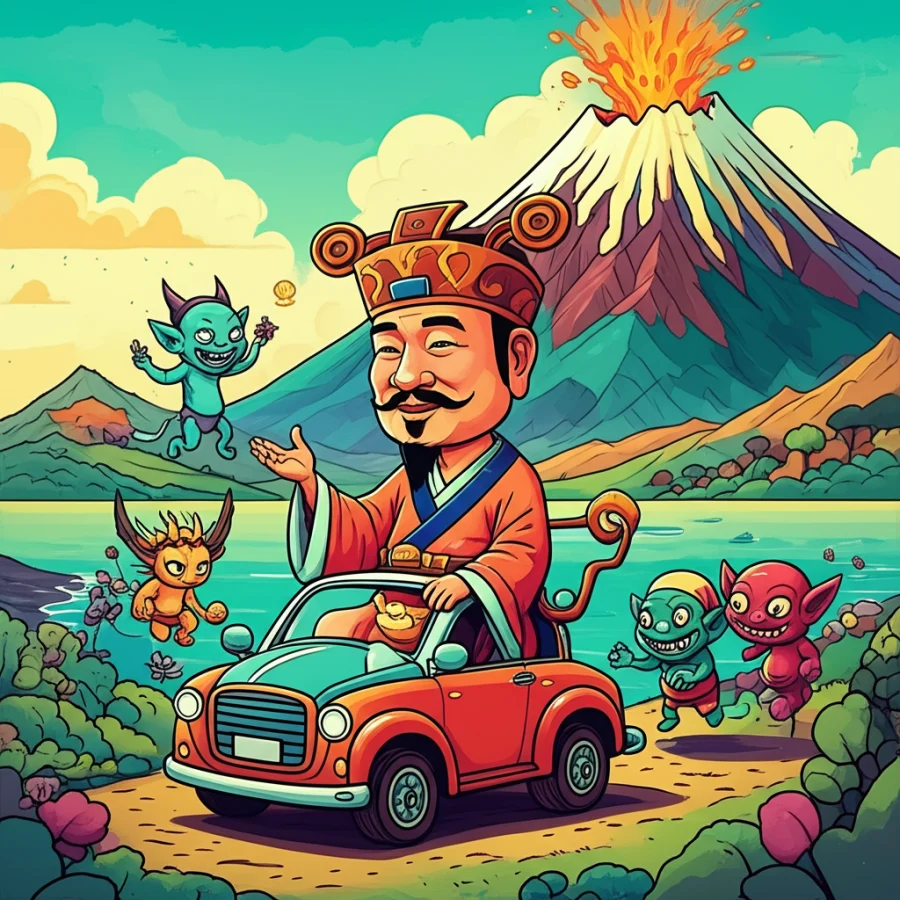
From the rugged, mist-shrouded peaks of the Korean peninsula, where ancient winds carry tales as old as time, emerges a rich tapestry of mythology and folklore. Among these narratives, the legend woven around Hwanung, the celestial prince, the spectral entities known as Gwisin, and the formidable Mount Baekdu stands as a testament to the deep spiritual connection ancient Koreans felt with their land and the cosmos. This is not a chronicle of divine beings to be worshipped, but a traditional story, a product of the collective imagination of our ancestors, offering a glimpse into their worldview.
The cultural era in which these stories took root was one where the natural world was not merely a backdrop but a living, breathing entity, imbued with spirit and power. In a society largely agrarian and deeply reliant on the cycles of nature, the distinction between the mundane and the spiritual was often blurred. Mountains were not just geological formations; they were perceived as sacred sites, abodes of deities and spirits. The heavens, too, were not an empty void but a realm populated by celestial beings who influenced earthly affairs. This worldview fostered a profound respect for nature, a sense of awe at its grandeur, and a recognition of unseen forces that shaped their lives. Fear and reverence walked hand-in-hand, as people sought to understand and appease the powers that governed their existence.
At the heart of this narrative lies Hwanung, often depicted not as a god in the Abrahamic sense, but as a celestial prince, a son of the Supreme God Hwanin. He is the embodiment of heavenly authority and benevolent leadership. His arrival on Earth, often descending from the heavens on a chariot pulled by celestial beings, signifies a desire to bring order and civilization to the human realm. He is associated with light, knowledge, and the establishment of principles that would guide humanity. His descent is not an act of conquest, but of guidance, a divine intention to nurture and uplift.
The Gwisin, on the other hand, represent a more complex and often unsettling aspect of the spiritual landscape. These are not necessarily malevolent demons, but rather spirits, often the lingering essences of those who have died, particularly those who have met untimely or tragic ends. They can manifest as shadowy figures, disembodied voices, or spectral presences, their forms shaped by the emotions and circumstances of their passing. Gwisin are often associated with sorrow, anger, or unfinished business, their presence a reminder of the impermanence of life and the enduring power of unresolved emotions. They are the echoes of the past, the whispers that haunt the present, a potent reminder of the interconnectedness between the living and the departed.
Mount Baekdu, a majestic volcano straddling the border between North Korea and China, plays a pivotal role in this mythological ecosystem. It is more than just a geographical landmark; it is considered the sacred birthplace of the Korean nation and a celestial gateway. Its imposing presence, its volatile nature, and its snow-capped summit evoke a sense of primal power and eternal watchfulness. For ancient peoples, Mount Baekdu was likely seen as a conduit between the earthly and the divine, a place where the veil between worlds was thinnest. It is a symbol of enduring strength, national identity, and a profound connection to the land itself.
The narrative often begins with Hwanin, the Supreme God, observing the earthly realm and deeming it worthy of his son’s guidance. He entrusts Hwanung with three Heavenly Seals, symbols of authority and divine mandate, and dispatches him to the highest peak of Mount Baekdu. Here, Hwanung establishes his divine city, Shinsu, and rules over the earthly realm with wisdom and compassion. He brings with him ministers of wind, rain, and clouds, symbolizing his control over the elements and his ability to foster agricultural prosperity. His reign is often depicted as a golden age, a time of peace and advancement for the early inhabitants of the land.
However, the narrative doesn’t always remain in idyllic tranquility. The stories often touch upon the interactions between Hwanung and the inhabitants of the land, including the emergence of creatures and spirits. The tale of the bear and the tiger, vying for the chance to become human, is a prominent example. Hwanung offers them a trial: to endure 100 days in a cave, subsisting only on garlic and mugwort. The tiger, impatient and unable to withstand the hardship, flees. The bear, however, perseveres and is transformed into a woman. This transformed bear-woman, often referred to as Ungnyeo, becomes the wife of a human and the mother of Dangun Wanggeom, the legendary founder of the first Korean kingdom, Gojoseon. This story, while fantastical, likely speaks to the ancient belief in the transformative power of endurance, the importance of patience, and the perceived connection between humans and the animal kingdom.
The presence of Gwisin, though not always central to Hwanung’s initial descent, often permeates the broader mythological landscape surrounding Mount Baekdu. These spectral entities can represent the challenges and anxieties of the human condition, the lingering fears of the unknown, or the unresolved karma of past actions. They serve as a counterpoint to Hwanung’s celestial order, reminding listeners of the inherent complexities and vulnerabilities of life on Earth. Mount Baekdu, with its imposing and often formidable nature, can be seen as a place where these spirits might gather or be appeased, a powerful natural entity that mediates between the human world and the spectral realm.
The symbolism embedded within these stories is multifaceted. Hwanung represents the ideal ruler, a figure of wisdom, justice, and divine favor. His descent signifies the establishment of a divinely ordained order and the beginning of civilization. The three Heavenly Seals symbolize legitimacy and the authority to govern. The ministers of wind, rain, and clouds speak to the profound dependence of ancient societies on agricultural success and the understanding of natural forces. The bear and tiger allegory highlights the virtues of perseverance and patience, while Ungnyeo’s transformation and her lineage with Dangun underscore the foundational myths of Korean identity, linking the nation’s origins to both divine intervention and the natural world. The Gwisin, in their varied manifestations, likely represent the ancient understanding of mortality, the emotional residue of life, and the lingering presence of the past. Mount Baekdu, as the sacred origin point, embodies national pride, spiritual power, and the enduring connection between the people and their land.
In the modern era, these ancient narratives continue to resonate, albeit in different forms. The figure of Hwanung and the foundation myths of Korea are explored in historical dramas, literature, and academic studies, providing cultural context and national identity. The concept of Gwisin has found a fertile ground in contemporary Korean cinema and television, often reinterpreted to explore themes of horror, trauma, and social commentary, transforming these spectral figures into compelling characters that tap into modern anxieties. Mount Baekdu, with its undeniable grandeur and historical significance, remains a potent symbol of national unity and enduring natural power, often appearing in documentaries and travelogues. These stories, once whispered around campfires, are now re-imagined and presented on global platforms, demonstrating their enduring appeal and adaptability.
In conclusion, the legend of Hwanung, the spectral presence of Gwisin, and the majestic presence of Mount Baekdu are rich threads in the intricate tapestry of Korean mythology and folklore. They are narratives born from the fertile imagination of ancient peoples, reflecting their understanding of the world, their hopes, and their fears. As Muslims, we recognize that only Allah is the true Creator and Sustainer of all existence, and that these stories, while culturally significant, are not to be believed as divine truths. However, by studying these ancient tales, we gain a profound appreciation for the enduring power of storytelling, the richness of cultural heritage, and the remarkable ways in which humanity has sought to understand its place in the vast and wondrous universe. These echoes of the past continue to inspire, inform, and connect us to the deep wellspring of human imagination.







