
 fufufafa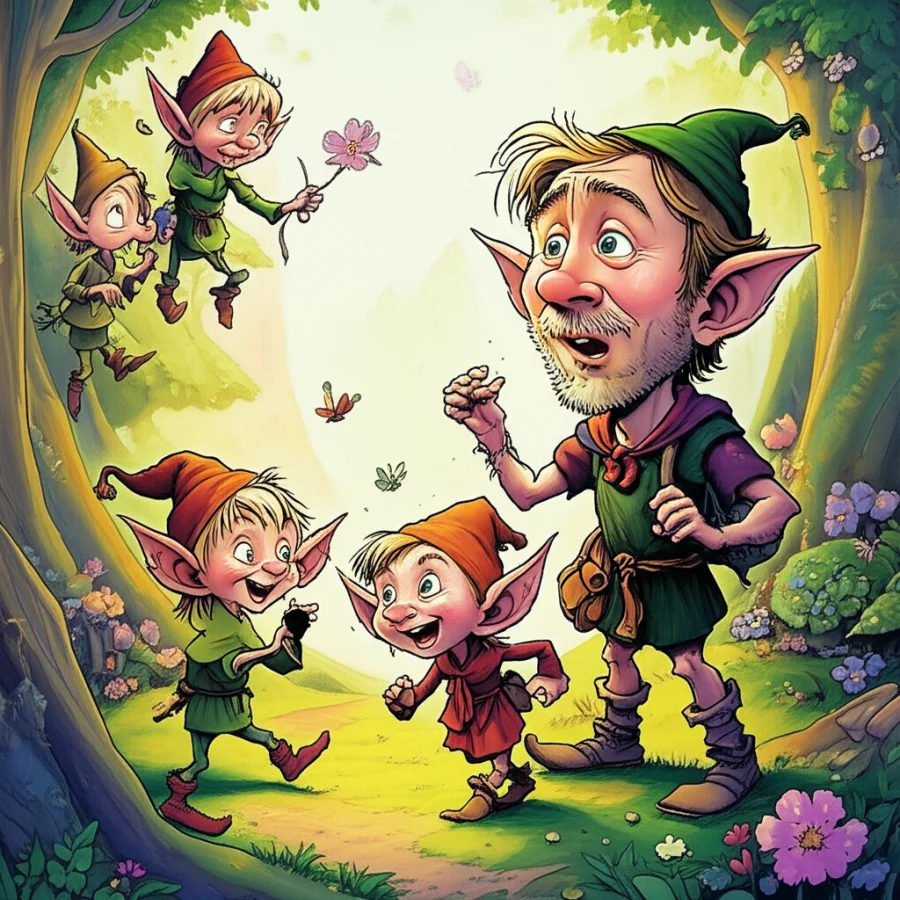
Across the vast tapestry of human history, countless stories have been woven to explain the mysteries of the world, to give voice to the unseen forces that shaped existence, and to impart lessons from one generation to the next. Among these ancient narratives, those originating from the Norse and Germanic peoples offer a particularly rich and evocative glimpse into a worldview where the veil between the mundane and the magical was thin. The tales of the Alfar, often translated as Elves, are a prominent thread in this rich tapestry, speaking of beings who dwelled in the liminal spaces of the world, interacting with humanity in ways both subtle and profound. It is important to understand that these are traditional stories, born from the imagination and worldview of ancient peoples, and are presented here for cultural and educational insight, not as belief.
The era in which these myths took root was one of harsh beauty and profound connection to the natural world. Imagine the rugged landscapes of Scandinavia and Northern Europe, a land shaped by glaciers, dense forests, and the ever-present, unpredictable power of the elements. Life was often challenging, dependent on the bounty of the earth and the sea, and vulnerable to the whims of weather and disease. In such an environment, it was natural for people to look beyond the immediate and tangible for explanations. Their understanding of the world was often animistic, seeing spirits and sentient forces in trees, rivers, rocks, and the changing seasons. The cosmos was envisioned as a series of interconnected realms, with Midgard, the realm of humans, positioned centrally, but not in isolation. It was a place where the boundaries between the physical and the spiritual were permeable, and where other beings, both benevolent and fearsome, could potentially cross over.
The Alfar themselves, as depicted in these ancient tales, were not the delicate, diminutive figures often portrayed in later romanticized literature. Instead, they were often described as luminous, beautiful beings, possessing an otherworldly grace and power. They were sometimes associated with fertility, light, and artistic creation, while at other times they were linked to the hidden forces of nature, capable of influencing human health and fortune. Their symbolic attributes were varied: their beauty might represent the allure and perfection of the natural world, their luminous presence the dawn or the stars, and their connection to fertility the life-giving power of the earth. They were seen as beings of immense age and wisdom, living in realms adjacent to our own, often in hidden groves, beneath hills, or within the deep heart of ancient forests. Some traditions even distinguished between the Ljósálfar (Light Elves), who were fair and beautiful, dwelling in Álfheimr, and the Dökkálfar (Dark Elves) or Svartálfar (Black Elves), who dwelled underground and were associated with craftsmanship and sometimes more sinister intentions. For the purposes of this narrative, we will focus on the more ethereal and nature-aligned Alfar, often encountered in the wilder parts of Midgard.
Consider this imagined encounter, a story told not as fact, but as a reflection of ancient beliefs about the unseen inhabitants of the world.
The biting wind, carrying the scent of pine and damp earth, whipped around Elara’s worn cloak as she ventured deeper into the Elder Woods. It was a place whispered about in hushed tones, a part of Midgard where the trees grew impossibly tall, their branches like gnarled fingers reaching towards a sky often obscured by a verdant canopy. The villagers rarely ventured this far, their lives bound to the fields and the familiar paths. But Elara, driven by a healer’s quiet desperation for a rare herb said to bloom only in places touched by ancient magic, had pushed beyond her fear.
The forest floor was a carpet of moss and fallen leaves, muffling her footsteps. Sunlight, when it managed to pierce the dense foliage, fell in dappled patterns, creating an ethereal, shifting light. The air grew still, the usual chatter of birds and rustle of small creatures fading into an expectant silence. It was a silence that felt pregnant with observation.
As she rounded a colossal, moss-covered boulder, Elara froze. Before her, bathed in a pool of impossibly soft, golden light that seemed to emanate from the very air, stood figures. They were tall and slender, their movements fluid and graceful, like willow branches swaying in a gentle breeze. Their skin seemed to possess a faint luminescence, and their eyes, large and deep, held a knowing that transcended human understanding. They wore garments woven from what appeared to be moonlight and spun spider silk, adorned with dewdrops that shimmered like tiny jewels. They were not of flesh and bone in the way Elara understood it, but rather seemed to be woven from the very essence of the forest itself. These, she intuitively understood, were the Alfar.
There was no immediate threat, no monstrous roar or menacing gesture. Instead, there was an intense, serene curiosity emanating from them. One of them, whose hair was the color of spun gold and flowed like a living stream, stepped forward. Its lips, the color of wild berries, did not move to form words, yet a melody, a symphony of rustling leaves, babbling brooks, and the whisper of the wind, seemed to resonate directly within Elara’s mind. It was not a language she could translate into spoken words, but a feeling, a comprehension of their presence and their ancient connection to this land.
Elara, heart pounding but strangely calmed by the sheer beauty and otherworldliness of the scene, managed a shaky bow. She held up the small, empty pouch that was meant for the herb, her gesture conveying her purpose, her need. The golden-haired Alfar tilted its head, and a faint, knowing smile touched its lips. It extended a hand, long and delicate, and pointed towards a hidden crevice in the boulder, where a cluster of silver-white flowers, glowing with an inner light, unfurled their petals.
The melody in Elara’s mind shifted, conveying a sense of gentle warning – these flowers were potent, to be used with respect and gratitude. Then, as silently as they had appeared, the Alfar began to recede, their forms becoming one with the dappled light, their presence dissolving back into the ancient fabric of the woods. Elara was left alone, the silence now filled with the echo of their otherworldly song, the scent of the magical flowers now a tangible reality before her. She carefully gathered a few of the blossoms, her hands trembling, and offered a silent prayer of thanks, not to the Alfar themselves, but to the mysterious forces of nature they seemed to embody.
To the ancient peoples who told these stories, the Alfar likely represented much more than just magical beings. Their encounters, real or imagined, served to explain the inexplicable wonders and dangers of the natural world. The Alfar’s association with fertility and growth could have symbolized the vital force of the earth, the abundance of harvests, and the very continuation of life. Their luminous presence might have represented the hope of dawn after a long night, the beauty of the stars, or the fleeting, yet powerful, inspiration of artistic creation. Conversely, their more elusive and potentially capricious nature could have served as a reminder of the inherent wildness and unpredictability of nature, a force that could be both nurturing and destructive. They might have also represented the wisdom of the elders, the deep knowledge held within ancient traditions and the natural world, a wisdom that humans could only glimpse and learn from.
In the modern world, the Alfar have undergone a significant transformation in popular culture. They are frequently depicted in fantasy literature, films, and video games, often retaining their ethereal beauty and connection to nature. However, their portrayal can vary greatly, from wise and benevolent guides to mischievous tricksters or even formidable adversaries. These modern interpretations often draw upon the rich mythology of the Alfar, reinterpreting their attributes and roles within new narrative frameworks, exploring themes of ecological balance, the clash between nature and civilization, and the enduring human fascination with the unknown. They are subjects of academic study in folklore, comparative mythology, and literature, offering insights into the cultural anxieties and aspirations of the societies that conceived them.
In conclusion, the tales of the Alfar of Midgard are a testament to the enduring power of human imagination and the deep-seated need to understand our place within the vast and often mysterious cosmos. These are traditional stories, born from the cultural landscape and worldview of ancient peoples, offering a window into their perception of the world around them. As Muslims, we recognize that only Allah is the true Creator and Sustainer of all existence, the source of all power and wonder. Yet, we can still appreciate these narratives for their cultural heritage, their intricate storytelling, and the enduring human spirit of exploration and wonder that they embody. They remind us of the rich tapestry of human belief and the diverse ways in which different cultures have sought to interpret the mysteries of life, death, and the unseen forces that may, or may not, reside just beyond our sight.







