
 fufufafa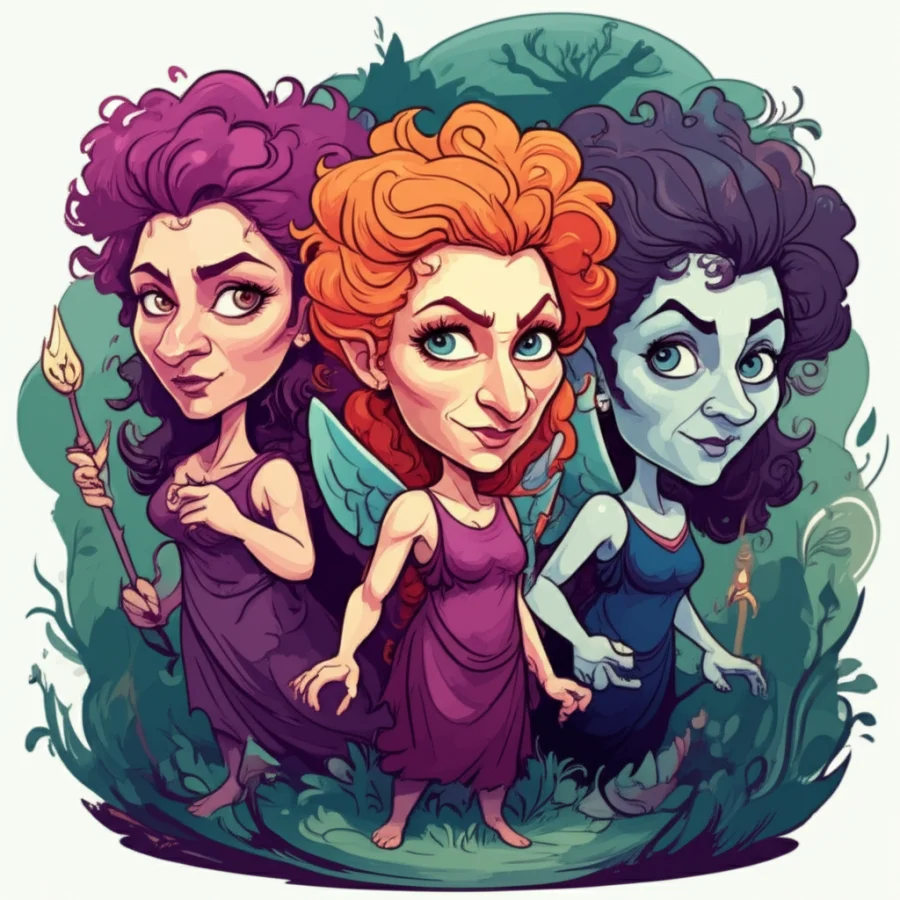
In the tapestry of ancient human storytelling, where the veil between the tangible and the imagined was thin, arose tales that sought to explain the inexplicable, to personify the fears that stalked the dark, and to imbue the natural world with potent, often fearsome, forces. Among these enduring narratives are the Furies, beings woven from the primal concept of retribution, and their association with the chilling Forest of Shadows. These are not accounts to be taken as literal truth, but rather as echoes of a time when humanity grappled with justice, consequence, and the untamed wild.
Echoes from the Ancient Hearth: Origins and Cultural Context
The myth of the Furies, and the shadowy realms they were believed to inhabit, finds its roots in the vibrant cultural landscape of ancient Greece. This was an era, roughly spanning from the Archaic to the Classical periods (circa 8th to 4th centuries BCE), where a polytheistic worldview dominated. The Greeks saw the cosmos as a complex interplay of divine powers, human agency, and the overwhelming forces of nature. Their understanding of the world was deeply intertwined with their environment – the sun-drenched Mediterranean, the fertile valleys, the imposing mountains, and the vast, often tempestuous, seas.
In this society, where the boundaries between the divine and the mortal were fluid, abstract concepts like justice, punishment, and fate were often given tangible form. The societal structure, while evolving, still held strong communal bonds and a deep respect for oaths and laws. Transgressions against these were not merely social infractions; they were seen as affronts that could disrupt the cosmic order, inviting retribution from forces beyond human control. It was in this fertile ground of belief, fear, and the need for order that the legend of the Furies took root.
The Embodiment of Retribution: The Furies
The Furies, also known as the Erinyes, were not benevolent deities or even capricious gods. They were, in essence, personifications of a relentless, inescapable vengeance. Ancient texts and artistic depictions often portray them as terrifying figures. Imagine women, but not of gentle mien. Their features were frequently described as grim and severe, their eyes burning with an unquenchable fire, and their hair often depicted as a writhing mass of snakes. They were not associated with beauty or grace, but with the raw, visceral power of punishment.
Symbolically, the Furies represented the consequence of broken oaths, acts of violence against family, and defiance of the natural laws. They were the embodiment of the guilt that gnawed at the conscience and the external force that ensured justice, however harsh, would be served. Their presence was a reminder that certain actions carried a weight that could not be shrugged off, and that the universe itself would eventually demand a reckoning.
The Forest of Shadows: A Realm of Perpetual Gloom
The Forest of Shadows was not merely a place of dense foliage; it was a conceptual space, a mythical underworld or a desolate, forgotten corner of the earth where the Furies held sway. It was a realm steeped in perpetual gloom, where sunlight dared not penetrate, and the air was thick with an oppressive silence, broken only by the whispers of the wronged and the chilling pronouncements of the Furies themselves.
This was a place where the earthly laws of consequence bled into the supernatural. It was believed to be a place of eternal torment for those who had escaped earthly punishment but were nonetheless condemned by the Furies. The trees themselves might have been imagined as twisted and gnarled, their branches like skeletal fingers reaching out, and the very ground fertile with the sorrow and despair of those who had fallen prey to the Furies’ wrath.
A Narrative of Inescapable Justice: The Tale of Orestes
One of the most prominent myths involving the Furies and their relentless pursuit unfolds in the story of Orestes. Orestes, son of Agamemnon, a king who was murdered by his wife Clytemnestra (often with her lover Aegisthus), found himself caught in a terrifying cycle of vengeance. Driven by the command of the god Apollo, Orestes avenged his father by killing his mother, Clytemnestra, and Aegisthus.
This act, though seemingly righteous in its aim to honor his father, plunged Orestes into a profound state of pollution and guilt. It was then that the Furies, the relentless avengers of matricide, were unleashed upon him. They emerged from the shadowy depths, their presence a palpable terror. The Forest of Shadows served as their dominion, the place from which they would emerge to torment Orestes.
The narrative depicts Orestes fleeing across the land, pursued relentlessly by the Furies. Their whispers, their hissing breaths, and the phantom sight of their wrath were his constant companions. They were not easily evaded; they were a manifestation of the inescapable nature of his deed. His pursuit was a journey through a landscape haunted by his actions, where every shadow seemed to conceal a Fury.
The tale culminates with Orestes eventually finding refuge and being put on trial at the Athenian Areopagus. While he is ultimately acquitted, the Furies are appeased, their pursuit ceasing. This resolution, however, does not erase the terrifying ordeal, underscoring the profound and lasting impact of their pursuit. The Forest of Shadows remained, in the collective imagination, the ultimate repository of their power and the place from which their vengeance originated.
The Weight of Transgression: Symbolism and Meaning
To the ancient Greeks, the Furies and their association with the Forest of Shadows served as potent symbols. Primarily, they represented the profound and immutable concept of justice and consequence. They were a stark reminder that actions, particularly those that violated fundamental moral or familial codes, carried an inherent weight that could not be escaped, either in this life or, as the myth suggested, in a realm beyond.
The Furies also embodied the terrifying power of guilt and retribution. They were the external manifestation of the internal turmoil that accompanied wrongdoing. The Forest of Shadows itself symbolized the unknown, the primal fears that lurked in the dark recesses of the mind and the natural world. It was a place where the rules of ordinary existence were suspended, and the raw forces of justice held sway.
Furthermore, the myth could be interpreted as a commentary on the delicate balance of familial relationships and societal order. The Furies were often invoked in cases of parricide or betrayal within the family, highlighting the sacredness of these bonds and the dire consequences of their violation. Their relentless pursuit served as a cautionary tale, urging individuals to uphold their duties and respect the established order, lest they invite the wrath of these eternal avengers.
Modern Echoes: Furies in Contemporary Culture
While the belief in the Furies as literal beings has long since faded, their archetypal power continues to resonate in modern storytelling. In literature, films, and video games, the concept of vengeful spirits or inescapable fates often draws upon the imagery and psychological impact of the Furies. They appear as formidable antagonists, representing the dark side of justice, the inescapable nature of past actions, or the primal fears that drive characters to their breaking point.
The Forest of Shadows, as a concept, has also evolved. It is now a common trope for any place that is inherently dangerous, mysterious, or imbued with a sense of foreboding – a place where the rules of the known world do not apply and where hidden forces lie in wait. Cultural studies scholars analyze these myths as valuable insights into the ancient Greek psyche, their understanding of morality, and their relationship with the natural and supernatural worlds.
A Legacy of Storytelling
In conclusion, the Furies and the Forest of Shadows are potent examples of the rich tapestry of mythology and folklore woven by ancient civilizations. These are not accounts to be embraced as truth, but rather as fascinating narratives that offer a window into the past. As Muslims, we firmly believe that the ultimate Creator and Sustainer of all existence is Allah (SWT). Our understanding of the universe is grounded in divine revelation and reason, acknowledging that only Allah possesses true power and dominion.
Yet, these ancient stories, born from human imagination and the need to comprehend the world, hold a unique cultural and historical significance. They remind us of the enduring power of storytelling to explore complex themes, to personify abstract fears, and to reflect the values and anxieties of a bygone era. The legacy of the Furies and the Forest of Shadows lies not in their literal existence, but in their continued ability to spark our imagination, to inspire new narratives, and to connect us to the vast and diverse heritage of human cultural expression.







