
 fufufafa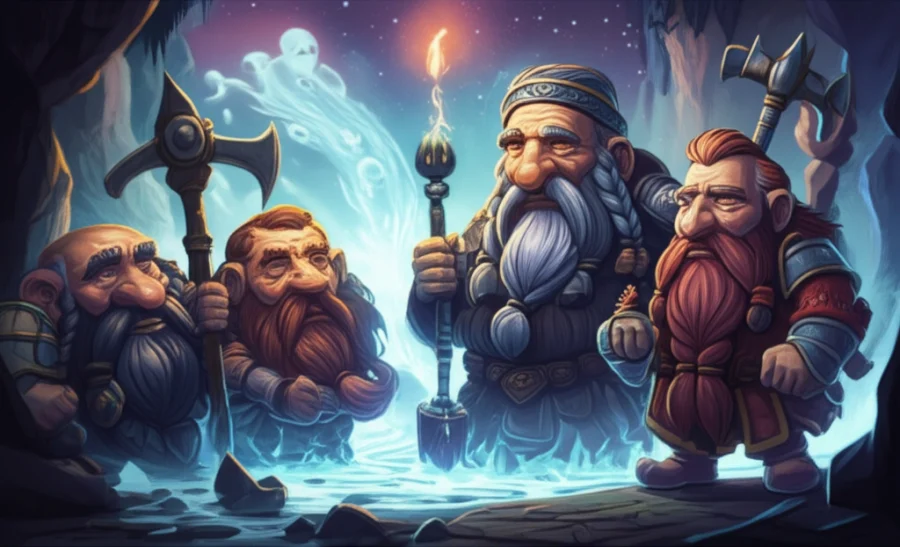
From the shadowy depths of ancient Germanic and Norse folklore emerges a fascinating tapestry of myth, woven with the enduring figures of dwarves and the enigmatic concept of the River of Souls. These are not tales of historical fact, but rather the imaginative narratives of a people seeking to understand the mysteries of life, death, and the unseen forces they believed shaped their world. These stories, passed down through generations around flickering hearths, offer a unique window into the worldview of early European cultures, a time when the natural and the supernatural were inextricably intertwined.
The cultural landscape from which these myths sprang was one of harsh beauty and profound respect for the elements. For the Germanic and Norse peoples, life was often a struggle against the unforgiving forces of nature – the biting winds of winter, the treacherous seas, and the dense, mysterious forests. Their world was a place where the divine and the earthly were not distant concepts, but palpable presences. Gods and spirits, giants and dwarves, were believed to inhabit the mountains, the forests, and even the very earth beneath their feet. In such a context, death was not an absolute end, but a transition, a journey into realms beyond the mortal plane. The River of Souls, in its various interpretations, served as a potent symbol for this transition, a liminal space between the living and the dead, a watery path traversed by the departed.
Central to these narratives are the dwarves, beings often depicted as stout, resilient folk who dwell deep within the earth. They are master craftsmen, their hands adept at coaxing precious metals and gleaming gems from the unyielding stone. Their symbolic attributes are rich and multifaceted. Dwarves are often associated with the earth itself, with its hidden treasures and its steadfast permanence. Their deep connection to the underground, to the darkness and the silence, imbues them with a sense of ancient wisdom and a profound understanding of the hidden workings of the world. They represent ingenuity, perseverance, and the enduring power of skilled labor. Their subterranean existence also links them to the underworld, a realm that, in these ancient stories, was not always a place of pure torment, but rather a complex domain of spirits and ancestral echoes.
The myth of the River of Souls, while not always explicitly linked to dwarves in every single tale, often involves them in its periphery or as intermediaries in the spiritual journey. Imagine, if you will, a world where the souls of the departed do not simply vanish, but embark on a final, solemn voyage. This River of Souls is not a placid, sun-dappled stream, but a powerful, often turbulent current, flowing through the shadowy landscapes of the underworld. It is a place of mists and echoes, where the memories of a life are carried along its inexorable flow.
In some interpretations, the dwarves, with their intimate knowledge of the earth’s hidden passages and their mastery over the very stones that form the underworld, might be seen as guardians or guides along this ethereal waterway. Perhaps they are the silent ferrymen, their sturdy boats, carved from the roots of ancient mountains, ferrying the spectral forms of the deceased. Or perhaps their subterranean workshops, filled with the ringing of hammers and the glow of forge fires, lie near the banks of this spectral river, their ceaseless labor a counterpoint to the somber procession of souls. The journey itself is often depicted as one of purification or reckoning, a shedding of mortal coils before reaching the final destination, be it a realm of rest or a place of eternal slumber. The very act of flowing, of movement, speaks to the ongoing cycle of existence, the constant ebb and flow of life and death.
The symbolism embedded within these tales is profound and speaks volumes about the concerns of ancient peoples. The River of Souls, with its ceaseless current, likely represented the unstoppable march of time and the inevitability of death. It was a tangible metaphor for the journey beyond the mortal realm, a journey that all would eventually undertake. The dwarves, as keepers of the earth’s secrets and masters of its hidden depths, could symbolize the deep, enduring truths that lie beneath the surface of everyday life. Their association with craftsmanship and perseverance might have offered a sense of hope – that even in the face of the unknown, skill and determination could lead to a meaningful existence, both in life and, perhaps, in the afterlife. The underworld itself, with its potential for both mystery and connection to ancestors, offered a framework for understanding grief and remembrance.
Today, these ancient myths continue to resonate, finding new life in the realms of modern storytelling. Dwarves, with their distinctive appearance and their rich lore, are staple characters in fantasy literature, their origins in these ancient tales clearly visible. Authors and game designers draw inspiration from their craftsmanship, their resilience, and their connection to the earth, often portraying them as stalwart allies or formidable adversaries. The concept of the River of Souls, while less frequently a direct narrative element, influences the portrayal of afterlife journeys and spectral realms in various media. It contributes to the rich tapestry of mythological archetypes that fuel our collective imagination.
It is crucial to reiterate that these narratives are products of human imagination, born from a desire to comprehend the world and its mysteries. As Muslims, we recognize that the true Creator and Sustainer of all existence is Allah (God) alone. These ancient stories, while fascinating from a cultural and historical perspective, are not to be mistaken for divine truth or held as articles of faith. They are valuable artifacts of human heritage, testaments to the enduring power of storytelling and the boundless creativity of the human mind. In understanding these myths, we gain not only insight into the beliefs of past civilizations but also a deeper appreciation for the traditions of oral storytelling that have shaped our cultural landscape for millennia. They remind us that even in the face of the profound mysteries of life and death, humanity has always sought meaning and connection through the enduring power of narrative.







