
 fufufafa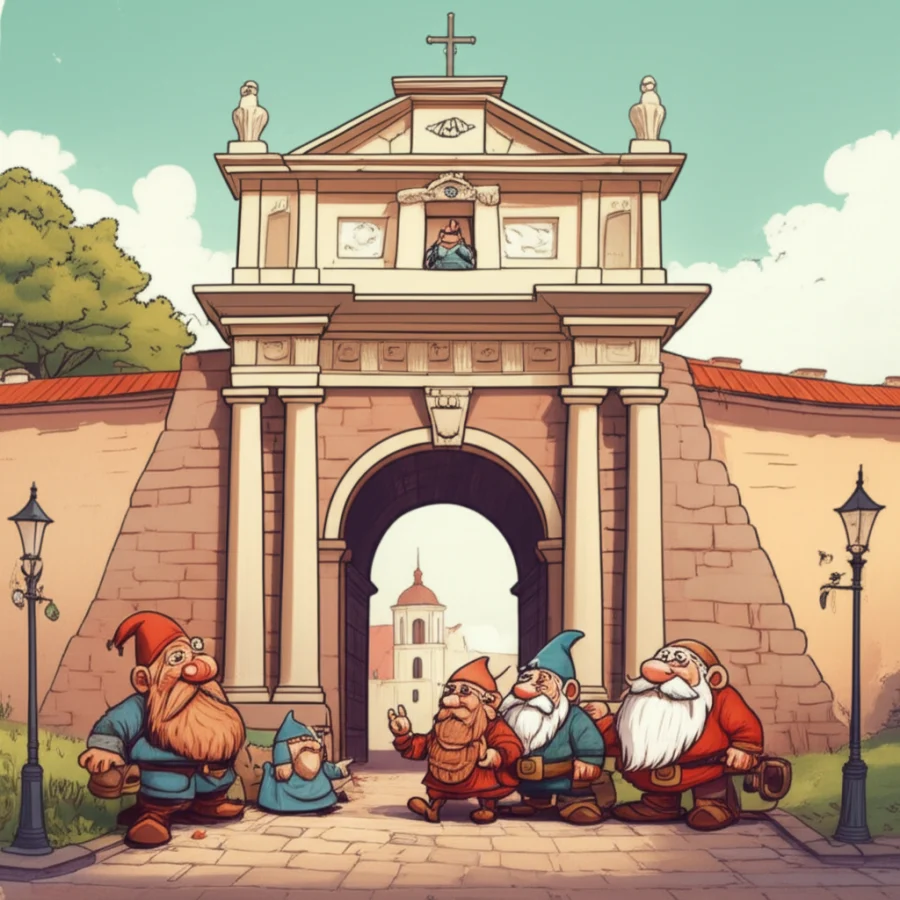
In the rugged, mist-shrouded valleys and deep, ancient forests of Northern Europe, particularly among the Germanic and Scandinavian peoples, a rich tapestry of folklore and myth has been woven over centuries. These are not divine pronouncements but rather the imaginative narratives and explanations of ancient cultures attempting to understand their world, their place within it, and the forces that shaped their lives. Among these enduring tales are those of the dwarves, small, stout beings often associated with the earth’s depths and its hidden treasures. One particular legend, spoken in hushed tones around hearth fires and during long winter nights, speaks of the Dwarves and the mythical Gate of Dawn.
The era in which these stories likely took root was one of close connection to the natural world. Life was dictated by the seasons, the bounty of the land, and the ever-present power of the elements. For these ancient peoples, the earth was not merely inert matter but a living entity, replete with spirits and unseen forces. Mountains were seen as slumbering giants, rivers as flowing veins, and the deep, dark earth as a realm of mystery, holding both peril and potential. The dwarves, in their folklore, embodied this subterranean essence. They were often depicted as master craftsmen, skilled miners, and guardians of precious ores and gems, reflecting the importance of these resources in their societies and their awe of the earth’s hidden riches. Their existence was a testament to the hidden life and potent forces that lay beneath the surface of the world they knew.
The dwarves themselves, as painted by these ancient stories, were a distinct people. They were described as short and stocky, with broad shoulders and strong hands, perfectly adapted for their subterranean lives. Their beards were often long and braided, a symbol of their age and wisdom. They were said to possess an uncanny ability to navigate the dark tunnels and caverns, their eyes keen even in the deepest gloom. While sometimes portrayed as gruff and solitary, they were also revered for their unparalleled craftsmanship. They could fashion weapons of legendary sharpness, intricate jewelry that shimmered with captured light, and magical artifacts imbued with their earthy power. Their connection to the earth was so profound that they were believed to be born from the decay of primordial giants, a concept that underscored their deep roots in the very fabric of the world. They were not beings of light and air, but dwellers of the dark, the stone, and the metal, embodying the raw, unyielding strength of the planet.
The legend of the Gate of Dawn tells of a magnificent, yet elusive, portal. It was not a physical gate of wood or iron, but a mystical threshold, a point where the profound darkness of the earth’s core would momentarily yield to the first, purest rays of the sun. This was not the dawn that broke over the horizon, but a dawn that emanated from within the very heart of the world. The dwarves, with their intimate knowledge of the subterranean realms, were said to be the only beings capable of finding and, on rare occasions, opening this gate. They sought it not for conquest or personal gain, but for reasons shrouded in their own ancient lore. Some tales suggested they wished to greet the nascent light, to draw strength from its primal essence before it was diluted by the journey through miles of rock. Others whispered that the Gate of Dawn held the secret to the earth’s deepest treasures, not just gold and gems, but perhaps even the source of life itself, a primordial spark that fueled the world.
Imagine a dwarf named Borin, his beard a cascade of silver, his eyes like polished obsidian, leading a small band through a labyrinthine network of tunnels. The air is heavy with the scent of damp earth and the faint, metallic tang of ore. Their journey has been long, guided by ancient maps etched onto stone tablets and the subtle vibrations of the earth beneath their calloused feet. They have faced perils – collapsing passages, underground rivers that roar with unseen fury, and creatures that dwell in eternal darkness. But their resolve is unwavering, driven by a quest whispered down through generations. Finally, after what feels like an eternity, they reach a vast cavern, unlike any they have seen before. The walls shimmer with veins of unknown minerals, pulsing with a faint, inner luminescence. In the center of the cavern, there is no physical structure, but a distortion in the air, a shimmering veil that seems to absorb all sound. This is the place. The dwarves, with a solemn reverence, begin their ritual, their guttural chants echoing in the stillness. As they chant, the veil intensifies, and a faint, golden light begins to seep through, not blinding, but soft and pure, like the first breath of a newborn day. This is the Gate of Dawn, a brief, ethereal communion between the deep earth and the primordial light.
The symbolism of the Gate of Dawn is rich and multifaceted. For the ancient peoples who told these stories, it likely represented the profound mystery and power of the natural world. The dwarves, as dwellers of the earth, symbolized our connection to the primal forces of creation, the hidden strengths that lie beneath the surface. The Gate of Dawn itself could be interpreted as a representation of hope, of renewal, and of the profound understanding that even in the deepest darkness, there is always the potential for light and new beginnings. It might also have symbolized the ultimate wisdom or knowledge that could only be attained through deep introspection and a connection to the fundamental elements of existence. The dwarves’ quest for it, therefore, was not just about material wealth but a spiritual or existential pursuit.
In modern interpretations, the dwarves and their association with the earth’s secrets continue to captivate imaginations. They are prominent figures in fantasy literature, tabletop role-playing games, and video games, often depicted as resilient, skilled warriors and artisans. Their connection to mining, craftsmanship, and subterranean realms is a common trope. While the specific legend of the Gate of Dawn might not be as universally known as other dwarven myths, its essence – the idea of hidden power within the earth, accessed through perseverance and specialized knowledge – resonates within these modern narratives. They embody a sense of enduring strength, a deep connection to the past, and the potential for hidden wonders.
It is crucial to reiterate that the tales of dwarves and the Gate of Dawn are traditional stories, imaginative constructs born from the minds of ancient peoples. They are valuable for understanding cultural heritage, the evolution of storytelling, and the human desire to explain the inexplicable. As Muslims, we recognize that only Allah (God) is the true Creator and Sustainer of the universe, the ultimate source of all power and knowledge. These stories, therefore, are appreciated for their cultural significance and their capacity to spark imagination, serving as a testament to the enduring tradition of human storytelling and the rich tapestry of our shared cultural heritage. They remind us of the power of narrative to explore profound themes, even without claiming divine authority, and to offer glimpses into the worldviews of those who came before us.







