
 fufufafa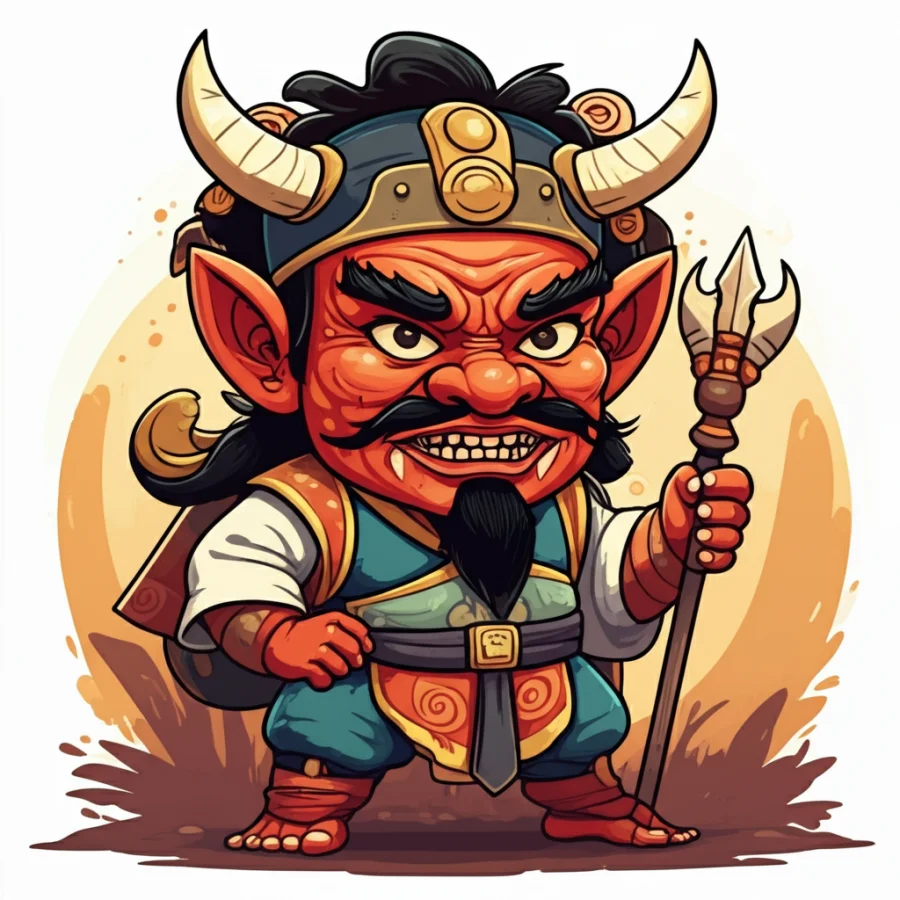
In the vast tapestry of Korean folklore, woven with threads of ancient belief and vibrant imagination, lie stories that speak of origins, of the forces that shaped the world, and of the beings that inhabited its hidden corners. Among these are tales that trace the lineage of the Korean people back to celestial realms, and others that introduce the mischievous, often fearsome, denizens of the earthly plane. The echoes of Hwanung, the legendary son of the Sky God, and the whispers of the Dokkaebi, the enigmatic spirits of Korean folklore, converge in the dramatic narrative of the ancient Goguryeo kingdom, offering a fascinating glimpse into the worldview of a bygone era.
This is not a chronicle of divine intervention or a testament to supernatural power, but rather a traditional story, passed down through generations, reflecting the cultural and historical context of ancient Korea. It is a narrative born from a time when the boundaries between the earthly and the divine, the natural and the supernatural, were fluid, and when the forces of nature and the human condition were often personified in mythical beings.
The era of Goguryeo (37 BCE – 668 CE) was a period of martial prowess and territorial expansion on the Korean peninsula and in parts of Manchuria. Life was often harsh, dictated by the rhythms of agriculture, the demands of warfare, and the ever-present uncertainties of nature. In such an environment, it was natural for people to seek explanations for the world around them. Their understanding was deeply intertwined with animism and shamanism, where spirits were believed to inhabit mountains, rivers, trees, and even everyday objects. The natural world was seen as alive, imbued with a potent energy that could be both benevolent and malevolent. Celestial bodies held significant importance, representing cosmic order and divine authority. It is within this worldview that the story of Hwanung, a figure descended from the heavens, and the Dokkaebi, creatures of the earth and shadow, finds its resonance.
Central to this narrative is the figure of Hwanung, who, according to the foundational myth of Korea, was the son of the Heavenly Emperor, Hwanin. Hwanung is depicted not as a deity to be worshipped in the sense of a singular, all-powerful being, but as a celestial prince, possessing divine lineage and a benevolent intention to govern the human realm. His symbolic attributes include a profound connection to the heavens, an inherent sense of justice and order, and a desire to bring civilization and governance to the earthly world. He is often associated with the three Heavenly Seals, representing authority, and his descent marks a significant moment in the establishment of earthly order.
In contrast, the Dokkaebi are far more complex and less easily defined. They are not gods, nor are they demons in a strict Abrahamic sense. Instead, they are beings of pure folklore, often described as shape-shifters, tricksters, and sometimes guardians, with a peculiar fascination for human affairs. Their appearance is varied, ranging from grotesque and fearsome to comically absurd, often depicted with horns, glowing eyes, and a distinctive red or blue complexion. Their symbolic attributes are manifold: they can represent the untamed aspects of nature, the chaotic forces that lie beyond human control, or the mischievous impulses within the human heart. They are associated with illusion, with the uncanny, and with the spirit of the wild. While they can be a source of fear and misfortune, they can also bring unexpected boons or act as catalysts for change, often through their elaborate pranks and games.
The narrative that weaves together Hwanung and the Dokkaebi, particularly within the context of Goguryeo, often centers on the establishment of order and the challenges faced by early societies. Imagine the heavens, a realm of pure light and order, from which Hwanung, the son of the Heavenly Emperor, gazes down upon the mortal world. He sees a land teeming with life but lacking the structure and guidance that his celestial domain embodies. Driven by a desire to bring order and prosperity to humanity, he descends to Earth, accompanied by his ministers of wind, rain, and clouds. He establishes his capital atop the sacred Taebaek Mountain, near a symbolic sandalwood tree, and begins to govern, teaching humans about agriculture, law, and morality.
Yet, the earthly realm is not merely populated by nascent human societies. It is also the domain of the Dokkaebi, spirits who have long roamed the forests, mountains, and hidden valleys. These beings, neither fully benevolent nor malevolent, are intrigued by the arrival of the celestial prince and the burgeoning human civilization. Some Dokkaebi, observing Hwanung’s efforts to cultivate the land and establish laws, might see his influence as a disruption to their own ancient ways. They might engage in their characteristic mischief, attempting to mislead humans, steal their crops, or sow confusion with their illusions.
The tales might describe Hwanung, with his celestial wisdom and divine mandate, confronting these earthly spirits. It is not a battle of divine versus demonic, but rather a dynamic interplay between order and chaos, between the structured world of governance and the wild, untamed spirit of the land. Hwanung might use his authority and understanding to outwit the Dokkaebi, perhaps through riddles, games of chance, or by demonstrating the superiority of his ordered ways. The Dokkaebi, in turn, might test Hwanung’s resolve, their antics serving as trials for the new human society and its celestial leader. This interaction, set against the backdrop of the nascent Goguryeo kingdom, would have illustrated the ongoing tension between the forces that sought to tame the wilderness and the primal energy that resided within it.
The symbolism embedded in these stories is rich and multifaceted. Hwanung’s descent represents the aspiration for divine guidance, the establishment of societal structures, and the belief in a benevolent force overseeing human destiny. He embodies the ideals of leadership, wisdom, and the pursuit of civilization. The Dokkaebi, on the other hand, symbolize the untamed forces of nature, the inherent chaos that exists alongside order, and perhaps even the darker, more capricious aspects of human nature that can manifest as fear, superstition, or rebellion against established norms. Their interactions with Hwanung and humanity highlight the perpetual struggle to understand and harmonize with the natural world, and the inherent unpredictability that characterizes existence. They also represent the enduring power of the spirit world, a realm that coexists with the human one, shaping perceptions and influencing events in subtle, often inexplicable ways.
In the modern era, these ancient myths continue to resonate, albeit in transformed guises. The legacy of Hwanung is often seen in the national identity of Korea, symbolizing a divinely ordained origin and a long historical lineage. The Dokkaebi, with their distinct visual appeal and capricious nature, have become popular figures in contemporary Korean media. They are frequently reimagined in literature, animated films, and video games, where they often serve as antagonists, comic relief, or even as figures of folklore with a moral lesson to impart. Their enduring presence speaks to their power as archetypes, representing the fantastical and the mysterious that continue to capture the human imagination. Cultural studies often analyze these stories as valuable windows into the historical beliefs, anxieties, and aspirations of the Korean people.
It is crucial to reiterate that these narratives are cultural stories, rich in symbolism and historical context, but not to be interpreted as factual accounts or divine pronouncements. As Muslims, we recognize that only Allah (God) is the true Creator and Sustainer of the universe, the sole source of truth and guidance. These ancient tales, like all human endeavors in storytelling and cultural expression, are products of human imagination and the historical context in which they were conceived.
In conclusion, the echoes of Hwanung and the whispers of the Dokkaebi, as they intertwine with the grand narrative of Goguryeo, offer a profound insight into the cultural heritage of Korea. They are testaments to the enduring power of storytelling, of humanity’s innate need to make sense of the world through myth and legend. These tales, born from the ancient soil of Korea, continue to captivate and inform, reminding us of the vibrant tapestry of human imagination and the rich cultural legacies that shape our understanding of the past and inform our present. They are not beliefs to be adopted, but stories to be understood, appreciated for their cultural significance, and cherished as part of our shared human heritage of narrative and imagination.







