fufufafa
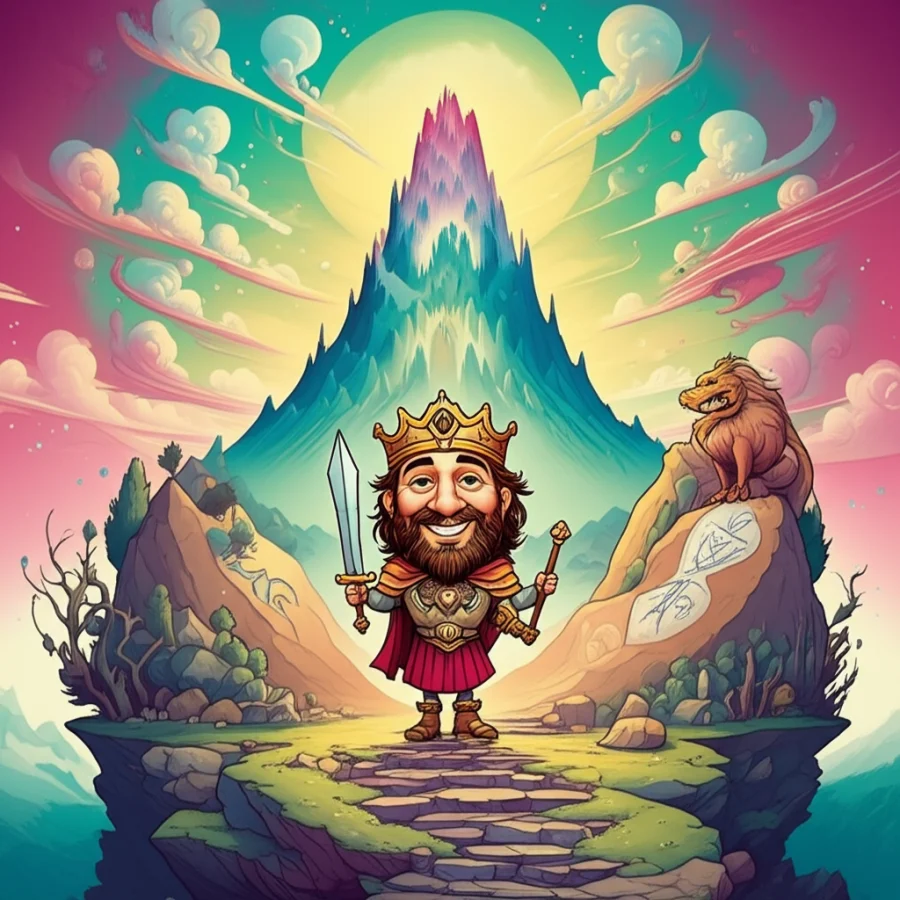
Across the windswept plains and through the shadowed valleys of what is now known as the ancient Celtic lands, particularly those regions that would later become Wales, stories were woven into the fabric of daily life. These were not mere tales to pass the time, but deeply ingrained narratives, passed down through generations of bards and storytellers, shaping their understanding of the world, its mysteries, and their place within it. Among these ancient traditions lies the legend of Arawn and the Hidden Mountain, a tale that speaks of the liminal spaces between the mortal realm and the otherworldly, of power and responsibility, and the enduring enigma of the unknown.
The cultural era from which this myth springs is one steeped in a profound connection to nature. The people of this time lived in close proximity to the elements, their lives dictated by the cycles of the sun and moon, the bounty of the earth, and the ferocity of the storms. The world, to them, was alive with unseen forces, populated by spirits of the land, the water, and the sky. Mountains, in particular, were often seen as sacred thresholds, places where the veil between the physical and the spiritual was thinnest. Their towering presence, their often-inaccessible peaks shrouded in mist, lent themselves to interpretations as dwelling places of powerful beings, guardians of ancient secrets. This was a worldview where the rational and the mystical were not separate entities but intertwined threads in the tapestry of existence.
At the heart of this chronicle is Arawn, a figure often depicted not as a benevolent deity, but as a formidable ruler of the Otherworld, a realm sometimes referred to as Annwn. In the context of these ancient narratives, Arawn is not presented as a being to be worshipped, but as a powerful entity representing a distinct aspect of existence. His attributes often lean towards the formidable and the enigmatic. He is frequently associated with darkness, with the underworld, and with the mysteries that lie beyond mortal comprehension. The concept of his rule signifies a powerful, perhaps even primal, force that governs realms beyond human experience. His presence is symbolic of the vast unknown, the powers that shape destinies from beyond the visible spectrum, and the inherent authority that can reside in the untamed and the hidden. He is a lord of shadows, a keeper of secrets, and a reminder of the forces that operate outside the direct observation of humanity.
The narrative of Arawn and the Hidden Mountain often unfolds in the form of a quest, a journey into the heart of the unknown. The tale begins with a profound sense of mystery surrounding a mountain that exists not on any ordinary map, but within the very fabric of myth. This Hidden Mountain, often described as a place of immense power and otherworldly beauty, is the seat of Arawn’s dominion. Mortals, drawn by tales of its wonders or perhaps driven by desperation, might seek passage to this realm. The journey itself is fraught with peril, requiring a brave and determined spirit, as the paths are not physical but often metaphorical, testing the courage, cunning, and moral fortitude of the traveler.
Upon reaching the foothills of the Hidden Mountain, the adventurer might find themselves at a threshold, a place where the familiar world gives way to the extraordinary. Here, they may encounter Arawn, not in a grand, welcoming hall, but perhaps in a shadowy council, surrounded by his spectral retinue. The stories do not typically portray Arawn as a being who grants boons lightly. Instead, he often presents challenges, riddles, or tasks that demand immense sacrifice or profound insight. The narrative might describe a protagonist who, through trials and tribulations, earns Arawn’s attention or even his grudging respect. The interactions are often stark, emphasizing the vast difference in power and perspective between the mortal and the lord of Annwn. The goal of such a quest might be to seek wisdom, to reclaim a lost artifact, or to negotiate for the fate of their own world. The chronicle is a testament to the human desire to confront the unknown, to seek understanding from realms that defy easy explanation.
The symbolism embedded within the Chronicle of Arawn and the Hidden Mountain is rich and multifaceted. The Hidden Mountain itself can be interpreted as a representation of the subconscious, the unexplored territories of the mind, or the spiritual planes that lie beyond immediate perception. Arawn, as its ruler, embodies the formidable, perhaps even daunting, aspects of such realms. He can symbolize the primal forces of nature, the power of fate, or the wisdom that comes from confronting one’s deepest fears and limitations. The quest to reach him might signify the human journey of self-discovery, the pursuit of knowledge that lies beyond the ordinary, or the struggle for control over one’s destiny when faced with overwhelming forces. The story, in essence, speaks to the ancient human fascination with what lies beyond the veil of everyday experience, and the inherent risks and potential rewards of venturing into the unknown.
In the modern world, the echoes of Arawn and the Hidden Mountain resonate through various forms of media and academic study. These ancient narratives continue to inspire fantasy literature, where elements of Celtic mythology are frequently woven into tales of quests, magical realms, and powerful, enigmatic figures. In video games, the archetypes of ancient lords and hidden dimensions are common, drawing upon the archetypal imagery of these old stories. Cultural anthropologists and folklorists continue to study these myths, not as literal accounts, but as valuable windows into the beliefs, anxieties, and aspirations of ancient societies. They offer insights into how our ancestors grappled with the mysteries of life, death, and the vastness of the universe.
In conclusion, the Chronicle of Arawn and the Hidden Mountain stands as a potent example of the rich tapestry of mythology woven by ancient peoples. It is a narrative born from a deep connection to the natural world and a worldview that embraced the unseen forces that governed existence. As Muslims, we understand that the ultimate Creator and Sustainer of all that exists is Allah (SWT). These ancient stories, while fascinating and culturally significant, are products of human imagination and tradition, not divine revelation. They serve as a valuable reminder of our shared human heritage, the enduring power of storytelling, and the diverse ways in which humanity has sought to understand its place in the grand cosmic order. By studying these myths, we gain not only an appreciation for the cultural past but also a deeper understanding of the human impulse to explore, to question, and to seek meaning in the stories we tell ourselves.